
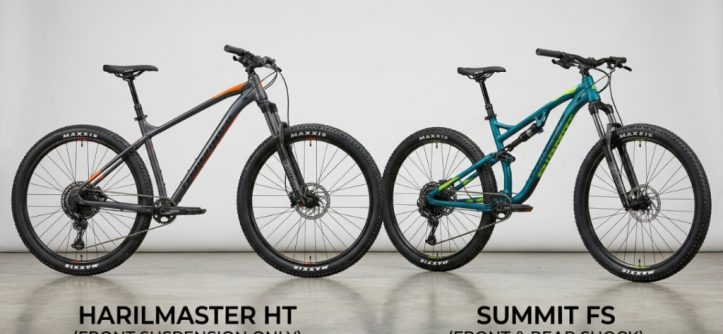
Every spring, bike forums flood with the same question: “Is Brand X better than Brand Y at $500?” — followed by fifty conflicting opinions based on brand loyalty rather than actual component analysis. The truth is that most entry level mountain bike options at similar price points use nearly identical components sourced from the same manufacturers — the differences hide in frame geometry, assembly quality, and which specific component gets the budget priority. A proper mountain bike comparison evaluates the five factors that actually determine riding experience at the entry level rather than getting distracted by marketing language, color options, or badge engineering that makes identical bikes appear different. This guide teaches you the professional evaluation framework that bike shop mechanics use to recommend entry-level bikes — the same criteria that separate a genuinely good starter bike from one that frustrates you into quitting within three months.
What Should You Actually Compare Between Entry-Level Bikes?
Compare these five factors in priority order: brake type and quality, suspension fork specification, frame material and geometry, drivetrain groupset level, and wheel/tire package — everything else (color, brand prestige, accessories) is secondary to these performance-determining specifications.
The professional comparison framework:
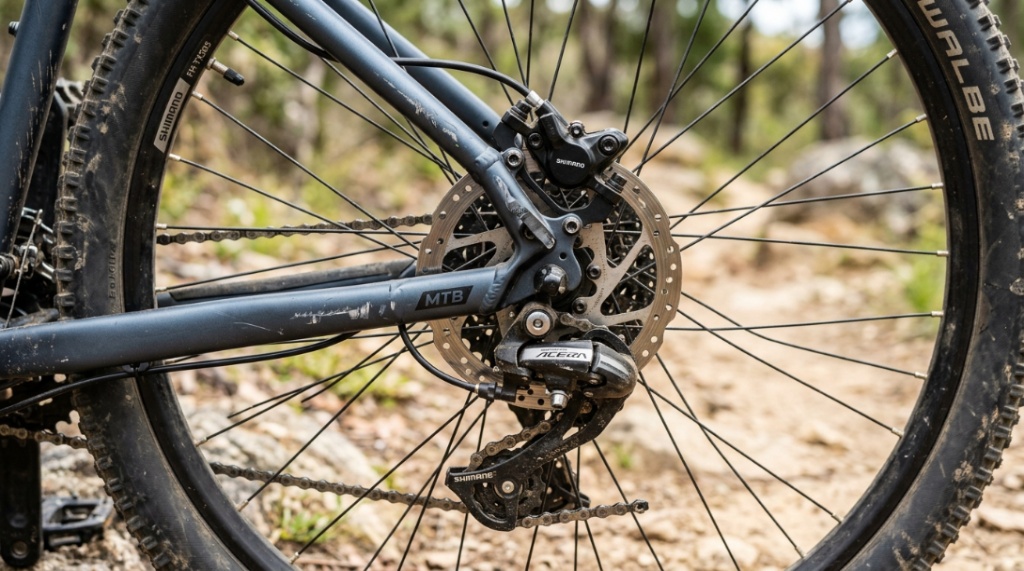
- #1 Brakes: Hydraulic disc > mechanical disc > rim brakes. This is binary at entry level — hydraulic disc brakes are dramatically safer and more effective. If one bike has hydraulic and another has mechanical at the same price, choose hydraulic every time.
- #2 Fork: Air spring > coil spring with lockout > basic coil spring. Fork quality determines how the bike handles bumps, which affects comfort, control, and confidence on every ride.
- #3 Frame: Aluminum alloy is standard at entry level. Compare geometry numbers: head tube angle (66–68° for trail), seat tube angle (73–75° for efficient climbing), and reach (determines cockpit length). Steel frames are heavier but more comfortable; carbon does not exist at true entry-level pricing.
- #4 Drivetrain: 1x systems (single front chainring) > 2x or 3x systems for trail riding simplicity and reliability. Shimano Deore or SRAM SX minimum for reliable shifting under trail conditions.
- #5 Wheels/tires: Tubeless-ready rims allow future tire upgrades. Tire width of 2.2″+ with trail-appropriate tread. Hub quality affects bearing longevity (sealed cartridge > loose ball).
How Do You Read Spec Sheets Without Getting Overwhelmed?
Focus only on the five priority components listed above, ignore marketing language (“race-tuned geometry,” “advanced alloy”), and compare specific model numbers of components rather than category descriptions — a “Shimano drivetrain” could mean $30 Tourney or $150 Deore depending on which specific model is installed.
Spec sheet translation guide:
| Spec Sheet Says | What It Actually Means | Quality Level |
|---|---|---|
| “Shimano 21-speed” | Shimano Tourney (lowest tier, 3×7) | Budget — adequate for casual riding only |
| “Shimano Altus/Acera” | Entry-level trail capable (2×8 or 2×9) | Acceptable — handles moderate trails |
| “Shimano Deore” | Solid trail performance (1×10, 1×11, or 1×12) | Good — reliable for regular trail use |
| “SR Suntour XCT/XCM fork” | Basic coil spring, limited damping | Budget — functional but not refined |
| “SR Suntour XCR/Raidon fork” | Better coil or air spring, adjustable | Good — capable trail performance |
| “RockShox Judy/Recon” | Quality air spring with proper damping | Very good — confident trail performance |
| “Mechanical disc brakes” | Cable-actuated disc — adequate stopping | Acceptable — works but requires adjustment |
| “Hydraulic disc brakes” | Fluid-actuated disc — powerful, consistent | Good — the minimum for serious trail riding |
Where Do Entry-Level Brands Actually Differ?
At the $400–$800 price point, brands differentiate primarily through frame geometry design, component allocation priority (where they spend the limited budget), warranty terms, and dealer service network — the actual component manufacturers are often identical across competing brands at the same price.
How major entry-level brands allocate budgets differently:
- Schwinn/Mongoose (big-box): Prioritize low retail price and availability. Frame geometry is conservative. Components are entry-spec but functional. Best for: riders who want accessible pricing and easy availability. The Schwinn Traxion exemplifies this approach — offering dual suspension and 29er wheels at big-box pricing.
- Giant/Trek/Specialized (bike-shop brands): Prioritize frame geometry and component balance. Better overall build quality. Higher price reflects shop assembly and support. Best for: riders who value professional setup and local service.
- Vitus/Polygon/YT (direct-to-consumer): Prioritize component specification at lower prices by eliminating dealer margins. Often best specs-per-dollar. Best for: riders comfortable with self-assembly and online purchasing.
- Co-op/REI (member brands): Balance between quality and service with membership benefits. Moderate specs with excellent return policies. Best for: riders who value no-risk purchasing with generous return windows.
What Are the Most Common Entry-Level Bike Mistakes to Avoid?
The five most expensive entry-level mistakes are: buying based on brand prestige alone, choosing style over function, ignoring brake type, selecting wrong frame size, and buying a bike with components too cheap to upgrade — each costing either money, safety, or enthusiasm.
- Brand over specs: A $600 name-brand bike with mechanical brakes and a basic fork is objectively worse than a $500 direct-to-consumer bike with hydraulic brakes and a better fork. Compare components, not logos.
- Full suspension under $800: Budget full-suspension bikes use the cheapest possible rear suspension that adds weight without providing meaningful function. A $600 hardtail outperforms a $600 full-suspension bike on every trail because the budget goes to better components rather than a non-functional rear shock.
- Too many gears: A “21-speed” bike sounds impressive but means Shimano Tourney (lowest grade) with a triple chainring that adds weight, complexity, and chain-drop problems. A “10-speed” 1x Deore is far superior for trail riding despite fewer total gear combinations.
- Wrong size “because it was on sale”: No discount justifies a wrong-sized frame. You will be uncomfortable, ride less, and eventually buy the correct size anyway — spending more total than buying right the first time.
- Department store assembly: Bikes assembled by non-specialists often have incorrectly adjusted brakes, improperly torqued bolts, and misaligned derailleurs. Always have a bike shop inspect any department-store purchase before riding ($30–$50 inspection fee).
Selecting the right bike is only half the battle; how your power transfers to the pedals matters just as much. While entry-level trail riders usually start with flat pedals and standard athletic sneakers, upgrading to dedicated cycling footwear can completely transform your efficiency and grip. However, make sure you don’t accidentally buy gear meant for the gym studio—understanding the differences between Indoor Cycling Shoes vs. Outdoor Cycling Shoes ensures you get the structural stiffness and weather protection required for rugged terrain.
How Do You Decide Between Two Similarly-Priced Options?
When two bikes match on the five priority components, choose the one with better warranty terms, more accessible service network, frame geometry better suited to your primary terrain, and the option to upgrade key components later without frame limitations (boost hub spacing, tapered headtube, internal cable routing).
Tiebreaker criteria in order:
- Warranty: Lifetime frame warranty > 5-year > 2-year. Frames rarely fail, but when they do, warranty matters enormously.
- Upgrade path: Tapered headtube (accepts modern forks), boost hub spacing (wider wheel compatibility), and internal routing (cleaner cable upgrades) future-proof the frame for component improvements.
- Service access: A bike you can get serviced locally beats a marginally better-spec’d bike that requires shipping for warranty work.
- Geometry match: Compare the head tube angle and reach to your intended use. Slacker (65–67°) for descending confidence. Steeper (68–70°) for climbing efficiency.
- Weight: All else truly equal, lighter is better — but only as a final tiebreaker. A 1-lb difference matters far less than a brake or fork upgrade.
Conclusion
Comparing entry-level mountain bikes like a pro means ignoring marketing noise and evaluating five specific factors: brakes (hydraulic disc minimum), fork quality (air spring preferred), frame geometry (matched to your terrain), drivetrain level (Shimano Deore/SRAM SX minimum for trails), and wheel package (tubeless-ready, proper width). At any given price point, most brands offer similar component quality — the difference lies in where each brand allocates its limited budget and whether that allocation matches your priorities.
Stop reading forum arguments about brand loyalty. Start reading spec sheets with the translation guide above. Compare component model numbers directly. Choose the bike that puts the most budget into brakes and fork — the two components that most affect your safety and daily riding experience. Everything else can be upgraded later; brakes and fork determine whether you enjoy riding enough to bother upgrading at all.
What component mattered most when you chose your first mountain bike — and would you prioritize differently now? Share below.
Frequently Asked Questions
Is a $500 mountain bike good enough for trail riding?
Yes — $500 buys a capable hardtail with adequate components for moderate trail riding. Expect mechanical disc brakes (upgrade to hydraulic if possible), a basic coil fork, and an entry-level drivetrain. These bikes handle fire roads, smooth singletrack, and moderate terrain confidently. They struggle only on highly technical trails that most beginners should not be riding anyway.
Should I buy the cheapest bike and upgrade parts later?
Only if the frame accepts upgrades (tapered headtube, boost spacing). Very cheap frames often use proprietary or outdated standards that limit upgrade options. A better strategy: buy the best complete bike your budget allows, ride it for a season, then upgrade only the specific components that limit your riding (usually tires first, then brakes).
How important is bike weight at the entry level?
Less important than component quality. A 32-lb bike with hydraulic brakes and a good fork rides better than a 28-lb bike with mechanical brakes and a cheap fork. Weight matters for racing and extended climbing, but for recreational trail riding, component function outweighs weight savings at every entry-level price point.
Can I trust online reviews of entry-level bikes?
Be skeptical of reviews that only praise without specific criticism — every entry-level bike has compromises. Trustworthy reviews mention specific component limitations, compare directly to alternatives, and describe actual trail use rather than parking-lot impressions. Multiple reviews agreeing on the same strengths/weaknesses indicate reliable assessment.
What is the single best upgrade for an entry-level mountain bike?
Tires. Factory tires on budget bikes are often the weakest component — designed for warehouse durability rather than trail grip. Proper trail tires ($30–$40 each) transform confidence, cornering grip, and braking traction immediately. This $60–$80 upgrade produces more noticeable improvement than any other single change at the entry level.
Should beginners buy 27.5 or 29-inch wheels?
Riders over 5’6″ should choose 29ers for trail riding — the larger wheels roll over obstacles more easily and maintain speed better. Riders under 5’6″ may find 27.5″ bikes fit better and feel more maneuverable. When in doubt, 29″ is the safer default for trail riding due to superior rollover capability on roots, rocks, and rough terrain.
How long before I outgrow an entry-level mountain bike?
Most recreational riders never truly outgrow a quality entry-level bike — they outgrow specific components rather than the frame. A good $600–$800 hardtail frame serves 5–10 years with periodic component upgrades. You outgrow the bike only when your skills demand full suspension, significantly different geometry, or competitive-grade weight savings that the frame cannot provide.




Leave a Reply