
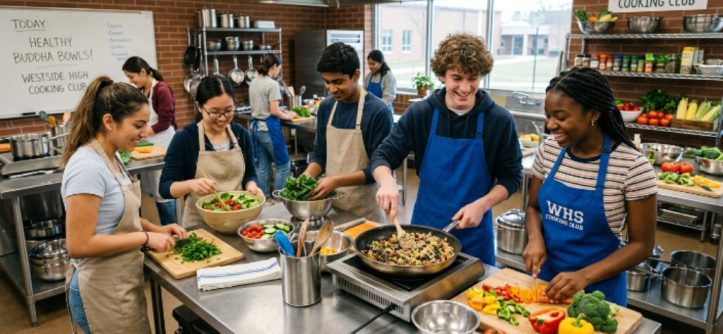
High school cooking clubs help students build confidence while creating memorable experiences with friends. These clubs encourage teamwork, creativity, and practical life skills through enjoyable kitchen activities. Recent education research shows many teenagers still need stronger nutrition knowledge, while hands on cooking improves confidence and everyday food preparation. Additionally, school culinary programs continue expanding because practical learning keeps students engaged.
A well planned cooking club transforms ordinary afternoons into exciting sessions that develop lasting skills and meaningful friendships.
Why High School Cooking Clubs Matter
Cooking clubs teach much more than preparing delicious meals. Students learn communication, planning, budgeting, and time management during every activity.
Furthermore, members become comfortable following recipes and solving unexpected kitchen challenges. These experiences strengthen confidence that extends beyond the classroom.
Many teenagers also discover new interests through cooking clubs. Some eventually pursue careers in hospitality, nutrition, baking, or food science.
Most importantly, cooking together creates an inclusive environment where students from different backgrounds naturally connect. Every recipe becomes an opportunity to build friendships.
How to Build an Engaging Cooking Club
A successful cooking club begins with simple organization and clear expectations. Students enjoy activities more when every meeting follows a consistent structure.
Assign rotating responsibilities to every participant. This approach keeps everyone involved throughout each session.
Consider dividing members into small teams for preparation, cooking, decorating, serving, and cleaning. Every student gains practical experience while sharing responsibilities.
Always begin meetings with a short safety reminder. Safe habits create confident cooks who enjoy learning new techniques.
Set Weekly Themes
Weekly themes keep meetings exciting and prevent repetitive activities. Members also look forward to discovering something different every session.
Examples include:
- Breakfast favorites
- International cuisine
- Healthy snacks
- Seasonal recipes
- Baking basics
- Comfort foods
- Street food classics
- Holiday treats
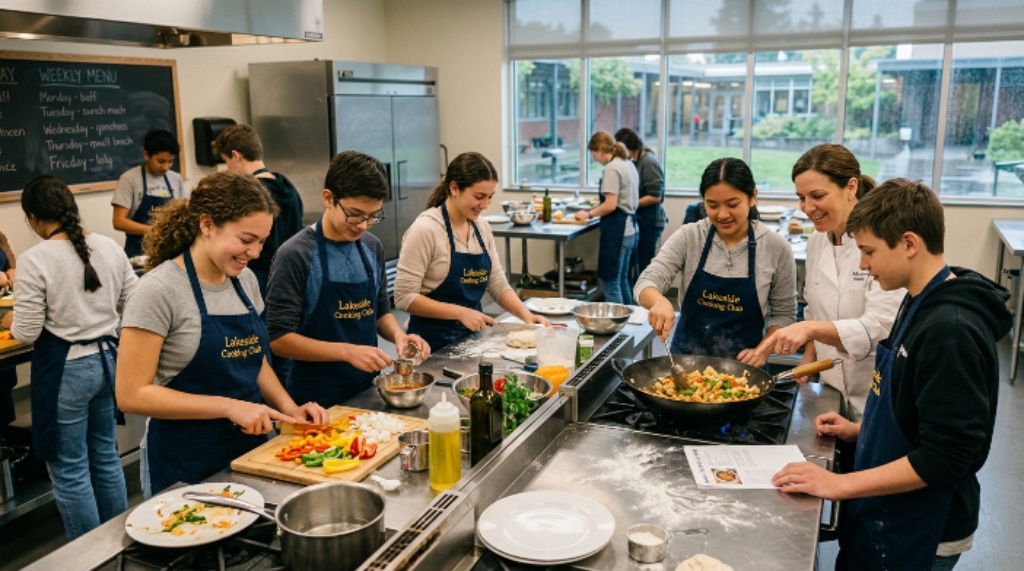
Fun Cooking Club Ideas for High School Students
Creative activities encourage participation while developing valuable cooking abilities. Variety keeps members motivated throughout the school year.
Mystery Ingredient Challenge
Provide every team with one surprise ingredient before cooking begins. Students must create a unique dish featuring that ingredient.
This activity improves creativity and problem solving. Every group produces completely different results using identical ingredients.
Build Your Own Pizza Night
Allow students to prepare personal pizzas using different sauces, vegetables, cheeses, and proteins. Everyone enjoys experimenting with unique flavor combinations.
After baking, members can vote for the most creative pizza. Friendly competition increases excitement without adding pressure.
Around The World Cooking Series
Choose one country during each meeting. Students prepare traditional recipes while learning about local culture and food traditions.
Possible destinations include:
- Italy
- Mexico
- Japan
- India
- Greece
- Thailand
- France
- South Korea
Breakfast For Dinner
Breakfast recipes remain affordable, simple, and enjoyable for beginners. Pancakes, waffles, scrambled eggs, breakfast burritos, and smoothies offer excellent practice.
Students also learn proper timing because several foods cook simultaneously. Coordination becomes an important lesson.
Cupcake Decorating Contest
Prepare plain cupcakes before the meeting begins. Students decorate them using colorful frosting, fruit, chocolate, and edible toppings.
Creativity matters more than perfection during this activity. Every participant leaves with attractive desserts and improved decorating skills.
Healthy Meal Makeover
Challenge students to recreate popular comfort foods using healthier ingredients. Small substitutions often produce impressive results.
Members discover nutritious recipes without sacrificing flavor. This lesson encourages healthier eating habits outside school.
One Pot Recipe Competition
One pot meals simplify cooking while reducing cleanup time. Students appreciate recipes that require fewer dishes and less preparation.
Popular ideas include pasta, soup, chili, curry, and rice bowls. These meals also fit limited club budgets.
Homemade Pasta Workshop
Students prepare pasta dough from scratch before shaping different styles. Rolling, cutting, and cooking fresh pasta creates an unforgettable experience.
Finally, each team prepares its favorite homemade sauce. Members compare textures, flavors, and presentation.
Cookie Exchange Event
Every student prepares one cookie recipe before the meeting. Everyone shares samples while discussing baking techniques and ingredient choices.
Participants leave with a variety of cookies instead of only one recipe. This activity encourages sharing and collaboration.
Smoothie Lab
Students experiment with fruit, vegetables, yogurt, seeds, and natural sweeteners. They learn how different ingredients affect taste and texture.
Each group creates a signature smoothie with a memorable name. Fun presentations make the tasting session even better.
Seasonal Cooking Club Activities
Seasonal themes keep meetings fresh throughout the year. Students enjoy recipes connected with changing weather and celebrations.
Autumn Favorites
Autumn offers comforting flavors and colorful ingredients. Students can prepare warm dishes using seasonal produce.
Ideas include:
- Pumpkin muffins
- Apple crisp
- Roasted vegetables
- Homemade soup
- Cinnamon rolls
Winter Celebrations
Cold weather inspires cozy recipes that everyone enjoys sharing. Baking projects become especially popular during winter months.
Great choices include:
- Gingerbread cookies
- Hot chocolate station
- Homemade bread
- Holiday desserts
- Festive cupcakes
Spring Freshness
Spring introduces bright colors and lighter meals. Fresh produce becomes the highlight of every recipe.
Popular recipes include:
- Fruit salads
- Vegetable wraps
- Lemon desserts
- Pasta salads
- Herb butter
Summer Inspired Foods
Summer recipes focus on refreshing flavors and simple preparation. Many options require very little cooking time.
Students enjoy preparing:
- Frozen yogurt treats
- Fresh salsa
- Fruit skewers
- Grilled vegetables
- Tropical smoothies
Cooking Games Everyone Will Enjoy
Games increase energy during club meetings while reinforcing important culinary skills. Students remain actively involved from beginning to end.
Blind Taste Test
Participants identify ingredients while wearing blindfolds. This activity strengthens taste recognition and encourages curiosity.
Unexpected flavors often create entertaining conversations. Every round becomes memorable.
Recipe Relay
Teams complete recipes by rotating responsibilities every few minutes. Members quickly adapt to different tasks during preparation.
This game teaches teamwork under gentle time pressure. Students also appreciate every teammate’s contribution.
Kitchen Equipment Quiz
Display different kitchen tools without labels. Students identify each item before explaining its purpose.
This activity builds confidence with unfamiliar equipment. Beginners especially benefit from hands on demonstrations.
Speed Plating Challenge
Teams receive identical dishes and limited presentation time. They focus entirely on attractive food arrangement.
Presentation skills become increasingly important with practice. Creative plating often impresses judges.
Budget Friendly Cooking Club Ideas
Affordable activities allow schools to organize regular meetings without excessive costs. Smart planning stretches every budget.
Purchase seasonal produce whenever possible. Fresh ingredients usually cost less during peak harvest periods.
Buy pantry staples in bulk for greater savings. Flour, rice, pasta, and beans support countless recipes.
Encourage simple recipes using common household ingredients. Excellent meals rarely require expensive products.
Partner with local grocery stores or community organizations when appropriate. Some businesses support educational cooking activities through donations.
Essential Skills Students Learn
Cooking clubs naturally develop practical abilities beyond recipe preparation. These skills benefit students throughout adulthood.
Important lessons include:
- Knife safety
- Food hygiene
- Measuring ingredients
- Reading recipes
- Time management
- Teamwork
- Problem solving
- Budget planning
- Food presentation
- Kitchen organization
Every meeting strengthens these abilities through enjoyable practice. Students gradually become more independent in the kitchen.
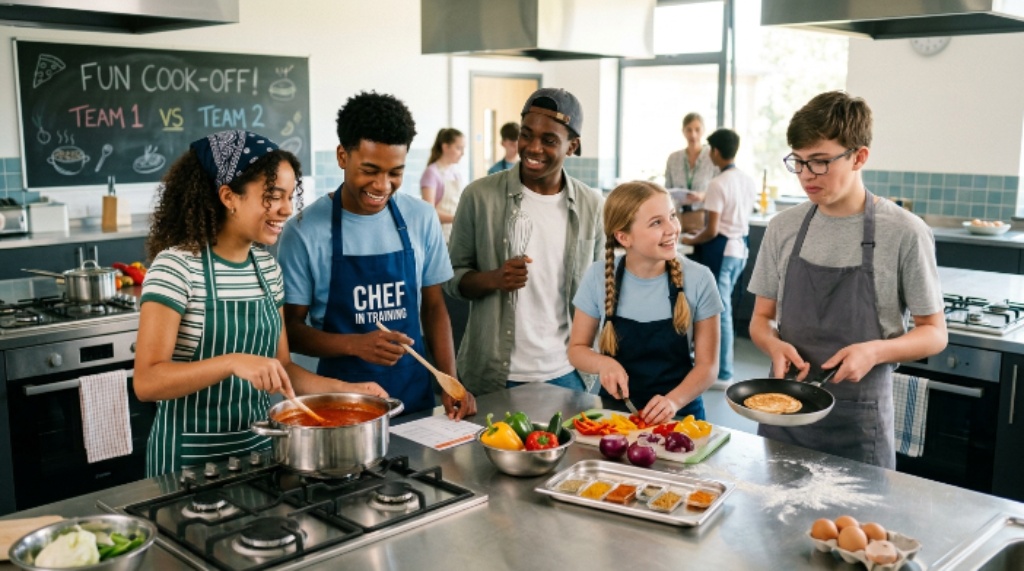
Tips For Running Successful Club Meetings
Preparation keeps every meeting organized and enjoyable. Planning also reduces unnecessary stress for student leaders.
Prepare ingredient stations before members arrive. Organized workspaces improve efficiency throughout each activity.
Demonstrate unfamiliar techniques before students begin cooking. Visual examples reduce mistakes and increase confidence.
Encourage positive feedback after every tasting session. Respectful discussions help everyone improve.
Keep recipes appropriate for available equipment and meeting length. Realistic planning prevents unfinished dishes.
Finish every meeting with shared cleanup responsibilities. Students learn that cleaning remains part of successful cooking.
Make Every Meeting Memorable
Special events create excitement throughout the school year. Members eagerly anticipate unique experiences beyond regular meetings.
Invite local chefs for demonstrations whenever possible. Professional advice inspires students and introduces new techniques.
Organize friendly cooking competitions between teams. Small prizes increase motivation without creating excessive pressure.
Host family tasting nights where parents enjoy student creations. Celebrating achievements strengthens community support for the club.
Create a club cookbook featuring favorite recipes from every member. Students treasure this collection long after graduation.
Conclusion
A creative cooking club gives high school students far more than enjoyable recipes. Every activity builds confidence, teamwork, creativity, and practical life skills through meaningful experiences. With themed meetings, friendly competitions, seasonal recipes, and collaborative challenges, your club can remain exciting throughout the entire school year. Start with simple ideas, encourage every member to participate, and celebrate each success together. Begin planning your next cooking club meeting today and turn ordinary afternoons into unforgettable culinary adventures.
FAQs
What is the best cooking activity for beginners?
Simple recipes like tacos, pizzas, sandwiches, and smoothies help beginners build confidence quickly.
How often should a high school cooking club meet?
Meeting once each week provides enough practice while fitting most school schedules.
How many students should join each cooking team?
Groups of three or four students encourage teamwork without creating overcrowded workstations.
How can a cooking club stay within budget?
Use seasonal ingredients, buy pantry items in bulk, and select recipes with affordable ingredients.
What skills do students gain from cooking clubs?
Students develop cooking techniques, teamwork, organization, communication, budgeting, and food safety skills.




Leave a Reply