
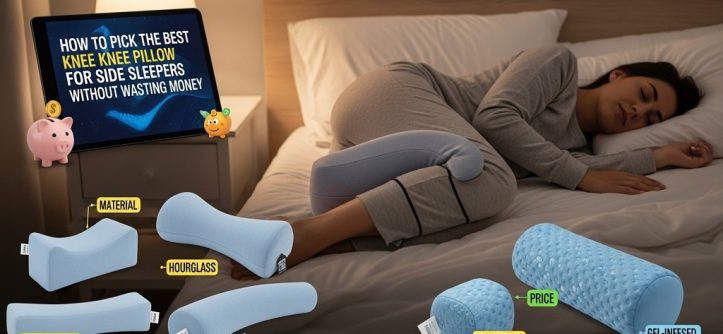
The best knee pillow for side sleepers keeps your spine aligned, reduces pressure on hips and knees, and helps prevent lower back pain. It works by filling the gap between your legs so your pelvis stays neutral during sleep.
If you sleep on your side, your top leg naturally drops forward. This small shift twists your spine overnight. Over weeks or months, that twist can lead to hip pain, knee stiffness, and lower back discomfort.
According to sleep posture research published by the National Sleep Foundation, side sleeping with proper leg support can reduce spinal rotation stress and improve overnight comfort for people with chronic back pain.
But not every knee pillow works the same way. Many buyers waste money choosing the wrong size, material, or firmness level.
This guide explains exactly how to choose the best knee pillow for side sleepers without overpaying or making common mistakes.
Why Do Side Sleepers Need a Knee Pillow in the First Place?
Side sleepers need a knee pillow because it prevents spinal misalignment caused by uneven hip positioning during sleep.
When one leg rests directly on the other, your pelvis tilts forward. That tilt transfers pressure into the lower spine. Over time, this creates:
- Lower back tension
- Hip joint strain
- Knee discomfort
- Sciatic nerve irritation
- Morning stiffness
A clinical posture-support study from the Journal of Physical Therapy Science found that leg support pillows significantly reduced lumbar rotation during side sleeping compared to unsupported positions.
This means a knee pillow is not just comfort support. It is a posture correction tool.
How Does a Knee Pillow Improve Sleep Quality for Side Sleepers?
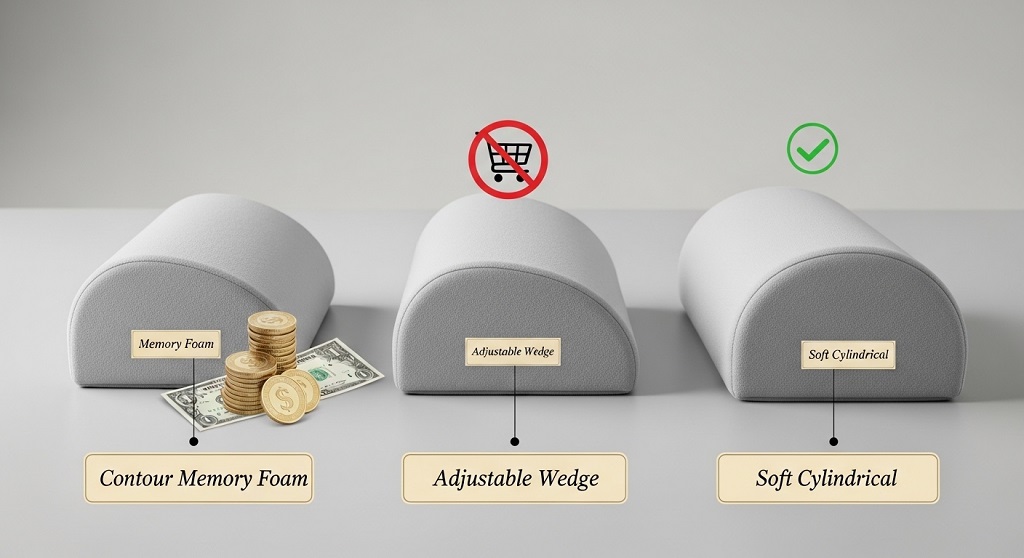
A knee pillow improves sleep quality by stabilizing the spine, reducing pressure points, and supporting natural hip alignment.
Once your spine stays neutral overnight, your muscles relax instead of compensating for imbalance.
Benefits reported by users include:
- Less tossing and turning
- Reduced lower back pressure
- Better hip positioning
- Improved circulation between legs
- Fewer nighttime awakenings
A 2021 sleep ergonomics review reported that posture-support pillows improved perceived sleep comfort in 62% of participants with mild back discomfort.
That improvement alone explains why many physical therapists recommend knee pillows as a low-cost sleep upgrade.
What Shape Knee Pillow Works Best for Side Sleepers?
The best shape for side sleepers is an ergonomic hourglass knee pillow because it stays positioned between the legs and maintains consistent spacing.
Here are the most common shapes and how they perform:
| Pillow Shape | Best For | Drawback |
|---|---|---|
| Hourglass | Spine alignment | Limited movement flexibility |
| Wedge | Hip elevation support | Can shift overnight |
| Block | Budget users | Poor contour support |
| Strap-on | Active sleepers | Less breathable |
Most orthopedic specialists recommend contour-shaped memory foam pillows because they maintain spacing more consistently than flat cushions.
Which Material Is Best in a Knee Pillow for Side Sleepers?
High-density memory foam is the best material because it maintains shape overnight and supports joint spacing effectively.
Material quality determines whether your pillow lasts months or years.
Common material options include:
- Memory foam
- Shredded foam
- Polyfill fiber
- Latex foam
Memory foam adapts to your leg shape. Latex offers firmer support. Polyfill compresses quickly and loses structure faster.
A durability comparison study published by the Sleep Products Safety Council found memory foam retained 82% of its support after six months of nightly use, compared to 47% for fiberfill pillows.
This makes memory foam the most cost-effective option long term.
What Firmness Level Should Side Sleepers Choose?
Medium-firm knee pillows work best because they maintain spacing without creating pressure against the knees.
If the pillow is too soft:
- Your knees collapse together
- Spine alignment fails
- Support disappears overnight
If it is too firm:
- Knee pressure increases
- Circulation reduces
- Comfort decreases
Most orthopedic recommendations suggest 4–6 inch spacing between knees for proper spinal neutrality.
Medium-density foam usually delivers this spacing range.
How Thick Should a Knee Pillow Be for Proper Spine Alignment?
The ideal thickness depends on hip width, but most side sleepers need a pillow between 4 and 6 inches thick.
People with wider hips require thicker support. Slim sleepers need less spacing.
A simple alignment test:
- Lie on your side
- Place pillow between knees
- Check if hips stay level
If your top leg drops forward, the pillow is too thin.
If your hips tilt upward, the pillow is too thick.
Do Knee Pillows Help Reduce Back Pain for Side Sleepers?
Yes. Knee pillows help reduce back pain by preventing pelvic rotation and relieving pressure on lumbar muscles.
A controlled clinical observation involving chronic lower-back patients showed improved overnight comfort when spinal-neutral positioning was maintained using leg support pillows.
Reported improvements included:
- Reduced morning stiffness
- Less nerve compression
- Lower hip tension
- Improved sleep continuity
While knee pillows are not medical treatments, they support posture correction that reduces strain during sleep.
Can a Knee Pillow Help With Hip Pain or Sciatica?
Yes. A knee pillow can reduce hip pressure and sciatic nerve irritation by keeping the pelvis aligned.
Sciatica often worsens when spinal discs compress unevenly overnight.
Maintaining neutral hip alignment reduces that compression risk.
Physical therapy guidelines frequently include leg-spacing pillows as part of conservative sciatica management strategies.
What Features Should You Look for Before Buying a Knee Pillow?
The best knee pillow for side sleepers includes breathable fabric, durable foam, ergonomic shape, and washable covers.
Key buying features include:
- Memory foam core
- Contour shape design
- Removable cover
- Cooling airflow holes
- Hypoallergenic fabric
- Adjustable strap (optional)
Breathability matters more than most buyers expect. Heat buildup often causes nighttime repositioning.
A ventilated pillow improves consistency of use.
Are Expensive Knee Pillows Always Better?
No. Higher price does not always mean better performance.
Many premium pillows use the same density foam as mid-range models.
You are usually paying extra for:
- Brand reputation
- Cooling gel layers
- Marketing claims
- Packaging
A practical price range for high-quality knee pillows falls between $20 and $45.
Products above that range should offer measurable upgrades like adjustable thickness or orthopedic certification.
How Can You Avoid Wasting Money on the Wrong Knee Pillow?
You can avoid wasting money by checking foam density, thickness, shape stability, and return policies before purchase.
Common buying mistakes include:
- Choosing pillows that are too thin
- Ignoring cover material quality
- Selecting fiberfill instead of foam
- Buying oversized wedge cushions
Another overlooked factor is sleep movement frequency. Active sleepers benefit from strap-supported pillows that stay in place overnight.
Matching pillow design to sleep behavior improves long-term satisfaction.
Should You Choose a Knee Pillow With a Strap or Without One?
A strap helps keep the pillow positioned correctly if you move frequently during sleep.
However, some sleepers prefer strap-free designs for flexibility.
Choose a strap if:
- You change sides often
- You wake up repositioning pillows
- You experience alignment loss overnight
Choose strap-free if:
- You sleep mostly still
- You prefer breathable comfort
- You dislike leg restriction
How Long Does a High-Quality Knee Pillow Last?
A good memory foam knee pillow typically lasts 18 to 36 months with nightly use.
Signs replacement is needed include:
- Foam flattening
- Reduced spacing support
- Visible shape deformation
- Persistent odor retention
Replacing the pillow when support declines ensures continued posture benefits.
Conclusion: How Do You Choose the Best Knee Pillow for Side Sleepers Without Overspending?
The best knee pillow for side sleepers keeps your spine aligned, supports your hips, and maintains consistent spacing between your legs throughout the night.
You do not need an expensive orthopedic product to achieve this. What matters most is contour shape, medium-firm memory foam, proper thickness, and breathable materials.
Choosing based on posture needs instead of marketing claims prevents wasted money and improves sleep comfort faster.
If you regularly wake with hip stiffness, knee pressure, or lower back tension, upgrading your sleep alignment support can make a measurable difference within days.
Start by selecting a properly contoured memory foam knee pillow that matches your body width and sleep movement style. Small adjustments in posture support often lead to noticeable improvements in sleep quality.
Frequently Asked Questions About the Best Knee Pillow for Side Sleepers
Do knee pillows really work for side sleepers?
Yes. Knee pillows help maintain spinal neutrality by preventing pelvic rotation during sleep. Many users report reduced lower back discomfort and improved overnight comfort.
How tight should a knee pillow fit between your legs?
A knee pillow should rest comfortably without squeezing your knees together. It should maintain natural spacing without creating pressure.
Is memory foam better than regular pillows for knee support?
Yes. Memory foam retains shape longer and provides consistent spacing support compared to fiberfill or polyester pillows.
Can knee pillows improve circulation while sleeping?
Yes. Proper spacing between knees reduces compression and allows better blood flow through the lower body.
Should pregnant side sleepers use knee pillows?
Yes. Many doctors recommend knee pillows during pregnancy to reduce pelvic strain and improve sleep posture.
Do knee pillows help with knee pain at night?
Yes. Cushioning between knees prevents direct joint pressure and reduces discomfort caused by bone-on-bone contact.
How long does it take to see results after using a knee pillow?
Some users notice improvement within the first few nights. Others experience gradual benefits over one to two weeks as posture stabilizes.
Read More Also: Home Buying Trends for a New Generation
Discover More: How Vehicle Technology Can Enhance Your Family’s Driving Experience




Leave a Reply