
Farmers want soil that works harder and costs less. Many of them also want a community that shares that goal. Every December, one event brings both together. This year, the gathering moves to Iowa, and it runs from December 1–4, 2026.
The 51st annual Acres U.S.A. Eco-Ag Conference draws growers, ranchers, consultants, and food-system leaders from across the country. They come to learn, trade ideas, and meet suppliers. Moreover, they leave with practical steps they can test at home.
This guide covers everything you need to plan your trip. You will find dates, tickets, workshops, speakers, exhibitors, and travel tips. Additionally, you will see how the event supports sustainable farming in real, measurable ways.
Event Overview and Key Dates
The event lasts four days. The first two days focus on deep, hands-on learning. The last two days offer the main conference and a large trade show. Therefore, you can pick a full week of study or a shorter visit.
Here is a quick look at the schedule.
| Date | What Happens | Notes |
| December 1, 2026 | Eco-Ag U workshops, then a reception | Workshops run 8:30 a.m. to 4:00 p.m. The reception runs 4:30 to 6:00 p.m. |
| December 2, 2026 | Eco-Ag U workshops and opening keynote | The keynote starts at 4:30 p.m. |
| December 3, 2026 | Main conference and trade show | Breakout sessions and exhibitor hall |
| December 4, 2026 | Main conference and trade show | Final sessions and networking |
Registration opens at 7:30 a.m. on workshop days. However, schedules can shift, so check the official website before you travel.
Where the Event Takes Place
The 2026 edition lands in Iowa City, Iowa. The host venue is the Hyatt Regency Coralville Hotel and Conference Center. Last year, the event took place in Wisconsin. This year, it moves to the heart of corn and soybean country.
That location matters. Iowa farmers manage some of the most productive land in the nation. Consequently, many local growers can attend without a long trip. Visitors from other states will also find the area easy to reach by car or by air through nearby airports.
The hotel and conference center sit under one roof. As a result, you can walk from your room to a session in minutes. That saves time and energy during long days.
Tickets and Registration
Ticket choices fit different goals and budgets. Some people want the main conference only. Others want the extra depth of the workshops. The table below shows how the main options compare.
| Ticket Type | What You Get |
| General conference | Entry to the main conference on December 3 and 4, plus the opening keynote on December 2 |
| One-day Eco-Ag U | One day of workshops, the December 1 reception, and the general conference |
| Two-day Eco-Ag U | Both days of workshops, the December 1 reception, and the general conference |
Some general tickets let you choose between December 3 and December 4. Check the registration page for the exact options. Prices change by date and category, so confirm current rates online.
Tips for a Smooth Registration
Plan early. Hotels near the venue fill up fast. In addition, group rates for lodging end on November 9, 2026. That date is close, so book soon if you want the discount.
Here are a few more helpful points:
- Decide whether you want workshops before you buy a ticket.
- Check whether your farm or team qualifies for a group rate.
- Register in advance to skip lines at the check-in desk.
- Save your confirmation email and bring a photo ID.
Exhibitors receive a badge for the main conference. However, that badge does not cover Eco-Ag U. Exhibitors who want workshop access can upgrade their badge.
Eco-Ag U Workshops: Learn Deeper
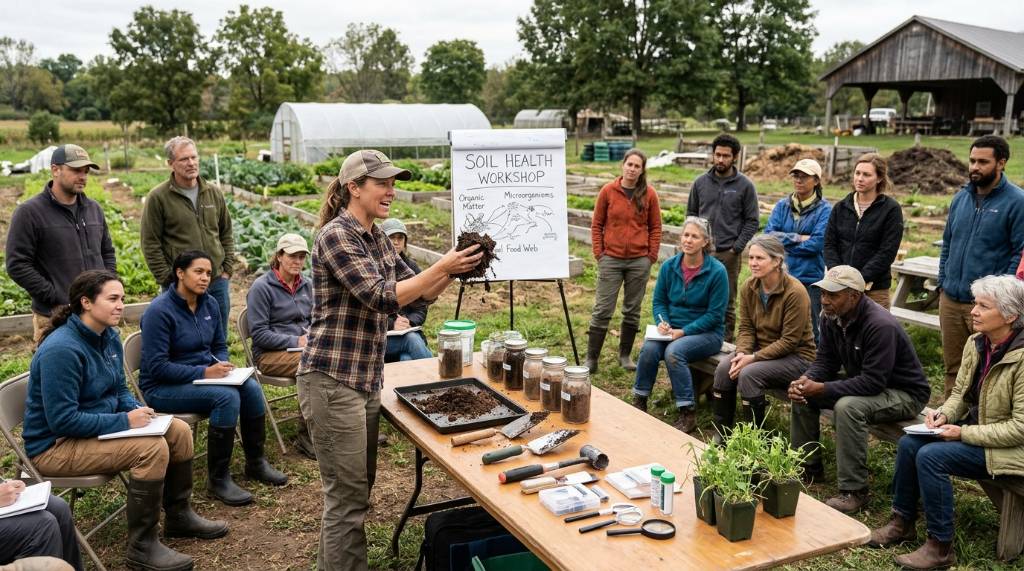
Eco-Ag U is the advanced learning track. It takes place on the first two days. Each workshop runs most of the day, from 8:30 a.m. to 4:00 p.m. Because of this length, instructors can go far beyond a typical talk.
Instructors usually come from farms, labs, and consulting firms. They share methods that work in the field. Furthermore, they answer detailed questions and walk through real examples.
Past workshop topics give a good idea of what to expect. They have covered soil testing, mineral balancing, farm profitability, and human health. Expect a similar mix of practical subjects in 2026, though the official lineup may differ.
Choosing Between One Day and Two Days
The one-day option suits people with limited time. You pick the workshop that fits your biggest need. The two-day option suits those who want a full course of study. You can build a stronger base of knowledge across both days.
However, workshops overlap with the early part of the schedule. If you attend on Wednesday, you may miss some early main-conference activity. Check the agenda so you know what you give up.
Each workshop ticket also includes the reception on December 1. This evening event gives you a relaxed way to meet instructors and fellow students. Additionally, it helps you make friends before the busy days begin.
Speakers and Keynotes
The opening keynote takes place on Wednesday, December 2, at 4:30 p.m. It sets the tone for the main conference. Speakers often share big-picture stories about soil, profit, and the future of farming.
The organizers had not posted a full 2026 speaker list at the time of writing. Therefore, watch the official site for updates. In previous years, the lineup has included well-known agronomists, ranchers, and researchers. For example, the 2025 program featured agronomist John Kempf, founder of Advancing Eco Agriculture.
You can expect speakers to cover themes such as these:
- Building living soil with less reliance on costly inputs
- Grazing systems that heal pasture and grow profit
- Crop health and plant nutrition
- Reducing herbicide use
- Animal health and nutrient-dense food
- Marketing and farm business planning
Also, the event honors one leader each year with the Eco-Ag Achievement Award. The award recognizes lifelong work in ecological and regenerative agriculture. The 2026 winner may appear on the program, so look for announcements closer to the date.
Breakout Sessions on December 3 and 4
The main conference features dozens of breakout sessions. Last year’s event offered more than 30. Each session lasts a set time, and several run at once. As a result, you must choose carefully.
Here is a simple way to plan your days:
- Download the schedule as soon as it goes live.
- Mark the sessions that match your top three goals.
- Pick one backup session for each time slot.
- Leave a gap for the trade show.
- Share the plan with your team so you can split up and cover more ground.
Sessions mix science with stories. Farmers talk about what worked and what failed. That honesty is a big reason people return year after year.
The Trade Show and Exhibitors
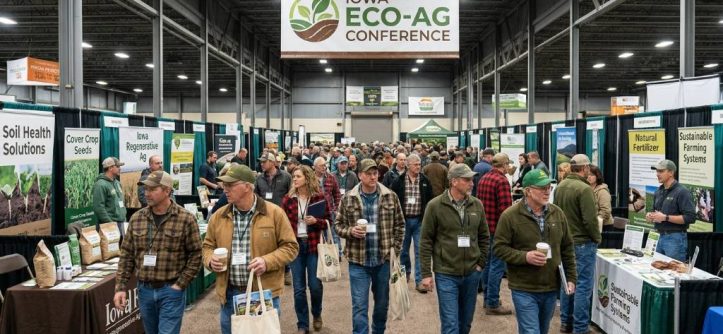
The trade show gives you a chance to meet suppliers face to face. Last year’s show featured more than 100 vendors, and the 2026 show should offer a similar mix. Exhibitors typically include seed companies, soil-testing labs, biological product makers, equipment sellers, and livestock suppliers.
Walking the floor saves time. You can compare products, ask questions, and test ideas in one place. Moreover, many exhibitors send agronomists who know the products well.
To get the most from the hall, try these steps:
- Make a short list of problems you want to solve.
- Bring questions about cost, application rates, and results.
- Collect business cards and take notes right away.
- Ask for farm references before you buy.
- Visit the hall twice, once early and once late.
Why Exhibit at the Show
Businesses that want to reach production-scale farmers find real value here. The audience arrives with a clear interest in regenerative methods. Therefore, conversations tend to be focused and useful. Exhibitors can apply through the official site. Meanwhile, early applicants often get better booth locations.
A reminder: exhibitor badges cover the main conference only. If your team wants to attend workshops, upgrade the badge.
Sustainable Farming: What You Can Learn
Sustainable farming means producing food while protecting the land for the next generation. It also means earning a fair living. The event treats both goals as equal. Consequently, sessions focus on profit as much as on soil.
Here are the main areas where attendees usually gain new skills.
| Topic | Why It Matters | Example Takeaway |
| Soil health | Healthy soil holds water and feeds crops | Use soil tests to guide mineral balance |
| Cover crops | They protect soil and add organic matter | Match species to your climate and goals |
| Managed grazing | It improves pasture and animal health | Rotate herds to rest the land |
| Input costs | Lower costs raise profit | Replace some inputs with biology |
| Water management | Better infiltration cuts runoff | Build organic matter to hold more rain |
| Direct marketing | Higher prices improve margins | Sell to local buyers and restaurants |
Notice that each topic links to both the environment and the bottom line. That connection explains why so many farmers trust the event. They see their peers cut costs and keep yields strong.
Who Should Attend
The event welcomes many kinds of people. Some attend with five acres. Others run thousands. In fact, organizers say the program fits farms of any size.
The event suits:
- Row-crop farmers who want to cut input costs
- Ranchers who want healthier pastures
- Market gardeners and orchard owners
- Crop consultants and agronomists
- Students and new farmers
- Food business owners who source from farms
If you are new to regenerative methods, start with the general conference. Then, add workshops in a later year. If you have years of experience, the Eco-Ag U track can sharpen your skills.
Travel and Lodging Tips for Iowa City
December in Iowa is cold. Therefore, pack warm layers, boots, and a heavy coat. Check the forecast a few days before you leave, and allow extra drive time if snow falls.
Here are some practical tips:
- Book your room early, and use the group rate before November 9, 2026.
- Stay at the host hotel for easy access to sessions.
- Carpool with neighbors to save fuel and share notes.
- Pack a notebook, a phone charger, and comfortable shoes.
- Bring business cards if you plan to sell products or services.
If you fly in, look at nearby airports and compare rental car prices. Meanwhile, ask the hotel about shuttle options.
How to Get the Most Value
Good preparation turns a conference into real change on your farm. First, set two or three clear goals. For example, you may want to lower fertilizer costs or improve pasture growth. Next, choose sessions that match those goals.
After each session, write down one action you can take within thirty days. Additionally, trade contact details with other farmers. Those friendships often last for years and give you a place to turn when problems arise.
Finally, plan a debrief when you return home. Gather your team and share what you learned. Then, pick one change to test this season. Small tests lower risk and build confidence.
Conclusion
The 51st annual Acres U.S.A. Eco-Ag Conference takes place December 1–4, 2026, at the Hyatt Regency Coralville in Iowa City. It blends two days of in-depth Eco-Ag U workshops with two days of breakout sessions and a busy trade show. An opening keynote on December 2 starts the main program.
Tickets come in three main types: general conference, one-day Eco-Ag U, and two-day Eco-Ag U. Lodging group rates end November 9, 2026, so plan soon. Although the full speaker list may still be growing, past events show a strong mix of science, farm stories, and practical tools.
In short, the event helps you build healthier soil, cut costs, and meet people who share your goals. Check the official website for current prices, the final agenda, and speaker news. Then, mark your calendar and start planning your trip.
Frequently Asked Questions
1. When is the 51st annual Eco-Ag event?
It runs from December 1 to 4, 2026.
2. Where does it take place?
The host venue is the Hyatt Regency Coralville Hotel and Conference Center in Iowa City, Iowa.
3. How much do tickets cost?
Prices vary by ticket type and purchase date. Visit the official registration page for current rates.
4. What does a general ticket include?
It includes entry to the main conference on December 3 and 4, plus the opening keynote on December 2.
5. What is Eco-Ag U?
Eco-Ag U is a set of full-day workshops on December 1 and 2. They go deeper into topics such as soil and farm profit.
6. Can I register on-site?
On-site registration may be possible for some options, but the organizers advise early sign-up. Confirm details on the official site.
7. Who speaks at the event?
The 2026 list was still developing at the time of writing. Past years included leading agronomists, ranchers, and researchers.
8. Do exhibitors need a separate ticket for workshops?
Yes. An exhibitor badge covers the main conference only, but exhibitors can upgrade it to include a workshop.
9. When do group hotel rates end?
Group rates end on November 9, 2026.
10. Is the event good for small farms?
Yes. The program serves farmers of every size, from a few acres to thousands.




Leave a Reply