
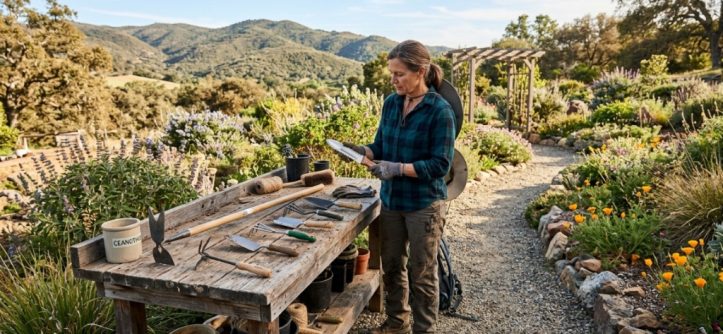
You know the frustration: you spend a gorgeous Saturday morning in your California garden, only to wage war against stubborn bindweed, dandelions, and oxalis that seem to laugh at your flimsy trowel. Your back aches from bending over, and the weeds just keep coming. The solution isn’t a stronger herbicide—it’s the right tool. A quality weeding knife can turn a dreaded chore into a satisfying five-minute task. But with so many blade shapes, handle materials, and price points on the market, how do you choose the perfect one for your specific soil and gardening style? This guide will walk you through everything you need to know to compare weeding knives california gardeners actually rely on, ensuring your next purchase is your last.
What Makes a Weeding Knife Ideal for California Soil Conditions?
The ideal weeding knife for California handles both the rock-hard, dry adobe clay of summer and the damp, sandy loam of coastal areas. You need a blade that can pry, cut, and slice without bending, paired with a handle that provides a firm grip even when your hands are dusty. A one-size-fits-all approach simply doesn’t work in our microclimates.
Understanding Different Soil Types: Clay, Sand, and Loam
California is a state of geological extremes. In the Central Valley, you’re likely dealing with dense, cracked clay that turns to concrete in July. A thin, flexible blade will snap here. You need a thick, sturdy blade like a Japanese Hori Hori with a sharp edge for chopping through roots. Conversely, if you’re gardening in coastal regions with sandy soil, a lighter, sharper blade is easier to maneuver and requires less force.
The Role of Blade Thickness and Steel Hardness
Look for blades made from high-carbon steel (like SK5 or 1050) that hold an edge longer than stainless steel. Thickness matters too. A blade that is 2.0mm to 2.5mm thick is ideal for prying in rocky soil. Harder steel (Rockwell rating of 50-55 HRC) will resist bending but can be brittle if you hit a rock. A slightly softer steel is easier to sharpen in the field, which is often the better trade-off for “scrub” gardening.
Why Handle Length and Angle Affect Your Posture
Standard weeding knives are about 8-10 inches long, forcing you to kneel or crouch. However, newer ergonomic models feature an angled head that allows you to stand upright while working. For large yards in the Bay Area or Sacramento, consider a handle extender or a stand-up weeder to save your lower back. The angle of the blade (usually 15-30 degrees) reduces wrist strain significantly.
How Do You Judge Blade Sharpness and Durability?
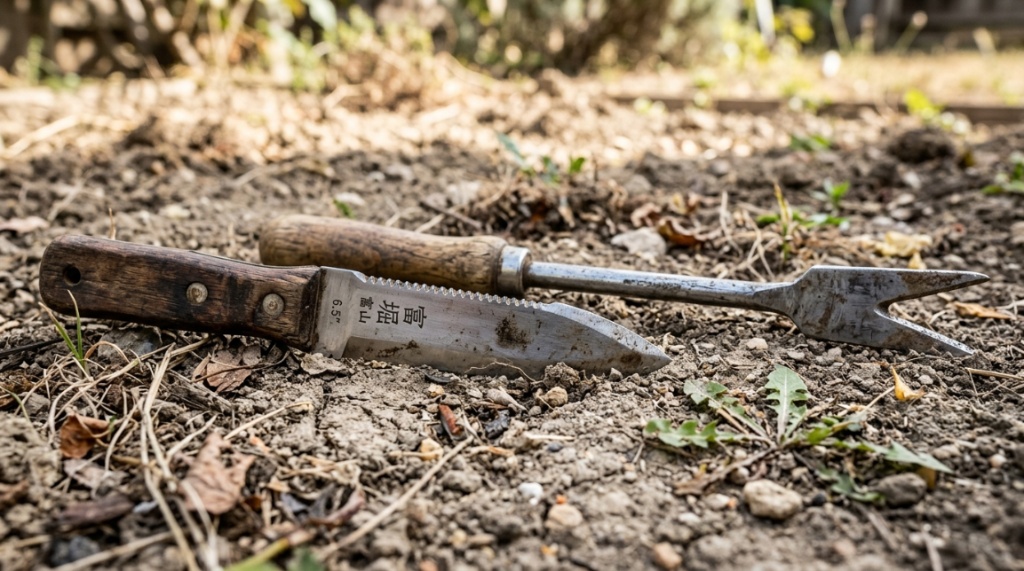
You judge a weeding knife’s sharpness by how easily it slices through a weed root without tearing, and you judge durability by how well the edge holds up against sandy soil. A mediocre knife will feel dull after one session; a great knife will last for years with minimal maintenance.
Straight Edge vs. Serrated Edge: Which is Better?
This is a critical comparison point. A straight edge is perfect for clean cuts, slicing through taproots, and precision work around desirable plants. A serrated edge, often found on the opposite side of a Hori Hori, is a beast for sawing through tough, woody stems and thick roots that would dull a straight blade instantly. For California vineyards and older landscapes with established shrubs, a serrated edge is non-negotiable. As you maintain your yard’s health and clear out invasive roots, incorporating eco-friendly layouts can also minimize long-term maintenance; learn more about Sustainable Landscape Design Trends for Residential Spaces to upgrade your outdoor layout.
How to Test Edge Retention Before Buying
You can’t test it in the store, but you can look for reviews that mention “edge retention” specifically. Look for blades that are forged rather than stamped. Forged blades have a denser grain structure. Also, check if the blade is coated (like a anti-rust black oxide or titanium coating). This not only protects against rust from our irrigation water but also reduces friction, making cutting easier.
Maintenance Tips for Long-Lasting Sharpness
Don’t put your knife in the dishwasher. After each use, wipe it down with a dry cloth. Use a diamond file or whetstone to maintain the edge—about 10 strokes per session is enough. Once a month, apply a thin layer of camellia oil or mineral oil to prevent rust, especially if you garden near the coast where salt air accelerates corrosion.
Which Handle Material Offers the Best Grip and Comfort?
The handle material determines your comfort and safety during prolonged use. In California’s heat, you need a handle that doesn’t slip when your hands sweat and doesn’t blister. Wood looks beautiful, but synthetic materials often outperform it for ergonomics.
Wooden Handles: Classic Feel vs. Maintenance
Ash or hardwood handles offer a warm, traditional grip and excellent shock absorption. However, they require seasonal oiling to prevent drying and cracking. If you leave a wood-handled tool in the sun, it will shrink and loosen. They are lovely for light duty, but if you are a heavy user, the maintenance might annoy you.
Rubberized and Ergonomic Synthetic Handles
Modern composite handles (like TPR or fiberglass-reinforced nylon) are virtually indestructible. They offer a non-slip grip even when wet. Look for handles with a pronounced “pistol grip” or finger grooves. This reduces fatigue. Many new models have a handguard at the base of the blade to prevent your hand from sliding onto the sharp edge when you hit a root.
The Weight Factor: Heavy Duty vs. Lightweight
A heavier tool (over 1.5 lbs) does the work for you, driving the blade into hard soil with momentum. However, it is tiring to carry. A lightweight tool (under 1 lb) is easier to maneuver but requires more physical strength to penetrate clay. For most home gardeners, a weight of 13-16 ounces is the sweet spot for balance.
Why is a Depth Gauge or Notched Blade Useful?
A depth gauge or a notched blade is useful for consistency, allowing you to plant bulbs or remove weeds at the exact same depth every time. This isn’t just a gimmick—it helps you get the entire root out, preventing regrowth.
Using the Notch for Removing Taproots
Dandelions and dock weeds have deep taproots. If you break the top off, they grow back angrier. A knife with a “weed notch” or a V-shaped cutout on the blade hooks the root, allowing you to roll the knife and pull the entire root out of the ground without snapping it. This is a game-changer for organic gardeners.
Measuring Bulb Planting Depth
Many Hori Hori knives have inch markers etched into the blade. This simplifies planting bulbs (like tulips or daffodils) to the required 6-inch depth or spacing. This eliminates the need to carry a ruler into the garden.
Why a Pointed vs. Rounded Tip Matters
A sharp pointed tip is essential for starting holes in tough soil and for slicing through plastic mulch. A rounded tip is safer for digging near underground cables or sprinkler lines. In California, where irrigation lines are often shallow, I recommend a pointed tip but using caution, or a rounded “dibble” tip for safety.
How Does Price Correlate with Performance and Longevity?
Price often correlates with the quality of steel and the construction method, but you don’t need to spend $80 to get a decent tool. Generally, knives in the $25–$45 range offer the best value for California gardeners, balancing durability with cost. Ultra-cheap knives ($10) will bend; ultra-expensive ones ($100+) are often made from “super steels” that are hard to sharpen at home.
Budget Options vs. Professional-Grade Tools
Budget knives are fine for apartment dwellers with a few pots. However, if you have a 50-foot plot, you need a professional-grade tool. Look for a full-tang design (where the metal runs through the entire handle). This prevents the blade from separating from the handle—the #1 failure point in cheap tools.
Are Expensive Japanese Steel Knives Worth It?
Japanese Steel (Ao-ko or Shiro-ko) is incredibly hard and holds a razor edge for a long time. They are worth it if you are a serious gardener. However, they are also more likely to chip if you hit a rock. For rocky foothill gardens, a slightly softer stainless steel is actually more forgiving.
Warranty and Guarantee Considerations
Check the warranty. Brands like Sneeboer offer a 10-year guarantee, while others offer a lifetime warranty against breakage. This is a sign of confidence in their manufacturing. A tool that lasts 10 years is cheaper in the long run than replacing a $15 tool every year.
What Safety Features Should You Look For?
Safety is often overlooked, but a weeding knife is essentially a sharp dagger. Look for safety features that protect both the user and the plants. A simple leather sheath is essential, but ergonomic considerations matter just as much.
The Importance of a Handguard
Never buy a knife without a handguard (a flared piece of metal or rubber where the blade meets the handle). When you are pulling up a tough root, your hand can slip forward. A handguard prevents a serious laceration. This is non-negotiable.
Safe Storage Solutions and Sheaths
Look for a knife that comes with a sturdy belt sheath. The sheath should have a drainage hole at the bottom so water doesn’t pool inside and rust your blade. A vertical carry sheath is safer than a horizontal one, as it doesn’t catch on fences.
Techniques to Avoid Injury in Hard Soil
Never use your knee as a leverage point. Always cut away from your body. Use a “rocking” motion rather than pure pushing force. If the ground is extremely hard, water it an hour before weeding to soften the soil; this reduces the force needed by 50% and prevents accidents.
When Should You Replace Your Weeding Knife?
You should replace your weeding knife when the blade has worn down so much that it no longer penetrates the soil easily, or when the handle becomes loose despite tightening. A worn-out tool wastes energy and time.
Signs of Irreparable Wear and Tear
If you have sharpened the blade so much that the bevel looks rounded or concave, it’s time for a new one. If the steel has developed hairline cracks or deep rust pits, the structural integrity is compromised. If the handle has split, replacement is safer than repair.
Upgrading Your Tool as Your Garden Grows
When you first start, a simple Japanese farmer’s knife might suffice. As you expand your garden—or as your knees get older—you will want to upgrade to an ergonomic, stand-up model. Don’t view this as a failure of your old tool, but a step up in your gardening journey.
Eco-Friendly Disposal of Old Tools
Don’t throw steel tools in the trash. If the steel is still intact, take it to a metal recycling center. Wooden handles can be composted or used as kindling. Some manufacturers have a take-back program. Recycling reduces landfill waste and gives the steel new life.
How to Match the Tool to the Weed Type?
Match the tool to the weed. Different weeds have different root systems, and using the right technique makes the job easier. There is no single “best” position for all weeds, but there are specific uses for your knife that target the most common California pests.
Combatting Nutgrass and Oxalis
Nutgrass has brittle roots and nutlets that break off easily. You must dig deeper with a scooping motion. Oxalis has shallow roots but many of them. Use a sharp scraping motion just under the surface. A knife with a curve is best for scooping out these pests without breaking them.
Slicing Through Annual Grasses
Annual grasses (like crabgrass) have fibrous roots. You don’t need to dig them out one by one; instead, run your knife horizontally just below the soil surface (about 1 inch deep) and slice through the roots. This is faster than pulling and less disruptive to the soil structure.
Removing Broadleaf Weeds from Cracks in Pavers
For weeds growing in concrete cracks, use the pointed tip of your knife to scrape the crown out of the crevice. You don’t use the blade like a shovel here, but like a scraper. This is where a knife with a sharp tip and a straight edge excels.
Does Brand Reputation Matter for Tools Used in California?
Yes, brand reputation provides a baseline for quality, but California-specific reviews are more valuable. A brand that is popular in the UK might not stand up to our dry, abrasive soil. Look for brands with a strong local presence in Western states.
Reviewing Popular Brands: Hori Hori vs. Traditional
Hori Hori is a style, not a brand, and it’s the most popular for California. Brands like Barebones and Nisaku are well-regarded for their quality. Traditional Western brands like Corona (made in California) offer excellent value for money and are designed for the local hard soil.
Why User Reviews from local Nurseries Matter
Local nurseries often test tools in the same soil as you. A review from a gardener in Arizona is less useful than one from a gardener in San Diego. Pay attention to reviews that mention “clay” or “adobe” specifically. These are the stress tests that matter.
Direct-to-Consumer vs. Hardware Store Brands
Direct-to-consumer brands (like Leicht or Zyliss) often offer better specs for the price because they cut out the middleman. However, hardware store brands (like Fiskars) are instantly replaceable and often more accessible. Consider whether you want a heirloom tool or a reliable workhorse that’s easy to replace.
Can You Use a Weeding Knife for Other Garden Tasks?
Absolutely. A high-quality weeding knife is the multi-tool of the garden. It replaces a trowel, a weeder, a edger, and sometimes even a small saw. This versatility justifies the cost.
Transplanting Seedlings and Dividing Bulbs
The sharp edge and pointed tip are perfect for prying out seedlings from a flat and creating a pilot hole in the soil for transplants. You can also use it to chop division into bulbs or rhizomes (like agapanthus) without needing a separate pruning saw.
Cutting Sod and Edging Beds
For small edging jobs, you can use the straight edge to cut a clean line along the border. For removing small patches of sod, use the knife to cut sections and then pry them up. It is a lighter alternative to a half-moon edger.
Opening Bags and Harvesting Root Vegetables
Use the serrated edge to slice open soil bags or feed sacks. Use the blade to gently lift carrots, beets, or potatoes from the ground without stabbing them. A knife is often easier to control than a fork for this task.
Frequently Asked Questions
How often should I sharpen my weeding knife?
You should sharpen your knife every 2-3 weeks if used regularly, or whenever you notice it requires extra force to cut. A quick pass with a honing rod every time you use it helps maintain the edge.
Is a weeding knife better than a trowel?
Yes, for removing tap-rooted weeds, a knife is superior because it cuts below the surface and leverages the root out. A trowel is better for transplanting larger plants. The knife is more specialized for precision weeding.
Can I leave my weeding knife outside in California?
No. The fluctuating temperatures and moisture levels, especially morning dew, will cause rust. Always clean and store your knife in a dry place. Leaving carbon steel outside will ruin it quickly.
What is the difference between a Hori Hori and a Japanese Farmer’s Knife?
There is no difference; they are the same tool. “Hori Hori” is simply the Japanese onomatopoeia for “digging.” It always has a concave, spade-like blade with a sharp edge, and often a serrated edge.
Do I need a serrated edge if I only have flower beds?
Not strictly, but a serrated edge is useful for cutting through thick mulch fabric or chopping up sod. If you have grassy weeds or bindweed, a serrated edge makes severing the vines much faster.
How long should a good weeding knife last?
A high-quality knife with proper maintenance can last 10-20 years. The handle may wear out, but the steel should last a lifetime if it isn’t chipped or abused on rocks. Look for replaceable handle systems.
Which is safer for a senior gardener: long or short handle?
Longer handles (18 inches or more) are safer for seniors, as they eliminate the need to bend down, reducing fall risk and back strain. They offer more leverage but less control, so they are safer for posture but require more strength to operate.
Conclusion
Choosing the right weeding knife for your California garden is about matching the tool to your soil and physical needs. We’ve covered the critical comparisons, from blade steel and edge types to handle ergonomics and price points. The right choice will not only make weeding less of a chore but also more effective, protecting your back and your plants. Don’t settle for a tool that you’ll need to replace next spring. Focus on the quality of the steel and the comfort of the grip. Now that you know exactly what to look for, it’s time to invest in your gardening happiness. Head to your local nursery or a trusted online retailer, put this knowledge to work, and enjoy a weed-free garden this year.



Leave a Reply