
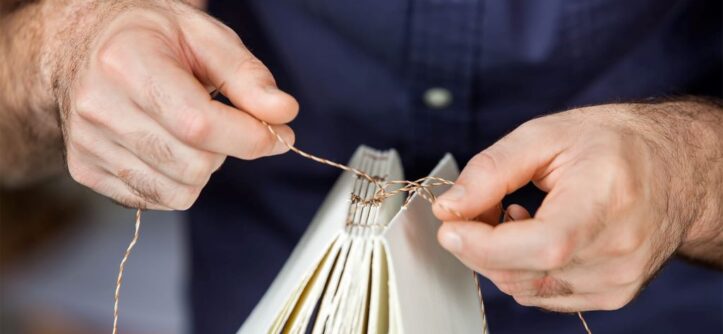
Bookbinding is a timeless craft that blends creativity with precision. Whether you’re an artist, student, or hobbyist, learning how to bind your own books can be deeply satisfying. As digital content grows, there’s something uniquely personal about holding a handmade book. Learning how to learn basic bookbinding is easier than ever today, with access to countless tutorials, kits, and communities online.
Why Learn Basic Bookbinding?
According to the Craft Industry Alliance, over 12 million Americans engage in some form of paper crafting. Bookbinding has seen a resurgence among creators, journaling fans, and DIYers due to its therapeutic nature and practical value. Handmade books make unique gifts, sketchbooks, or journals, and knowing how to bind one is a skill that connects past and present craftsmanship.
Unlike digital publishing, physical books offer tactile joy. Studies from the Journal of Consumer Psychology suggest that tactile interaction with handmade items increases emotional value. Bookbinding delivers that experience—making the book you create more meaningful.
Tools You Need to Start Bookbinding
Before diving into the process, gather your tools. You don’t need a fancy studio—just a few essentials:
- Bone folder – for creasing paper cleanly
- Awl – for punching holes
- Bookbinding needle and waxed thread – for sewing signatures
- Cutting mat and craft knife – for precise cuts
- Glue (PVA) – archival and flexible
- Clamps or weights – to secure drying books
Starter kits are available online from reliable retailers like TALAS or Hollander’s. These kits include beginner-friendly materials and tools, offering a great first step into the craft.

Step-by-Step: How to Learn Basic Bookbinding
-
Understand Book Structure
At its core, a book consists of folded sheets called signatures. Multiple signatures form the text block. A cover protects and supports the text block. Recognizing these components helps you visualize the final product and understand how the pieces fit together.
-
Start with the Simplest Style: Pamphlet Stitch
The pamphlet stitch is ideal for beginners. It’s a straightforward method using a single signature and three holes. It’s often used for zines or notebooks.
Steps:
- Fold paper into halves
- Nest pages inside each other
- Punch holes through the spine
- Use waxed thread to stitch in a 3-hole pattern
- Tie off the ends inside or outside the spine
This project usually takes under 30 minutes. It’s a great first success to build your confidence.
-
Move to Multi-Signature Binding
Once comfortable, try multi-signature Coptic stitch binding. It allows books to lay flat and uses an exposed spine—perfect for sketchbooks. While more complex, online classes on platforms like Skillshare or YouTube tutorials by experienced binders provide step-by-step instruction.
-
Learn to Make Hard Covers
Creating hard covers involves cutting bookboard, gluing on decorative paper or fabric, and attaching it to the text block. This adds polish and durability. It also allows customization, whether you’re designing a personal journal or a limited-run art book.
-
Practice Consistently
Consistency is key to mastering bookbinding. Dedicate regular time to practicing stitches, trimming paper, and gluing covers. Each book you make will teach you something new—about materials, technique, and problem-solving.
Expert Tips for Better Results
- Use sharp tools for clean edges and holes. Dull tools tear paper and frustrate beginners.
- Measure twice, cut once. Precision makes all the difference in alignment.
- Work in a clean, dry area. Dust or moisture can ruin paper or glue adhesion.
- Don’t rush drying time. Let glue set completely before handling.
- Join online forums. Reddit’s /r/bookbinding and Facebook groups are rich with advice and critique.
Challenges Beginners Might Face (And How to Overcome Them)
Many beginners struggle with sewing consistency or paper alignment. Misaligned pages or loose threads can be disheartening. However, remember that early mistakes are learning steps. Watching seasoned binders troubleshoot problems on video or in workshops will improve your process faster than trial-and-error alone.
Some also underestimate material quality. Using cheap thread or paper can cause your book to fall apart. It’s better to start small but invest in decent tools and supplies.
Homemade Gifts Made Easy: Crafting Heartfelt Presents in 2025
Featured Snippet: Quick Guide — What’s the Easiest Way to Learn Bookbinding?
The easiest way to learn basic bookbinding is to start with pamphlet stitch binding using a single signature and three-hole sewing technique. This method requires minimal tools and is ideal for beginners. Start by folding a few sheets of paper, punching three evenly spaced holes along the spine, and sewing with waxed thread. Use a bone folder to create crisp folds and a ruler to mark hole placement. Once you’re comfortable, explore Coptic stitch or Japanese stab binding through free tutorials on YouTube or guided workshops. Practice regularly and join bookbinding communities to improve faster.
Frequently Asked Questions
- How long does it take to learn basic bookbinding?
With regular practice, most people master basic techniques within a few weeks. Complex bindings may take months to refine. - Can I learn bookbinding online for free?
Yes, many free YouTube tutorials, blog posts, and library resources teach basic techniques. Paid courses offer more structure. - What kind of thread is best for bookbinding?
Waxed linen thread is ideal due to its strength and durability. Cotton thread can work for smaller books. - Is bookbinding expensive to start?
No. Basic kits start around $20–$30. You can also improvise with household tools like sewing needles and ruler. - Can I bind printed documents?
Absolutely. Print your pages, fold or collate them into signatures, and bind them using the same techniques. - What’s the difference between Coptic stitch and Japanese binding?
Coptic stitch has an exposed spine and opens flat. Japanese binding stitches through the side, often with decorative patterns. - Where can I buy bookbinding supplies?
Trusted sites like TALAS, Hollander’s, and local craft stores offer quality supplies.
Final Thought
Learning how to learn basic bookbinding opens up a rewarding journey of creativity, patience, and craftsmanship. It’s a skill that connects you with centuries of tradition while offering a deeply personal form of expression. With the right tools, consistent practice, and a curious mindset, anyone can master the basics of bookbinding. The key is to start small, make mistakes, and enjoy the process. Your first handmade book might not be perfect, but it will always be uniquely yours.
Read More: Homemade Gifts Made Easy: Crafting Heartfelt Presents in 2025



Leave a Reply