
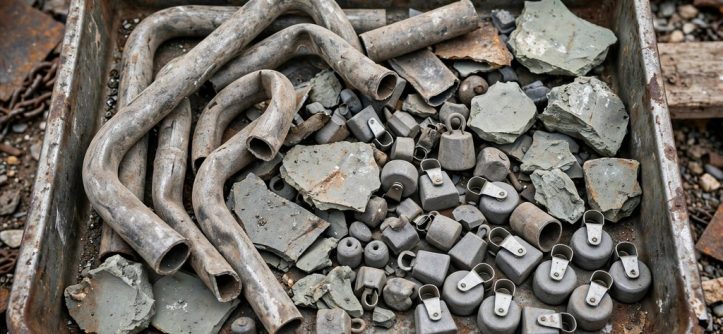
Lead is heavy enough to surprise you. A small box can feel like a bag of bricks. That weight is exactly why people ask what it is worth, and why the answer is not a single number.
Scrap lead prices vary by type, cleanliness, and the market for the day. This guide explains the main kinds of scrap lead, what separates a good rate from a poor one, and how to handle the metal safely before it ever reaches a scale.
What kinds of scrap lead are there?
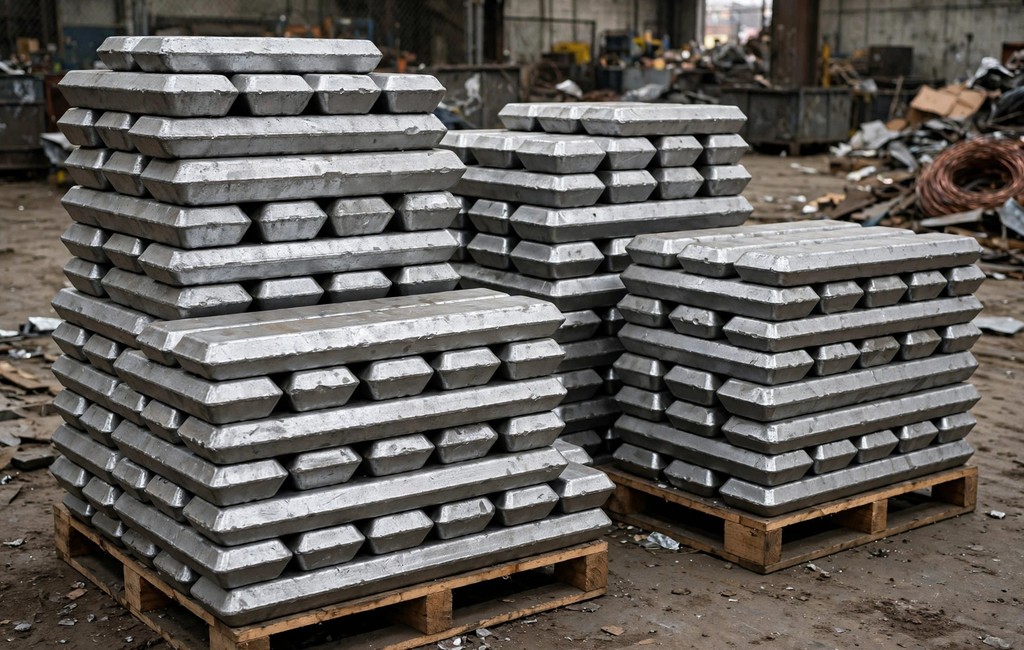
- Soft lead: Nearly pure lead, such as roof flashing, sheet, old plumbing pipe, and cable sheathing. It is the most valuable category.
- Hard lead: Lead mixed with antimony or other metals, found in some battery parts, type metal, and certain industrial items.
- Wheel weights: Clip-on and stick-on balancing weights. Many are lead alloy, though some are steel or zinc, which are worth far less.
- Lead-acid batteries: Priced by weight, and covered in more detail in our scrap battery guide.
- Solder and shot: Specialty items that some buyers price separately.
Scrap lead prices: what do buyers pay?
The rate follows the lead market, with a discount for processing and transport. As a general pattern, clean soft lead earns the best price per pound, wheel weights and mixed alloys earn less, and whole batteries earn the least per pound because so much of their weight is not lead. Published ranges for these categories differ by date and region, which is why a number from an older article may not match today’s board.
A quick example shows how the categories add up. If a yard paid a hypothetical $0.50 per pound for clean soft lead, 50 pounds would bring $25. The same weight in batteries or mixed weights would bring noticeably less. Use these figures only to understand relationships, and confirm the real numbers with a local buyer.
Why does lead pricing seem inconsistent?
Because pages quote different things. One might quote the exchange price of refined lead per tonne, another a yard price per pound, and another a price for wheel weights or batteries. They look similar and mean different things. The refined metal price is a useful reference, but you will never receive it as a seller, since yards sell at a margin after sorting and processing.
How to identify lead
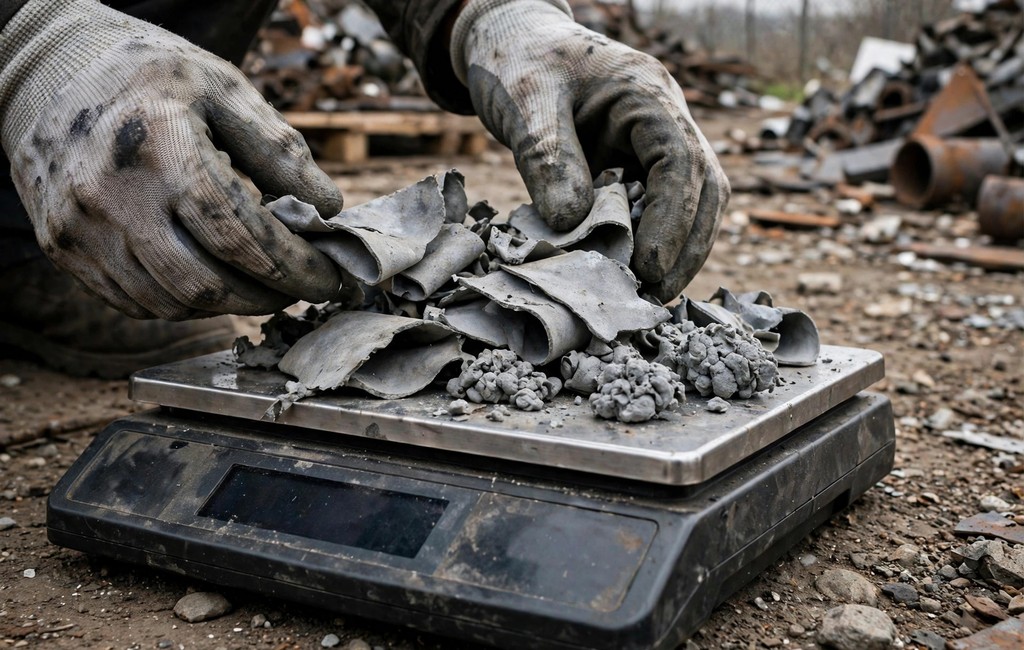
- Weight: Lead is extremely dense. A small piece feels far heavier than steel or aluminum of the same size.
- Softness: You can scratch it with a fingernail or coin, and it will mark paper.
- Appearance: A fresh scratch looks bright silver, then dulls to gray as it oxidizes.
- Magnet: Lead is non-magnetic.
Health and safety come first
Lead is toxic, and the risk comes mainly from dust and fumes, not from touching a clean piece. Wash your hands after handling, keep it away from food and children, and avoid sanding or grinding it. Never melt lead at home in an unventilated space, because fumes and spatter are hazardous. Wear gloves, and consider a respirator if you are disturbing old, corroded material or lead-painted surfaces.
If you are cleaning out an older home, pipes and flashing may be lead, and old paint may contain it as well. Local health agencies provide guidance on safe handling and disposal for lead-based paint and contaminated debris.
Tips to get a better rate
- Separate soft from hard: Do not mix pure lead with alloyed lead or steel. Mixed loads are priced at the lowest grade.
- Remove contaminants: Take off steel clips, rubber, plastic, and dirt.
- Check wheel weights: Use a magnet to separate steel weights, which are worth little, from lead alloy.
- Call ahead: Some yards limit lead purchases, require ID, or buy only in certain forms.
- Compare buyers: Specialist recyclers may pay more for clean, sorted lots.
Rules and restrictions
Lead is regulated in many areas. Some regions restrict the sale or use of lead wheel weights, and many yards keep records of purchases. Check your local rules and bring valid identification. If you are a contractor handling lead from renovations, follow your area’s regulations for transport and disposal.
Frequently asked questions
Is scrap lead worth more than copper?
No. Copper typically pays several times more per pound than lead. Lead’s value comes from its weight and steady demand, especially for batteries.
What is the difference between soft lead and wheel weights?
Soft lead is nearly pure and priced higher. Wheel weights are alloyed with other metals and are usually priced lower.
Can I sell lead pipe?
Yes, many yards buy it as soft lead. Check for steel or brass attachments and remove them first.
Is it safe to handle scrap lead?
Handling is generally low-risk if you wash up afterward and avoid dust and fumes. Never melt it in a confined or unventilated space.
Do yards need ID to buy lead?
Many do. Rules vary by region, so call ahead and bring valid identification.
Ready to sell?
Sort your lead into soft, hard, and weights, remove contaminants, and call two buyers for current rates. If you are not sure what you have, describe it in the comments and we will help you identify it. Subscribe for more clear, practical scrap price guides.



Leave a Reply