
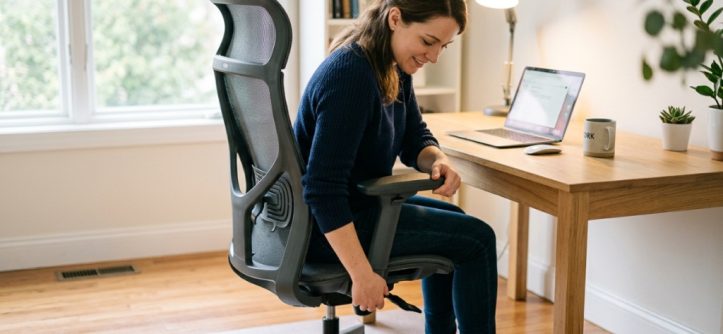
If you work from home in Washington—whether in Seattle, Spokane, or Tacoma—you already know that long hours at a desk can take a serious toll on your lower back. A chair that felt fine for a year can suddenly feel like a torture device by 3 p.m. The problem isn’t just the chair itself; it’s the lack of proper lumbar support, adjustability, and alignment that your spine desperately needs during hours of sitting. Choosing the right chair isn’t about buying the most expensive model; it’s about understanding how your body interacts with the chair and what specific features support your natural posture. This guide breaks down exactly what to look for in the best office chair for back support WA residents rely on, explains why one-size-fits-all solutions often fail, and helps you avoid the costly mistakes that lead to chronic discomfort.
Key Takeaways
- A chair that feels comfortable for a few minutes may still lack the adjustable lumbar support needed for all-day back health.
- Your height and weight directly affect which chair size and seat depth will properly support your spine; ignore size charts and you’ll likely end up with lower back pain.
- Dynamic support features like a synchro-tilt mechanism and adjustable seat depth are more important than high-priced materials for daily back comfort.
- Consider your specific home office setup in WA, including desk height and climate, to avoid choosing a chair that feels great in the store but fails in daily use.
Why Standard Office Chairs Fail to Protect Your Back
Many so-called “ergonomic” chairs only look supportive. They have a curved backrest and a cushion, but the crucial support comes from the ability to adjust that lumbar area to fit the natural S-curve of your spine. Without a properly positioned lumbar support, your lower back loses its inward curve when you sit, forcing your hips muscles to overwork and putting excess pressure on the lumbar discs. That leads to the fatigue and soreness that you feel by the afternoon.
Beyond the lumbar cushion, the seat depth is a major factor. If the seat is too long for your legs, the front edge pushes against the back of your knees, restricting circulation and forcing you to sit at an awkward angle. If it’s too short, you get inadequate thigh support, which places more weight directly on your buttocks and tailbone. The solution isn’t a “one-size-fits-all” model but rather a chair that features a seat slide mechanism. It’s a crucial point many reviewers overlook when they only focus on cushion firmness.
The Role of Adjustable Lumbar Support
Adjustable lumbar support is not just about adding more padding at the lower back. It should allow you to change the depth (how far it pushes into your back) and the height (where it pushes). Most quality chairs let you adjust the vertical position of the lumbar pad because two people of similar height can have entirely different spinal curves. If your chair’s lumbar support cannot be repositioned, it is likely designed for an average person, which means it may be pressing against your ribcage or your hips instead of your lower spine. Look for a mechanism that you can adjust while seated to properly fit the small of your back.
What to Look For: The Core Features of the Best Office Chair for Back Support WA
When you filter through hundreds of options, specific mechanisms separate a truly supportive chair from an average office chair. Let’s break down the non-negotiable features you need for chronic back support and the types of adjustments that deserve your attention. You can check out a helpful roundup of the best office chair for back support WA residents currently use to see how these features come together. But before you click, understand exactly what you are looking for and how it affects your anatomy.
Seat Depth Adjustment (Slider)
This is the adjustment often ignored until you experience thigh numbness. When sitting fully back in the chair, you should have a gap of roughly two to three fingers between the back of your knee and the seat’s front edge. If there is no gap, the seat is compressing the soft tissue and restricting blood flow. If the gap is larger than a fist, the seat is too short, and you are losing thigh support that would naturally distribute your weight and take strain off the sitz bones and lower back.
Backrest Height and Angle
The backrest should be high enough to support your shoulder blades, but you also need to adjust the tilt tension. A good tilt mechanism should allow the chair to recline easily but also provide firm resistance so you don’t have to tense your back muscles to stay upright. Many WA office workers prefer a slight recline (about 100-110 degrees) as it reduces disc pressure compared to sitting straight up at 90 degrees. Make sure the backrest can be locked in place or has a synchro-tilt feature where the seat and backrest move together at a natural ratio.
Armrest Adjustability
While armrests might not seem related to lower back pain, they are critical for shoulder and upper back alignment. The armrests should sit at a height where your elbows are at a 90-degree angle and your shoulders are relaxed. Just as important is the width adjustability. If the armrests force you to push your elbows inward or hold them out too wide, it creates muscle tension that travels down to your lower back. Even better are armrests that slide forward and backward so you can align them with your desk’s edge when typing.
How to Match a Chair to Your Body Type in WA
Even a high-end chair will fail you if it is sized incorrectly. Chairs are not one-size-fits-all; they are designed for different percentile body types. Here is how to map your measurements to the right chair features:
- If you are 5’4″ or shorter: Look for a chair with a shorter seat depth (less than 19 inches) and a cylinder height that allows your feet to rest flat on the floor without stressing your thighs. A smaller backrest that doesn’t push your upper back is better.
- If you are between 5’5″ and 5’11”: This bracket fits most standard chairs. You will want a seat depth of around 19-21 inches and a minimum backrest height of 21 inches. Pay close attention to the lumbar support’s height range to see if it aligns with your specific spine curve.
- If you are 6’0″ or taller: You need a chair with a taller backrest (around 24 inches) and a seat slider that extends beyond 21 inches. Also, verify the maximum seat height—if the cylinder is too short, your knees will be higher than your hips, which causes you to slouch and increases pressure in the lumbar region.
Weight is a secondary but important factor. Chairs rated for 300 pounds have a sturdier cylinder and a wider base, which prevents the chair from wobbling during micro-adjustments—a wobble that forces your back muscles to constantly correct your posture.
Are Expensive Chairs Always Better for Your Spine?
Not necessarily. While premium chairs (often in the $800–$1,500 range) use higher-end mechanisms and sturdier materials, many mid-range chairs in the $300–$600 range provide the same essential adjustability. The main trade-off is usually material quality and the longevity of the gas cylinder. Where you should not skimp is on the mechanism. A cheap chair with a shallow synchro-tilt mechanism will not allow for smooth recline, causing you to fight the chair when you lean back.
However, avoid chairs that only offer a fixed seat angle. Your hips need to open up (ideally at around 90 degrees or slightly more) when you lean back. Fixed seats often push your thighs downward, which tilts your pelvis backward and flattens your lower back—instantly recreating the very pain you’re trying to solve.
Common Mistakes When Buying a Desk Chair for Back Pain
Many people make the decision based on the first five minutes of sitting in the showroom or after reading one online review. Here are the most common practical mistakes you can easily avoid:
Ignoring the Height of Your Existing Desk
You might buy a chair with excellent lumbar support, but if your desk is too high and you cannot raise the chair enough to bring your forearms parallel to the floor, your shoulders will rise, creating a stress loop that ends in your lower back. Conversely, if your desk is too low, the armrests won’t fit underneath, forcing you to sit far away from the desk to use them—leaning forward and losing your back support.
Overestimating the Lumbar Cushion
Lumbar support should not feel like a massage tool pressing into your back. It should fill the gap between your spine’s natural curve and the backrest. If the support is too aggressive, it will push your spine forward instead of supporting it. When testing a chair, you should feel the pad pressing gently against the lower back, not digging into it.
Forgetting About Casters on Carpet or Hardwood Floors
Washington homes often have a mix of hardwood floors and area rugs. The chair’s casters matter more than you think. Hard casters on hardwood can cause the chair to slide away from you subtly when you lean back, breaking the contact between your back and the lumbar support. If you have hardwood floors, look for soft rubber casters. For thick carpets, a hard caster will roll far better than a soft one, which can get stuck and jerk your posture.
Comparing Supportive Technologies: Mesh vs. Foam
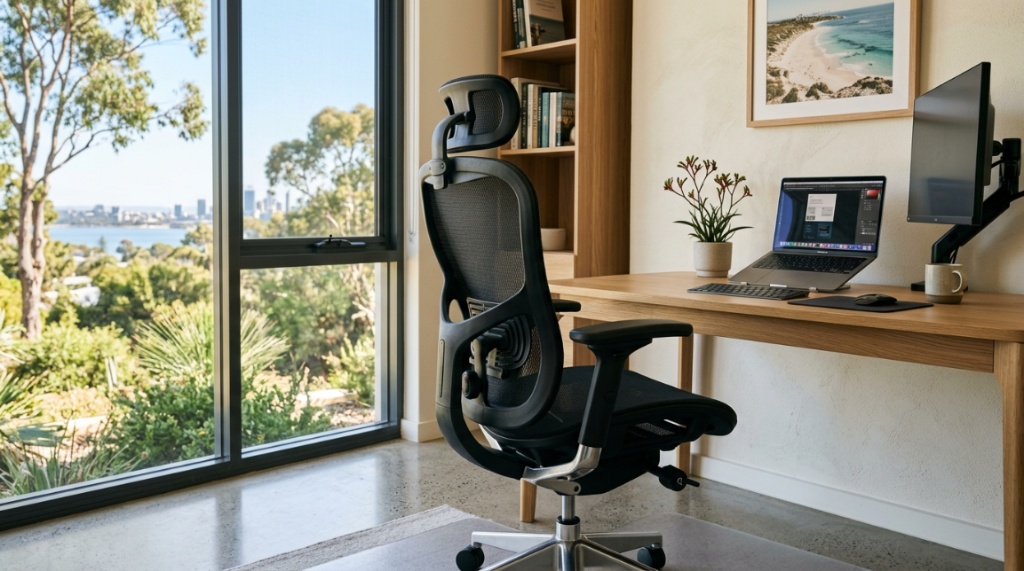
When deciding between a mesh back and a foam-padded back, understand the trade-offs for back health rather than just comfort:
| Feature | Breathable Mesh Back | High-Density Foam Padding |
|---|---|---|
| Lower Back Support | Provides firm, consistent support; often allows more adjustability thanks to a separate lumbar edge. | Conforms to your shape initially but can compress and lose support after months. |
| Temperature Regulation | Keeps you cool in summer; ideal for WA’s warmer inland climates like Spokane. | Can retain heat, causing sweating and discomfort during 8+ hour shifts. |
| Long-term Durability | Retains its shape; doesn’t sag significantly after years of use. | May form permanent indentations, especially if the foam is low density. |
| Body Conformity | Less uniform contact over the whole back. | More cradling feeling that some users find more comfortable. |
For serious back issues, a mesh back with a separate adjustable lumbar arch tends to be safer because it doesn’t soften over time. Foam cushions might feel plush in the store but often break down by the 12-month mark, leaving you with a slumped position and an unsupported spine,For a complete workspace refresh, remember that keeping your peripherals clean is just as important as your posture learn how to How to Clean a Mouse Pad to maintain a hygienic desk setup.
Setting Up Your Chair for Immediate Relief
Once you order your chair, you cannot just put it on your desk and expect magic. Follow this sequence for a quick setup to ensure the chair fits you properly:
- Set the seat height: Sit back in the chair. Your feet must be flat on the floor and your knees at a 90-degree angle. Your hips should be at the same level or slightly higher than your knees.
- Adjust the seat depth: Push the slider until you have two to three finger widths of space between your knee and the seat edge.
- Set the lumbar support: Sit fully upright and adjust the lumbar height until it aligns exactly with the natural inward curve of your spine (usually around your belt line).
- Adjust the armrests: Round the shoulders and let your arms hang naturally. Raise the armrests until they lightly touch your elbows, then lock them. They should not lift your shoulders.
- Set the tilt tension: Lean back to a comfortable 100-110 degrees. The chair should support your weight without you having to constantly use your back muscles.
Take the time to make these adjustments. This is what converts a good chair into the best office chair for back support WA users can get—it’s the precise fit, not the brand name, that eliminates back pain.
Frequently Asked Questions
Can a better chair actually fix my existing lower back pain?
It can significantly reduce the strain that worsens pain, but it does not replace medical treatment for underlying conditions. A supportive chair maintains the proper curvature of your spine and reduces pressure on the discs, which can alleviate pain caused by muscle fatigue and poor posture. This often allows your body to recover during the day.
Should I choose a high-back or mid-back chair for back issues?
Because of the lumbar support that engages your lower back, a mid-back chair provides enough support. A high-back chair adds upper back and shoulder support, which is helpful if you lean back frequently. Your injury type dictates your choice—lumbar issues do not require a high back unless you also experience upper back tension.
Is a headrest necessary for good back support?
A headrest only supports your cervical spine when you recline. If you are typing or leaning forward, a headrest loses usefulness. You don’t need a headrest for lower back support; prioritize lumbar and seat adjustments first, and only seek a headrest if you frequently take breaks to lean back and rest your neck.
Can a chair be too firm for my lower back?
Yes. A very hard seat pan can create pressure points on your sit bones, which tilts your pelvis and forces you to shift constantly, disrupting your spinal alignment. You need a firm but forgiving surface. Your hip muscles should feel supported, not compressed. Test for firmness by pressing into the cushion; it should spring back quickly.
How often should I replace my office chair in WA due to wear?
If you use your chair full-time (40 hours a week), plan to replace it every 5 to 7 years. The foam and gas cylinder degrade over this time, reducing the quality of the lumbar support and causing the chair to sink, which misaligns your posture. You should consider replacing the chair sooner if you notice that the tilt mechanism no longer provides resistance.
Conclusion
Finding the right office chair for back support in WA comes down to more than just cushion preference. Your mobility and comfort depend on specific technical features like adjustable lumbar depth, seat depth sliders, and proper sizing. Focus on the mechanism rather than fancy upholstery or brand reputation. Once you bring a chair home, don’t skip the setup adjustments—that is the final and most important step to ensure your spine gets the support it deserves. Take the time to align the chair to your unique proportions, and your back will thank you through every work hour of the year.




Leave a Reply