
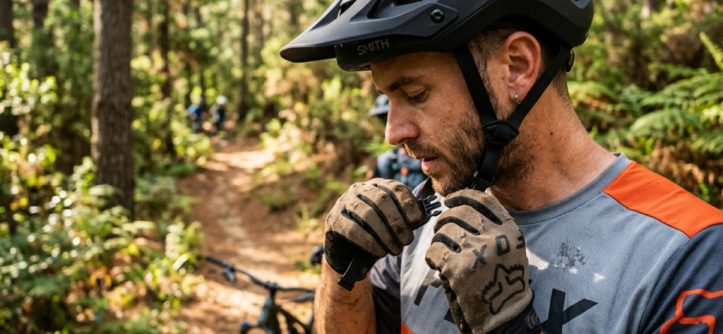
Your helmet looks fine. No visible cracks. No major dents. The straps still work. The buckle clicks. It fits the same as the day you bought it. So why would you replace something that isn’t broken?
Because “looks fine” and “protects your brain effectively” aren’t the same thing. The protective materials inside your mountain biking helmet degrade invisibly — UV radiation breaks down molecular bonds in the EPS foam, sweat salts corrode internal structures, temperature cycling creates micro-fractures, and the very plastics that protect you become brittle and less energy-absorbent over time. A 5-year-old helmet can look identical to a new one while providing 30-50% less impact protection.
This isn’t fear-mongering — it’s materials science. Every major helmet manufacturer, safety organization, and helmet certification standards body publishes replacement timelines based on measured degradation data. This guide covers exactly when and why to replace your mountain biking helmet, what accelerates degradation, what the certification standards actually require, and how to maximize both safety and value from your helmet investment.
What’s the Official Replacement Timeline for Mountain Bike Helmets?
Multiple authoritative sources agree on similar timelines:
Consumer Product Safety Commission (CPSC): Recommends replacement every 5-10 years depending on use and care, or immediately after any impact.
Snell Memorial Foundation: Recommends replacement every 5 years regardless of appearance or perceived condition.
Most helmet manufacturers (Giro, Bell, POC, Troy Lee Designs, Smith): Recommend replacement every 3-5 years for regularly used helmets, with 3 years being the guideline for heavy use (riding 3+ times per week).
The practical consensus: Replace your mountain biking helmet every 3-5 years under normal use, immediately after any significant impact, or sooner if visible damage or degradation is present. Heavy riders (4+ days/week, high-sweat environments, stored in heat) should lean toward the 3-year end. Occasional riders with proper storage can push toward 5 years.
Why Do Helmets Degrade Even Without Impacts?
Understanding the science helps you take degradation seriously:
EPS Foam Breakdown
The expanded polystyrene (EPS) foam that absorbs impact energy is a gas-filled cellular structure. Over time: UV radiation breaks polymer chains (making cells brittle), temperature cycling causes expansion/contraction that weakens cell walls, and the gas within cells slowly diffuses — leaving denser, harder foam that absorbs less energy on impact. A 5-year-old EPS liner absorbs 20-30% less energy than a new one in laboratory testing.
Shell Degradation
The outer polycarbonate or in-mold shell protects EPS from direct damage and distributes impact forces across a wider area. UV exposure causes photo-oxidation — the shell becomes more brittle, prone to cracking on impact rather than flexing and spreading force. Color fading is a visible indicator of UV damage occurring — if the color has changed, the material properties have too.
Sweat and Chemical Exposure
Human sweat contains salts, oils, and acidic compounds that chemically degrade both EPS and interior fabrics over time. Sunscreen, bug spray, and hair products contain solvents that attack polystyrene particularly aggressively. DEET-based insect repellents are notorious for dissolving EPS foam on contact.
Retention System Weakening
Straps, buckles, and adjustment dials weaken with repeated use. Webbing loses tensile strength from UV and sweat exposure. Ratchet mechanisms wear from friction. A retention system that doesn’t hold the helmet firmly in position during impact renders even perfect foam protection less effective.
| Degradation Factor | What It Affects | Speed of Degradation | Prevention Possible? |
|---|---|---|---|
| UV Radiation | Shell, EPS, straps | Cumulative — significant by year 3-4 | Partial (indoor storage helps) |
| Sweat/Oils | EPS, interior fabric, pads | Moderate — accelerates with frequency | Partial (washing pads, rinsing) |
| Temperature Cycling | EPS cell structure | Cumulative — worse in extreme climates | Partial (climate-controlled storage) |
| Chemical Exposure | EPS, shell material | Fast (direct contact causes immediate damage) | Yes (avoid DEET, solvents on helmet) |
| Mechanical Wear | Straps, buckles, dials | Proportional to use frequency | Partial (gentle handling, proper storage) |
When Should You Replace a Helmet Immediately (Regardless of Age)?
Certain events demand immediate replacement — no exceptions:
After any crash where the helmet contacted a surface: EPS foam is designed to crush once. After compression, it doesn’t recover — the crushed cells cannot absorb energy again in a subsequent impact. Even if you can’t see damage externally, internal foam compression may have occurred. Any impact to the helmet means replacement. Period.
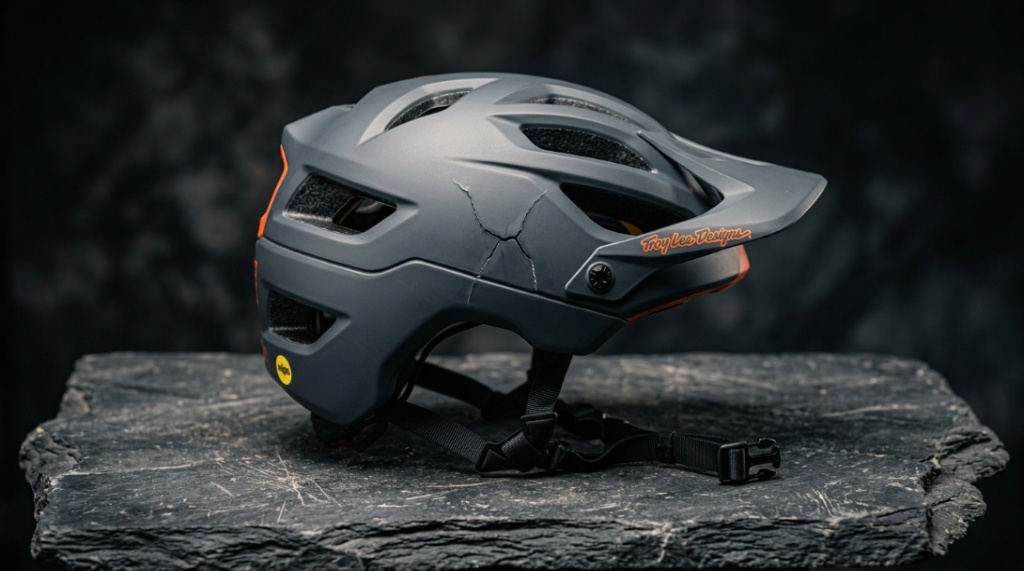
Visible cracks in the shell or foam: Cracks — even hairline ones — indicate structural compromise. The shell can no longer distribute force evenly, and cracked EPS has lost its energy-absorbing capacity in that zone. A cracked helmet provides dramatically less protection.
Dropped from significant height onto hard surfaces: A helmet dropped from a car roof rack, high shelf, or tailgate onto concrete can sustain internal foam damage invisible externally. If you can’t be certain no damage occurred, replace. The $150-250 replacement cost is irrelevant compared to compromised brain protection.
Retention system failure: If straps are frayed, buckles don’t lock securely, or the fit system no longer holds the helmet stable on your head, the helmet cannot position correctly during impact. Even perfect foam is useless if the helmet rotates off your head before absorbing the energy.
Visible foam separation from shell: If EPS is detaching from the outer shell (visible gaps, peeling), the two components can no longer work as an integrated system. Impact force won’t transfer properly from shell to foam, reducing protection significantly.
Investing in a high-quality helmet is just the first step in trail safety, especially if you are hitting technical terrain with a fresh set of wheels. If you are still figuring out your gear setup, it helps to Compare Entry-Level Mountain Bikes Like a Pro to ensure your entire ride matches your skill level and safety needs. Much like your bike, your protective gear requires regular evaluation to ensure it performs when it matters most.
What Do Helmet Certification Standards Actually Require?
Understanding certifications helps you evaluate what “safe” actually means:
CPSC (Consumer Product Safety Commission — US Mandatory)
The minimum legal requirement for any bicycle helmet sold in the United States. Tests for: impact absorption (drop test from 2m onto flat and curbstone anvils), strap strength (300N pull test), coverage area (minimum protection zone), and peripheral vision (minimum 105° each side). CPSC is the baseline — all helmets meeting this standard provide fundamental protection.
EN 1078 (European Standard)
The European equivalent to CPSC. Similar impact testing protocols with slightly different anvil geometries and pass/fail thresholds. Helmets sold in the EU must meet EN 1078. Generally comparable to CPSC in protection level.
ASTM F1952 (Downhill Mountain Biking)
A more demanding standard specifically for downhill/full-face helmets. Higher impact energies (faster drop speeds), chinbar impact testing, and additional coverage requirements. Required for competition DH racing. Significantly exceeds CPSC requirements for severe-impact scenarios.
Virginia Tech STAR Rating (Voluntary, Independent)
Not a certification but an independent rating system that tests for both linear AND rotational impact protection — something CPSC and EN standards don’t currently require. Five-star rated helmets provide the best overall protection as measured by this laboratory. The most comprehensive publicly available helmet safety data.
Key insight: Current mandatory standards (CPSC, EN 1078) test only linear impact protection and don’t require rotational protection testing. This is why technologies like MIPS exist as voluntary additions — they address a real protection gap that certifications haven’t yet mandated.
How Can You Tell If Your Mountain Biking Helmet Needs Replacing?
Visual and functional checks to perform regularly:
Visual Inspection (Monthly)
- Shell: Look for cracks, deep scratches that expose foam, color fading (UV damage indicator), delamination, or warping
- Interior foam: Check for crumbling, discoloration (yellow/brown indicates chemical breakdown), soft spots, or visible compression marks
- Straps: Look for fraying, discoloration, stiffness (loss of flexibility), or worn stitching at connection points
- Buckle: Test that it clicks securely and doesn’t release under upward pressure
- Fit system: Verify the dial/ratchet still adjusts smoothly and holds position
Functional Tests
- The squeeze test: Gently compress the helmet between your hands. New EPS has firm, even resistance. Degraded EPS feels softer, uneven, or “crunchy.” Any cracking sounds indicate compromised foam.
- The stability test: Put the helmet on, buckle it, and try to rock it front-to-back and side-to-side. More than 1 inch of movement in any direction means the fit system has worn beyond effectiveness.
- The smell test: Strong persistent odors that don’t wash out indicate deep bacterial/chemical contamination of the foam — a sign of significant material exposure over time.
How Do Storage Conditions Affect Helmet Lifespan?
Where and how you store your mountain biking helmet directly impacts how long it protects you:
Worst storage: In a car trunk or truck bed (extreme heat accelerates EPS degradation 3-5x), hanging on garage wall in direct sunlight (UV exposure), in a damp basement (moisture promotes material breakdown), or loose in a gear bag where it gets crushed/compressed by other items.
Best storage: Indoor, climate-controlled space (room temperature, out of direct sunlight). On a shelf or hook where nothing presses against it. In a breathable helmet bag if transporting. Away from chemicals, solvents, and products containing DEET.
The car storage problem: Interior car temperatures regularly exceed 60°C (140°F) in summer sun. At these temperatures, EPS foam can physically deform (the cells collapse) and the polycarbonate shell can warp. A helmet stored in a hot car for one summer may lose as much protection as 2-3 years of normal aging. Never leave helmets in vehicles during warm weather.
Post-ride care: Remove the helmet from your gear bag when you get home. Let it air dry completely (sweat trapped inside accelerates degradation). Rinse interior pads with mild soap and water monthly. Store in open air, not sealed in plastic bags.
What’s the True Cost of Helmet Replacement Over Time?
Reframing replacement as a recurring safety investment:
3-year replacement cycle (heavy riders): $150-250 helmet every 3 years = $50-83/year for brain protection. Compare to: bike insurance ($100-300/year), health insurance ($200-500/month), or a single ambulance ride ($500-3,000).
5-year replacement cycle (moderate riders): $150-250 helmet every 5 years = $30-50/year. Less than a monthly coffee habit.
Cost reduction strategies:
- Buy previous-year models on clearance (same protection, 30-50% less cost)
- Watch for end-of-season sales (September-November in northern hemisphere)
- Avoid unnecessary premium features — a $130 MIPS helmet provides identical core protection to a $300 MIPS helmet
- Track purchase dates so replacement is planned, not reactive (avoiding emergency full-price purchases after crashes)
For riders researching replacement options that balance protection features with value, this resource on the best mountain bike helmet options reviews current models across multiple price points with safety feature comparisons.
Do Expensive Helmets Last Longer Than Budget Helmets?
Partially — but not as much as price differences suggest:
Materials that last longer in premium helmets: Higher-grade polycarbonate shells resist UV better. Carbon fiber elements don’t degrade from UV at all. Premium EPS formulations may use more UV-stable compounds. Better adhesives maintain shell-to-foam bonds longer. Titanium hardware doesn’t corrode.
What doesn’t change with price: EPS foam degradation from sweat is identical regardless of price. Time-based material fatigue affects all polymers similarly. Retention systems wear proportionally to use regardless of brand. No helmet is immune to the fundamental chemistry of aging materials.
Realistic assessment: A $300 helmet might last 4-5 years in optimal conditions versus 3-4 years for a $100 helmet. The difference is perhaps 12-18 months — not dramatic. Both need replacement within the same general timeline. The premium buys better comfort, lighter weight, improved ventilation, and marginally longer material life — not fundamentally different safety longevity.
FAQ
Should I replace my helmet after a minor crash with no visible damage?
If the helmet contacted any surface during the crash — yes, replace it. EPS foam can compress internally without visible external damage. The difficulty of assessing internal damage means the safe default is always replacement. If you’re certain the helmet never touched anything (you fell but your head didn’t contact the ground), the helmet is likely fine — but inspect thoroughly before the next ride.
Does the 3-5 year replacement rule apply if I barely ride?
Yes, though you can lean toward the 5-year end. Time-based degradation (UV if any exposure, temperature cycling, material aging) occurs regardless of use frequency. A helmet that sat on a shelf for 7 years, unused, has still degraded — the EPS has off-gassed, polymer chains have broken, and glue has weakened. Use or not, materials age.
Can I trust the manufacture date on my helmet for replacement timing?
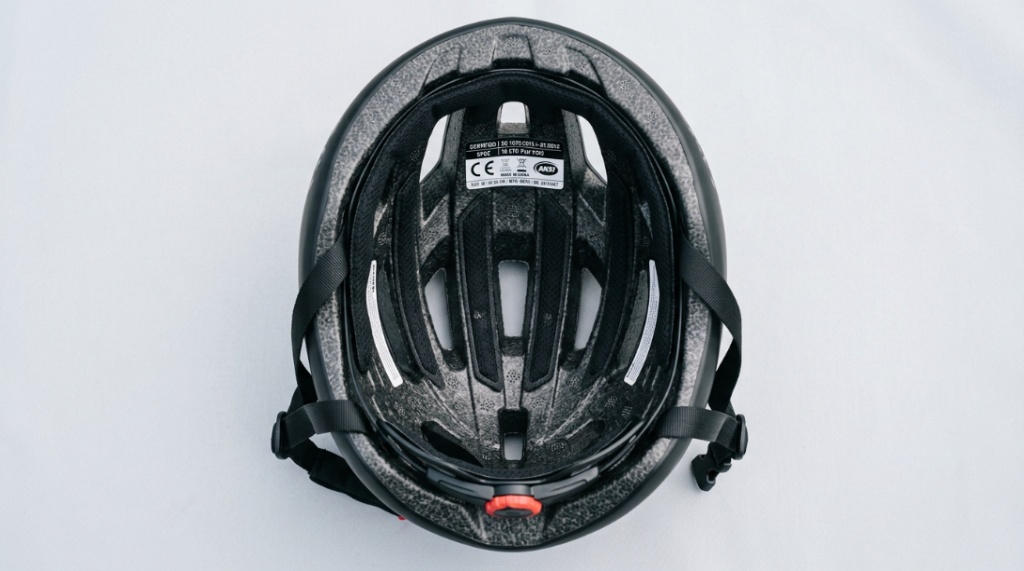
The date sticker inside the helmet shows production date — this is your starting point. Count 3-5 years from this date for replacement timing. If no date is visible (very old helmets or sticker removed), err on the side of caution and consider it due for replacement. Some brands use date codes printed on the EPS foam itself.
Are helmet certification standards the same worldwide?
No. CPSC (US), EN 1078 (Europe), AS/NZS 2063 (Australia/NZ), and JIS T8134 (Japan) all have different specific testing protocols. However, all require similar basic protection levels. A helmet certified to any major standard provides fundamental impact protection. Multiple certifications (CPSC + EN 1078) indicate testing across different protocols — slightly better confidence in comprehensive protection.
Does replacing pads and straps extend helmet life?
Replacing comfort pads and degraded straps improves fit and hygiene — both important for effective protection. However, pad replacement does NOT address EPS foam degradation or shell material aging. A helmet with fresh pads and worn-out foam still provides compromised impact protection. Replace the entire helmet on the 3-5 year schedule regardless of pad condition.
What should I do with my old helmet after replacing it?
Do NOT donate or sell expired helmets — they may provide inadequate protection to the next user. Cut the straps to prevent reuse, then recycle if your municipality accepts mixed plastics, or dispose in regular waste. Some manufacturers offer recycling programs. Never give an expired helmet to anyone who might wear it.
Is there a way to test if my helmet’s protection has degraded?
No consumer-accessible test reliably measures EPS foam degradation. Laboratory equipment can measure foam density changes and energy absorption capacity, but this isn’t available to riders. This is precisely why time-based replacement guidelines exist — when you can’t test degradation, you replace on a schedule that ensures adequate protection statistically.
Key Takeaways
- ✅ Replace your mountain biking helmet every 3-5 years regardless of appearance — invisible material degradation reduces protection by 20-30% over this period
- ✅ Replace immediately after any impact, visible cracks, or retention system failure — no exceptions, no “it looks fine” justifications
- ✅ Heat exposure (car storage) accelerates degradation dramatically — never store helmets in vehicles during warm weather
- ✅ Helmet certification standards (CPSC, EN 1078) ensure minimum protection at purchase but don’t account for age-related degradation
- ✅ At $30-83/year, helmet replacement is one of the cheapest safety investments in mountain biking — less than a coffee habit for brain protection




Leave a Reply