

It’s 3 a.m., your baby is finally latched, and within minutes your shoulders start to ache, your lower back tightens, and you begin counting the seconds until you can put her down. A nursing pillow is supposed to prevent exactly this—yet many parents buy one on a friend’s recommendation and still end up uncomfortable. The problem usually isn’t effort; it’s fit. A pillow that works for a petite parent in a rocking chair can fail completely for a taller parent feeding in bed. Resources like PillowShowcase can help you understand how different pillow designs suit different needs, but the real decision comes down to your body, your usual feeding spot, and your baby’s size.
Quick Answer
Choose a nursing pillow based on three things: how well it holds your baby at breast height without you hunching, how stable it stays when you shift positions, and where you actually feed most often. A firm, wraparound pillow generally works best for seated feeding, while a flatter or adjustable design suits bed feeding and side-lying. Ignore cute patterns and brand hype until those three boxes are checked.
Key Takeaways
- A nursing pillow’s main job is to raise your baby to your breast, not to bring your breast down to your baby—this prevents the neck, shoulder, and back strain that builds over months of feeding.
- Firmness matters more than thickness: a pillow that compresses flat under your baby’s weight stops supporting you within weeks.
- Your body proportions (torso length, breast height, arm length) affect whether a fixed-shape pillow will actually fit you.
- Feeding position—chair, sofa, bed, or side-lying—should guide your choice more than brand reputation.
- No pillow replaces good positioning habits; it’s a support tool, not a fix for an uncomfortable latch or posture.
What a Nursing Pillow Actually Does (and What It Can’t)
A nursing pillow is a positioning aid. It raises your baby to a comfortable height so your arms aren’t doing all the work and your shoulders aren’t creeping toward your ears. Over a year of breastfeeding, that difference is significant—poor positioning is one of the most common reasons parents develop wrist, neck, and upper-back pain.
What it can’t do is correct a shallow latch, compensate for a chair that’s too low, or make an awkward feeding position comfortable if your posture habits are poor. Think of it as one part of a setup: a supportive chair, a footrest, and a pillow that fits your body together do more than any single product.
The Fit Factors That Actually Matter
Most buying guides list the same features—washable cover, cute prints, multiple uses. Those are fine, but they rarely determine whether you’ll be comfortable. These four factors do.
Height and Firmness
The pillow needs to sit at roughly your breast height when you’re seated, with your baby resting on top. If it’s too low, you’ll lean forward and round your shoulders. If it’s too high, your baby’s chin will tuck toward the chest, which can make latching harder. Firmness is what keeps that height consistent—a pillow that squashes under a growing baby stops doing its job around the two- to three-month mark, right when feedings get longer.
Shape and Wrap
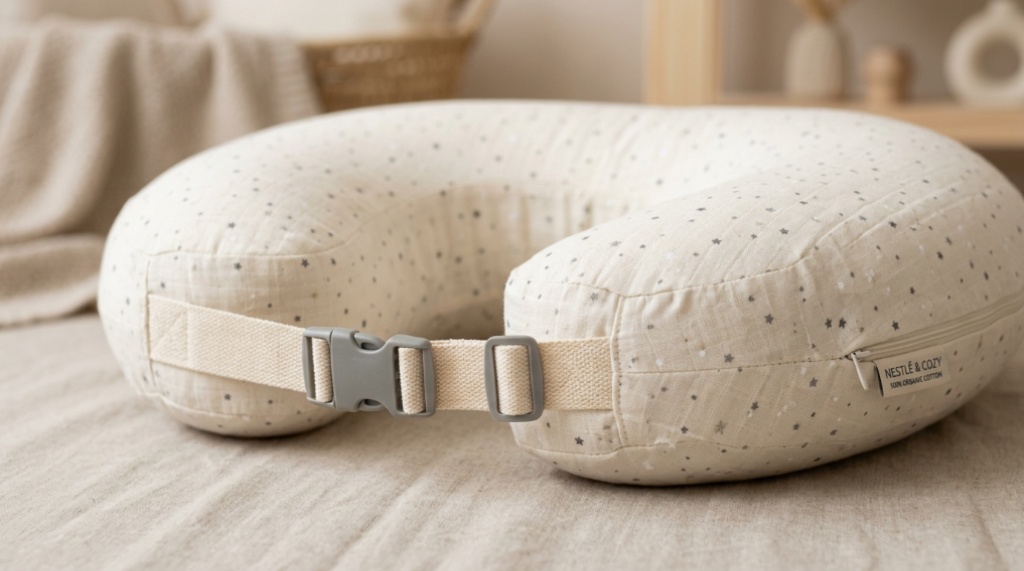
C-shaped and U-shaped pillows wrap around your waist and hold position when you shift. Straight or wedge-style pillows are flatter and less stable but easier to reposition in bed. If you tend to feed in one spot most of the day, a wraparound shape gives you more hands-free stability. If you feed in different rooms or on the go, a lighter, flatter design may serve you better.
Your Body Proportions
Torso length and breast height vary a lot between people. A pillow that’s the right height for someone with a shorter torso may sit far too low for someone taller, forcing a forward lean. This is why a pillow that a friend swears by can feel useless to you—it’s not a quality issue, it’s a geometry issue.
Your Usual Feeding Position
Seated in a chair, seated on a sofa, reclined in bed, or side-lying—each position changes what kind of support you need. A firm wraparound pillow is excellent for seated feeding and awkward for bed feeding. A flatter pillow is the opposite. Decide where you’ll realistically spend most of your feeding hours before you buy, If you are planning a trip after welcoming your little one, make sure to pack smart for your journey and Pick a Comfortable Neck Pillow for Plane Travel to stay rested on the go.
Comparing Nursing Pillow Types
There’s no single best type, only types that suit different situations. Here’s how the most common designs compare on the factors that affect comfort.
| Pillow Type | Best For | Main Advantage | Main Limitation |
|---|---|---|---|
| Wraparound C/U-shape | Seated feeding in a chair or sofa | Stays in place and frees your hands | Bulky; awkward in bed |
| Wedge or flat | Bed feeding, reclined positions | Easy to reposition; lightweight | Less stability; can slip |
| Adjustable or tie-style | Parents who want a custom height | Can be tightened to fit your torso | More fiddly to set up each time |
| Multi-use (feeding + support) | Parents who want one item to do several jobs | Extends usefulness after nursing | May be softer and less firm |
How to Test a Pillow Before You Commit
You can’t always try before you buy, but you can evaluate a pillow quickly once it arrives—or in a store—using a few simple checks.
- Sit where you’ll actually feed. Not on a stool or the edge of a bed—use your real chair or sofa.
- Place the pillow and sit your baby on it. Your baby’s head should rest near your breast without you leaning forward.
- Check your shoulders. If they’re creeping up or rounding forward, the pillow is the wrong height.
- Press down on the pillow with your hand. If it flattens easily, it will compress under your baby’s weight over time.
- Shift position slightly. If the pillow slides or shifts, it won’t hold up during a 30-minute feeding.
A pillow that passes these checks in your real feeding spot is a better choice than one that looks nicer but fails them.
Common Mistakes That Lead to Discomfort
Many parents blame the pillow when the real issue is elsewhere. Watch for these common traps.
- Buying for looks first. Fabric and pattern are the least important factors for comfort.
- Assuming one pillow fits all positions. Feeding in bed and feeding in a chair need different support.
- Ignoring your chair. A pillow can’t compensate for a seat that’s too low or a backrest that offers no support.
- Skipping the footrest. Raising your knees slightly takes pressure off your lower back and improves your seated posture.
- Keeping a pillow past its firmness. If it’s flattening, no amount of adjusting will bring it back.
- Expecting the pillow to fix latch problems. If feeding is painful, that’s a positioning or latch issue worth discussing with a lactation consultant—not a pillow problem.
Special Situations Worth Considering
A few scenarios change the recommendation meaningfully.
Twins or tandem feeding. You’ll likely need a wider, firmer pillow that can support two babies at once, or two separate pillows used together. Stability matters even more here.
C-section recovery. A pillow that puts pressure on your incision will make feeding miserable. Look for designs that sit higher on the waist or that you can angle away from the abdomen.
Feeding in bed at night. A flatter, lighter pillow is easier to manage when you’re half-awake, and it won’t create a bulky barrier between you and your baby.
Post-nursing use. Some pillows double as tummy-time supports or seated props for older babies. If you want one item to serve multiple stages, check that the firmness still works for feeding first.
Frequently Asked Questions
Do I really need a nursing pillow, or can I use regular pillows?
Regular pillows can work in a pinch, but they compress easily and shift out of position, which means you’ll spend feedings readjusting. A firmer, purpose-shaped pillow holds its height and stays put, which reduces strain over the many months you’ll be feeding.
How do I know if my nursing pillow is the right height?
Sit in your usual feeding spot with the pillow in place. Your baby’s head should rest near your breast without you leaning forward or lifting your shoulders. If you’re hunching, the pillow is too low; if your baby’s chin tucks down, it’s too high.
Can I use the same pillow for bed feeding and chair feeding?
Often, yes, but with compromises. A wraparound pillow is ideal in a chair but bulky in bed. A flat pillow works in bed but offers less stability in a chair. If you feed in both places regularly, a lighter adjustable design may be the better middle ground.
How long will a nursing pillow stay useful?
Most parents use one through the first year, sometimes longer if it doubles as a support for sitting or tummy time. The pillow itself usually outlasts its firmness—once it compresses noticeably, it stops supporting you properly.
What if breastfeeding is still painful even with a good pillow?
Pain during feeding is usually a latch or positioning issue, not a pillow problem. A pillow supports your posture, but it can’t correct how your baby latches. If pain persists, a lactation consultant can assess positioning and latch directly.
Is a firmer pillow always better?
Firmer is generally better for maintaining height and stability, but not to the point of discomfort. The goal is a pillow that holds your baby at breast level without digging into your waist or compressing flat within a few weeks.
Conclusion
The right nursing pillow is the one that fits your body, your usual feeding position, and your baby’s current size—not the one with the best reviews. Start by identifying where you’ll feed most often, then check firmness and height against your own proportions. Test it in your real chair before committing, and treat it as one part of a supportive setup rather than a standalone fix. If feeding is painful or your posture still suffers, adjust the chair and footrest before buying another pillow.




Leave a Reply