
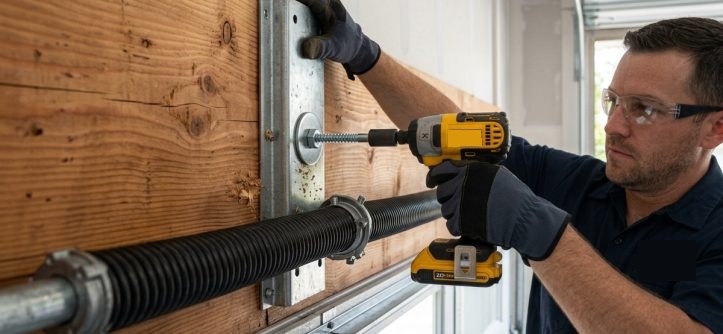
Small positioning errors near the top of a garage door can affect how the entire opener performs. Proper header bracket placement gives the rail a stable anchor, keeps the opener pulling in the intended direction, and helps the top section move smoothly through the track curve. Careful setup during garage door opener installation can reduce strain on the door, rail, trolley, and surrounding framing.
Why the Header Bracket Needs Solid Framing
Solid framing gives the header bracket enough strength to handle the repeated pulling and pushing created each time the opener moves the door. Fasteners driven only into drywall, thin trim, or weak material may loosen as vibration builds over hundreds of cycles. Installers normally look for structural lumber or another approved mounting surface capable of supporting the bracket firmly. Weak attachment can let the rail shift slightly, causing noise, changing trolley alignment, or placing unwanted movement into the opener assembly.
Bracket Height Changes How the Door Travels
Height determines the angle at which the opener rail approaches the door and how the top section moves through the curved part of the tracks. Mounting the bracket too low may interfere with door travel, while placing it unnecessarily high can create an awkward opener-arm angle. Manufacturer instructions usually specify the proper relationship between the highest point of door travel and the bracket position.
Accurate placement becomes especially important on doors with unusual track geometry, low ceilings, or limited headroom. Technicians completing garage door installation often check this area before choosing the final opener location because spring hardware, track radius, and ceiling clearance all compete for space. Measuring first helps avoid repositioning the rail after mounting holes have already been drilled.
Centering the Bracket Helps Keep the Opener Pulling Straight
Centering keeps the opener force directed along the door’s intended line of movement instead of pulling noticeably toward one side. Proper alignment can reduce twisting at the top section, uneven trolley movement, and stress around the attachment point between the opener arm and door. A garage door repairman near me may check bracket alignment when a door jerks during startup, shifts sideways, or makes new noises even though the opener motor still runs normally.
Poor Placement Can Put Stress on the Top Door Section
Incorrect bracket positioning can change the direction of force applied every time the opener begins lifting the door. Repeated pulling at a poor angle may flex the upper panel, loosen reinforcement, or place extra stress on the opener bracket attached to the door itself. Heavier insulated doors and wide double doors can make those effects more noticeable because their upper sections carry greater loads during movement.
Reinforcement often becomes part of the installation plan for that reason. Quality garage door opener installation may include a proper operator reinforcement bracket or strut when the door manufacturer requires one, especially on larger or heavier sections. Using the opener arm as though it can pull from any point on the door can eventually damage panel material that was never intended to carry concentrated force.
Clearance Above the Door Matters During Installation
Limited space above the opening can change where the header bracket, rail, spring assembly, and opener motor can safely fit. Beams, ducts, lights, shelving, or low ceilings may prevent a standard mounting position even if the garage appears large enough overall. Technicians account for the door’s highest point of travel so the rail does not collide with moving sections or spring hardware. Anyone searching for an overhead door company near me can benefit from having headroom checked before an opener or replacement door is selected.
The Bracket Position Affects Rail and Trolley Alignment
Rail alignment begins at the header bracket because that front mounting point establishes the direction of the opener assembly. A bracket mounted off-center, tilted, or at the wrong height can leave the rail running at an angle toward the motor. That misalignment may cause the trolley to travel unevenly or place side pressure on drive components.
Mechanical balance still matters even with perfect bracket placement. Springs should carry the proper share of door weight so the opener guides movement rather than forcing a heavy door through the tracks. Replacing garage door spring components may be necessary if the door drops, rises too quickly, or feels unusually heavy after the opener is disconnected. Correcting the spring problem first keeps technicians from adjusting the rail or force settings to compensate for poor balance.
Checking Header Support Before Mounting the Opener
Final preparation should include checking framing condition, bracket location, door balance, ceiling clearance, rail length, and the path the trolley will follow before permanent mounting begins. Snappy Doors can evaluate these installation details as part of professional garage door opener installation, along with garage door installation, spring replacement, and repair services when worn hardware or structural setup could affect performance. Their technicians can help match bracket placement and opener alignment to the actual door system so the motor pulls cleanly without placing avoidable stress on the top section or mounting structure.




Leave a Reply