
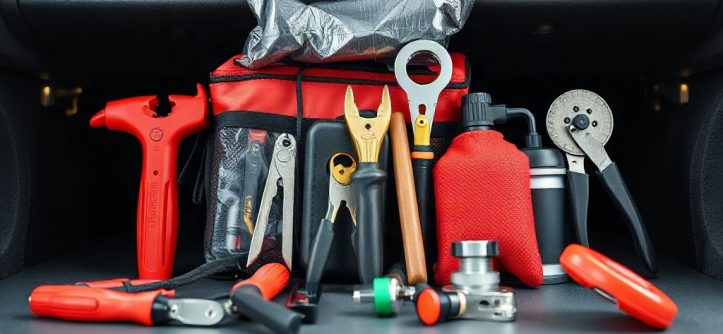
A breakdown at dusk, a flat tire in freezing rain, a stuck seatbelt after a minor collision: the difference between a nuisance and a genuine hazard often comes down to what sits in your trunk. The essential emergency tools to keep in your car form a small, practical kit that helps you stay visible, get moving, or wait safely for help. Most drivers own a jack and a spare, then stop there. Understanding https://vehicletradeus.com/ and the wider world of vehicle ownership makes the gaps in that thinking easy to see. This guide explains what belongs in the kit, why each item earns its space, and how to keep the collection working when you need it.
Quick answer: Keep a kit that covers four jobs: visibility, minor repairs, first aid, and communication. At minimum, carry a flashlight, warning triangle, jumper cables, tire pressure gauge, basic tool roll, first aid kit, and a paper list of emergency numbers. Store everything in one accessible bag or bin, check it twice a year, and replace anything expired or damaged.
What is essential emergency tools to keep?
The essentials are items that solve the most common roadside problems or prevent a small problem from becoming a dangerous one. They fall into four practical groups, and each group answers a specific question.
Visibility and warning
You need to see, and you need others to see you before they reach you. A bright flashlight with spare batteries, a reflective warning triangle, and a high-visibility vest cover this ground. On an unlit road, a triangle placed behind the car gives approaching drivers time to react. The vest matters most when you step out near moving traffic.
Repair and recovery
A tire pressure gauge, a portable tire inflator, and a basic tool roll (screwdrivers, pliers, adjustable wrench, utility knife) handle the small failures that strand people. A jump starter pack or a set of jumper cables addresses a dead battery, one of the most frequent reasons drivers need help. Add a tire iron and confirm your jack actually fits your vehicle; many factory jacks are minimal.
First aid and personal care
A first aid kit with bandages, antiseptic wipes, and gloves is the baseline. Pack water, a blanket, and any personal medication if you drive long distances or through remote areas. These supplies let you stay comfortable while waiting, which is often the entire goal.
Communication and information
A phone charger and cable, a power bank, and a paper copy of emergency contacts round out the kit. A written list survives a dead phone. A small notepad and pen help you record details after an incident.
The pattern is straightforward: each item must solve a real, recurring problem. Novelty gear rarely earns space.
Before adding anything, ask which of the four jobs it serves. Items that serve none tend to stay in the trunk unused for years.
Takeaway: build the kit around visibility, repair, first aid, and communication, not around gadgets.
Why essential emergency tools to keep matters
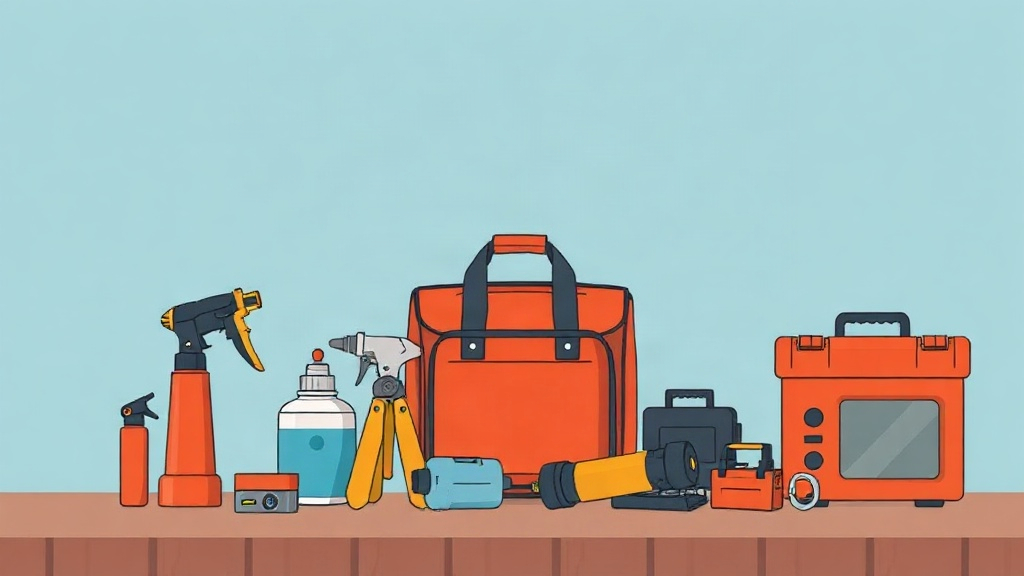
A roadside problem turns dangerous in two ways: exposure and traffic. A stuck driver standing near a dark lane faces both at once. The kit addresses each risk directly, and it does so at moments when improvisation is hardest.
Consider what tools actually change. A warning triangle converts an invisible parked car into an obvious obstacle, giving drivers several seconds more to slow down. A jump starter turns a two-hour wait for a service truck into a five-minute start. A flashlight lets you read your insurance card, find the wheel nut, or signal for help.
The cost argument is simple. Assembling a basic kit costs less than a single emergency towing call in most markets. Replacement batteries and an occasional fresh first aid kit add little. The math favors preparation heavily.
There is a legal dimension in many places. Warning triangles and reflective vests are mandatory equipment in various countries, and driving without them can bring a fine. Check your local requirements, because the list of required items differs by jurisdiction.
A working kit also reduces bad decisions. Drivers without a flashlight often crawl under a car in the dark or walk along a highway shoulder toward a distant light. Both choices raise injury risk. Having the right tool nearby makes the safer option the easy one.
If a breakdown happens in a live traffic lane, getting yourself and passengers to a safe location matters more than any tool. Move to the shoulder or barrier and stay behind it while you assess the situation.
Takeaway: the kit earns its place by cutting response time, lowering exposure, and preventing rushed, risky decisions.
Best practices
A kit only helps if it is complete, reachable, and current. These practices keep it that way.
Build a kit you can actually carry
Store essentials in a single cloth bag or shallow bin with a handle. Split kits between the trunk and a storage bin and you will hunt for pieces you need. Pack the bag so the most-used items sit on top: flashlight, multi-tool, gloves, first aid kit. Keep heavier recovery gear beneath.
Check the kit twice a year
Set reminders for spring and fall, timed with seasonal tire changes if you do those. At each check, test the flashlight, confirm the jump starter holds charge, and inspect the first aid kit for expired items. Batteries left in a flashlight for years can leak and ruin the contacts; remove them if the light sits unused for long stretches.
Match the kit to your driving
A commuter in a mild climate needs a leaner kit than a driver crossing mountain passes in winter. Long-distance drivers should add water, a blanket, and food with a long shelf life. Winter drivers benefit from a small shovel, ice scraper, and sand or traction mats. Parents should keep a spare set of children’s medication and warm layers.
Practice before you need it
Find your jack points, loosen and retighten one wheel nut at home to confirm the tire iron fits, and test the jump starter once on a healthy battery. Reading instructions during a rainstorm at night is a poor time to learn the process. Forced entry is a last resort, but knowing how to break a car window safely in an emergency, such as a child locked inside on a hot day, is knowledge worth having in advance.
Heat degrades batteries, adhesives, and some medications quickly. Park in shade where possible, and store the kit away from direct sun rather than under the rear window.
Takeaway: one accessible bag, two checks a year, and a kit shaped around your actual driving make the difference between owning tools and having a working kit.
Common mistakes to avoid
Most kits fail for predictable reasons. Watch for these.
Buying gear and never checking it
The most common failure is a sealed bag nobody opens for years. Batteries die, inflators lose pressure, and medicines expire. An unchecked kit is a guess, not a plan. The twice-yearly review fixes this, and it should take minutes.
Ignoring the jack and tire iron fit
Factory jacks and tire irons sometimes work poorly, and wheel nuts tightened by a shop can exceed what a short wrench can loosen. Verify the fit at home. Add a breaker bar or a longer wrench if the factory tool struggles. A jack that slips on soft ground is another trap; a small flat board under the jack base adds stability.
Forgetting the human side of a breakdown
Drivers pack tools and forget warmth, water, light, and a phone charger. On a cold night, a blanket matters as much as jumper cables. A power bank matters as much as a wrench. Treat personal comfort and communication as part of the toolkit, not an afterthought.
Storing everything loose
Loose tools rattle, shift, and become hard to find. A small bag with labeled pockets or a shallow bin keeps items visible. Keep a written inventory taped inside the lid, so a quick glance confirms what is present and what went missing.
Overpacking
A trunk filled with rarely used gadgets crowds the space you need for luggage and hides the items that matter. Choose tools that solve real, recurring problems, and leave the rest at home. Review after each season and remove anything you have never touched.
Takeaway: check your kit, verify your tools fit your car, include personal supplies, pack with organization, and resist clutter.
FAQ
How much does a basic emergency kit cost?
A practical starter kit usually costs less than a single emergency towing call in most areas. Prices vary widely by country and brand, so compare locally. Start with the four groups and add items over time rather than buying everything at once.
How often should I replace the items in my kit?
Test batteries, the jump starter, and the flashlight every six months. Replace expired first aid supplies, water, and medications as their dates pass. Gear stored in high heat ages faster, so inspect it more often in hot climates.
Can I keep jumper cables instead of a jump starter pack?
Yes, cables work well when another driver is available to help. A jump starter pack works alone and is convenient for drivers who often travel empty roads. Many drivers carry both, since each covers a different situation.
What should I add for winter driving?
Add a small shovel, ice scraper, warm gloves, a blanket, and sand or traction mats. Extra water and high-energy food help if you must wait. Winter conditions also justify a fully charged power bank and a printed route list.
Is a warning triangle required by law?
Requirements differ by country and sometimes by road type, so check your local rules before assuming. Even where it is optional, a triangle plus a high-visibility vest improves your safety on dark or fast roads.
Conclusion
A sensible emergency kit is modest, organized, and checked regularly. Cover visibility, basic repairs, first aid, and communication, and you handle most roadside problems without waiting hours for help. Verify that your jack and tire iron fit your vehicle, store everything in one reachable bag, and review the contents twice a year. This week, open your trunk, list what is missing, and pack the first three items you lack. A few minutes now makes your next breakdown far less stressful.


Leave a Reply