
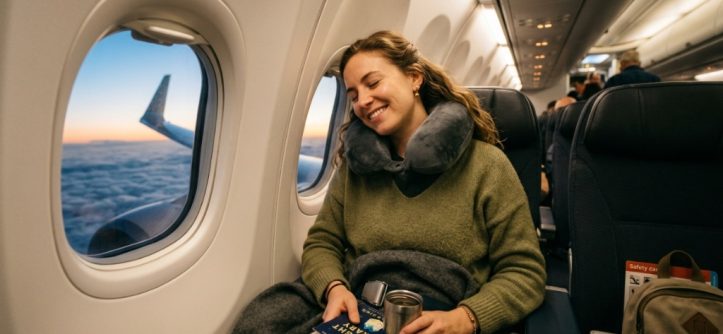
You know the feeling. You board a red-eye flight, buckle up, and settle in for some much-needed rest. But within twenty minutes, your head starts bobbing, your neck aches, and you find yourself waking up more tired than when you boarded. The culprit? A poorly chosen neck pillow. Finding a truly comfortable neck pillow plane travel solution isn’t just about grabbing the first U-shaped foam option at the airport gift shop. It requires understanding your sleep style, the pillow’s materials, and how it interacts with the airplane seat itself. This guide breaks down everything you need to know to make an informed choice, so your next flight can actually be restful.
Why Most Neck Pillows Fail You at 30,000 Feet
The fundamental problem with many travel pillows is that they are designed for a world that doesn’t exist. They assume you will sit perfectly upright with your head facing forward. In reality, airplane seats have headrests that push your head forward, and your body naturally slumps. A standard U-shaped pillow often fails because it pushes your head forward rather than supporting it in a neutral position. This creates a “chin tuck” that strains the neck muscles and leads to that dreaded stiff neck after landing.
Furthermore, the thickness of the pillow matters more than most people realize. If the pillow is too thick, it forces your neck into an unnatural angle. If it is too thin, it provides no support at all. The key is to find a pillow that fills the gap between your neck and shoulder without lifting your head off the alignment of your spine. This is why a one-size-fits-all approach rarely works for everyone.
Key Factors to Consider Before Buying
Before you even start looking at specific models, you need to assess your own habits and body mechanics. This will narrow down your options significantly and save you from wasting money on a pillow that looks great but feels terrible.
Your Sleep Position on a Plane
Are you a side sleeper, a back sleeper, or a “chin-on-chest” sleeper? Your natural tendency dictates the shape of the pillow you need.
- Back sleepers: Need a pillow that supports the curve of the cervical spine without pushing the head too far forward. A U-shape with a higher back section works well.
- Side sleepers: Need a pillow with higher, firmer side bolsters to keep the head level with the shoulders. Look for a “J-shaped” or “horseshoe” design that offers more vertical support.
- Forward sleepers: Those who tend to slump forward need a pillow that wraps around the front of the neck (like a “collar” style) to prevent the head from dropping too far down.
Material and Firmness: The Trade-Offs
The material determines the level of support, packability, and temperature regulation. There is no “best” material, only the best material for your specific needs.
- Memory Foam: Offers the best support and contouring. It molds to your shape and holds your head in place. However, it can be bulky and retains heat, making it warm on long flights.
- Microbeads (Polystyrene): These are lightweight and packable. They conform to the head but offer less structural support. They are often too soft for long-haul flights and can shift around, requiring constant adjustment.
- Inflatable: The ultimate in packability. You can deflate them to save space. However, they can feel hard and unstable, and the air pressure changes during the flight can make them feel different than when you inflated them on the ground.
- Hybrid (Foam + Beads): A good compromise. They offer more support than pure beads but are more flexible than solid foam. They are often easier to pack than a solid foam pillow,
To ensure a truly restful journey from head to toe, keeping your bedroom sleep environment just as cool and sweat-free is essential; check out our guide on how Cooling Pillow Cases Stop Night Sweats for better night comfort.
Understanding the Different Pillow Shapes
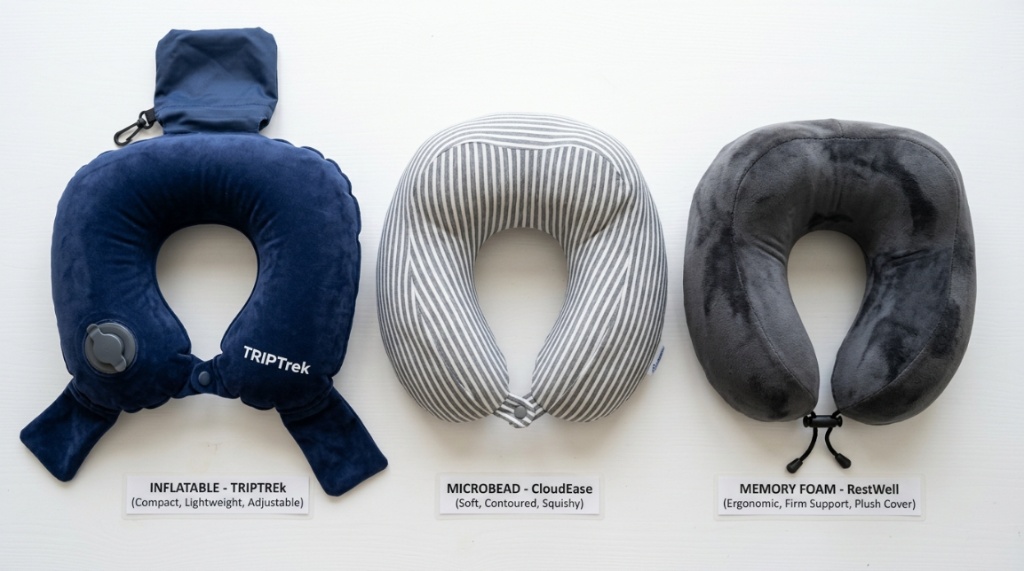
Once you know your sleep position and material preference, you need to consider the shape. The classic “U” is not your only option, and often not the best one.
The Classic U-Shape
This is the most common and works well for back sleepers. It provides even support around the neck. The downside is that it often fails to prevent the head from falling forward, which is the most common cause of neck pain on planes.
The J-Shape (or “Hook”)
This design has a higher, more supportive section on one side. It is ideal for side sleepers who lean against the window. The taller section fills the gap between the ear and shoulder, keeping the spine aligned. It is less versatile than a U-shape but much better for a specific sleeping position.
The Wrap-Around Collar
This style wraps fully around the neck and fastens in the front. It provides excellent support for the chin, preventing the “nodding off” head drop. It is a great choice for forward sleepers but can feel restrictive for those who prefer to turn their head.
The “Zero-Profile” or Flat Pillow
These are thin, flat pillows that rest on the tray table or against the seatback. They are designed for those who prefer to lean forward. While they are compact, they do not provide support for the lateral movement of the head.
How to Test a Pillow for Fit
You cannot test a pillow on an airplane seat in the store, but you can simulate the conditions. When you are evaluating a pillow, place it around your neck while sitting in a straight-backed chair. Pay attention to the following:
- Check the gap: Does the pillow fill the space between your neck and shoulder, or is there a large air gap? A gap means no support.
- Check your chin: Does the pillow push your chin down toward your chest? If so, it is too thick in the front. Does it allow your chin to drop freely? If so, it is too thin.
- Check the sides: Can you turn your head slightly without the pillow digging into your jaw or pushing your head too far forward? You need a little room to shift positions.
If you are shopping online, look for detailed measurements of the pillow’s height and thickness. A pillow that is 4 inches thick in the side bolsters is generally better for side sleepers, while a 3-inch thickness is better for back sleepers.
Practical Tips for Using Your Neck Pillow Effectively
Even the best pillow will fail if you use it incorrectly. Many travelers make the mistake of placing the pillow behind their head instead of around their neck. The pillow should sit snugly against the back of your neck, with the thicker part of the U-shape under the base of your skull, not behind your head. This supports the cervical spine and prevents the head from rolling backward.
Another overlooked factor is the airplane seat itself. If you have a window seat, you can lean against the window for additional support. If you are in the middle or aisle seat, you are entirely reliant on your pillow. In this case, a J-shaped pillow or a wrap-around collar is often more effective than a U-shape because it provides more anterior (front) support to stop the head from bobbing forward. For those looking for a budget-friendly option that still offers decent support, you might find that a well-reviewed comfortable neck pillow plane travel option doesn’t have to break the bank, but you still need to prioritize the fit over the price tag.
Common Mistakes to Avoid When Buying
There are a few common pitfalls that lead to buyer’s remorse. Being aware of these can help you avoid wasting money.
- Buying for the “someday” trip: Don’t buy a pillow for a trip you might take. Buy it for the specific flight you have booked. A short domestic flight might be fine with an inflatable pillow, while a 14-hour international flight demands a high-quality memory foam option.
- Ignoring the washability: Travel pillows get dirty. They are exposed to germs, food crumbs, and sweat. If the cover is not removable and washable, you will be stuck with a smelly pillow. Always check the care instructions before purchasing.
- Choosing style over function: A cute, novelty-shaped pillow might look fun, but it rarely provides the ergonomic support your neck needs. Prioritize function over aesthetics.
- Forgetting about compression: If you are a minimalist packer, a bulky memory foam pillow will eat up your carry-on space. Consider how the pillow packs. Does it have a compression sack? Can it be rolled up? If not, you might need to clip it to the outside of your bag.
When to Replace Your Travel Pillow
Travel pillows are not lifetime purchases. Over time, memory foam loses its density and support, and inflatable pillows develop slow leaks. If you find that you are waking up with a sore neck even when using your pillow, it is likely time to replace it. Similarly, if the foam has yellowed or lost its spring-back ability, it is no longer providing the necessary support. A good rule of thumb is to replace your travel pillow every 1-2 years, depending on how often you fly.
Frequently Asked Questions
Is an inflatable neck pillow better than a memory foam one?
It depends on your priorities. Inflatable pillows are better for packability and adjustability, but they are often less comfortable and stable than memory foam. Memory foam offers superior support and comfort but takes up more space in your bag.
Can I use a neck pillow on a train or in a car?
Yes, absolutely. The same principles of neck support apply to any mode of transport where you might sleep in a seated position. A good travel pillow is versatile and can be used on trains, buses, and in passenger vehicles.
How do I clean a memory foam neck pillow?
Always check the label first. Most memory foam pillows have a removable, machine-washable cover. The foam core itself should never be machine washed, as it will break down. Instead, spot clean it with a damp cloth and mild detergent, then air dry it completely.
What is the best neck pillow for side sleepers on a plane?
A J-shaped or “hook” style pillow is generally the best for side sleepers. The taller side bolster provides the necessary height to keep your head aligned with your spine, preventing a kink in your neck.
Why does my neck hurt even when I use a travel pillow?
This usually happens because the pillow is either too thick or too thin for your body, or because you are not positioning it correctly. Ensure the pillow is snug against the back of your neck and that your head is not being pushed forward or tilted too far to the side.
Conclusion
Selecting the right travel pillow is a personal process that requires a bit of self-awareness. There is no universal “best” pillow; there is only the best pillow for your body, your sleep habits, and your travel style. Start by identifying how you sleep on a plane, then choose a material and shape that supports that position. Remember to prioritize the fit over the brand name, and don’t be afraid to replace a pillow that isn’t working for you. By taking the time to make an informed choice, you can transform your next flight from a battle against fatigue into a chance to arrive at your destination feeling refreshed and ready to go.




Leave a Reply