

Why Do You Need a Surfboard Repair Stand?
A repair stand is essential for:
- Stability: Keeps your surfboard steady while you work, preventing slips or wobbles.
- Accessibility: Elevates the board to a comfortable height, reducing strain on your back and arms.
- Precision: Allows you to work on both sides of the board easily, ensuring even repairs.
- Safety: Prevents damage to your board or workspace by keeping it secure.
What Are the Different Types of Surfboard Repair Stands?
Here are the most common types of stands for surfboard repairs:
| Type | Description | Pros | Cons | Best For |
|---|---|---|---|---|
| Adjustable Height Stands | Stands with telescopic or adjustable legs to customize the height. | Versatile, comfortable for different users | More expensive, can be bulkier | Frequent use, multi-user workshops |
| Fixed Height Stands | Stands with a set height, often lightweight and portable. | Affordable, easy to store | Less versatile, may not suit all users | Occasional use, budget-friendly |
| Wall-Mounted Stands | Stands that attach to a wall, freeing up floor space. | Space-saving, sturdy | Permanent installation required | Small workshops, garages |
| Folding Stands | Collapsible stands for easy storage and transport. | Portable, space-efficient | May be less stable than fixed stands | Traveling, limited space |
| Workbench Stands | Stands designed to clamp onto a workbench or table. | Sturdy, integrates with existing workspace | Requires a workbench, less portable | Dedicated workshops |
What Features Should You Look for in a Surfboard Repair Stand?
Here are the key features to consider when choosing a stand:
- Stability: Look for stands with a wide base or non-slip feet to prevent wobbling.
- Adjustability: Adjustable height and angle allow you to work comfortably on different parts of the board.
- Material: Durable materials like aluminum, steel, or high-quality plastic ensure longevity.
- Weight Capacity: Ensure the stand can support the weight of your surfboard (most stands support 20–50 lbs).
- Portability: If you need to move or store the stand, look for lightweight or folding designs.
- Padding: Soft padding on the cradles or arms protects your board from scratches and dents.
- Ease of Use: Simple assembly and intuitive adjustments make the stand more user-friendly.—
What Are the Best Surfboard Repair Stands for DIY Repairs?
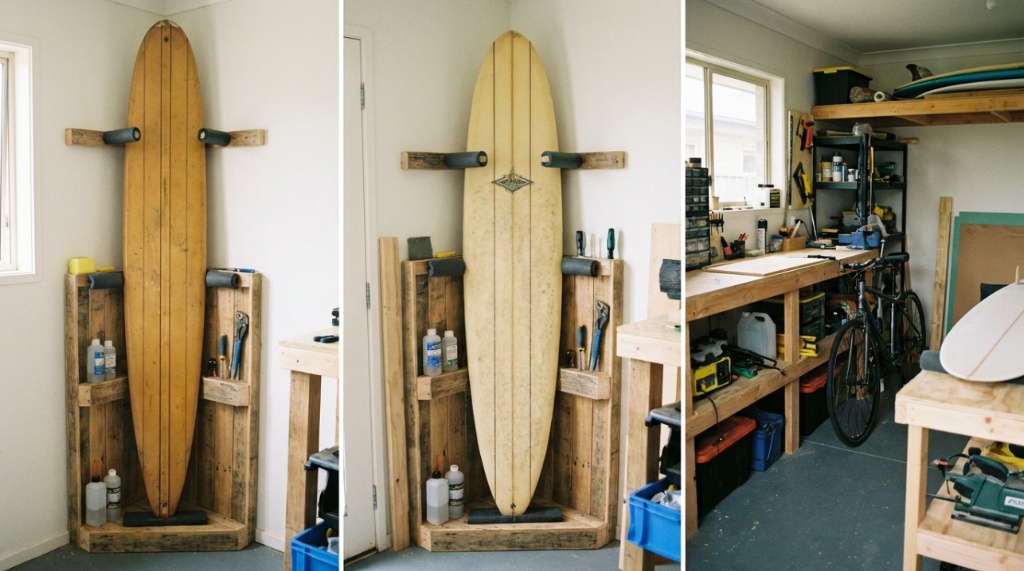
Here are some of the best stands for DIY surfboard repairs, based on quality, features, and user reviews:
| Model | Type | Key Features | Price Range | Best For |
|---|---|---|---|---|
| Pro-Tec Surfboard Repair Stand | Adjustable Height | Aluminum frame, adjustable height (28–42″), padded arms, 50 lb capacity | $120–$150 | Versatile, frequent use |
| FCS Surfboard Repair Stand | Fixed Height | Lightweight, portable, padded cradles, 30 lb capacity | $80–$100 | Budget-friendly, occasional use |
| Gorilla Racks Surfboard Stand | Wall-Mounted | Sturdy steel construction, space-saving, padded arms, 40 lb capacity | $100–$130 | Small workshops, garages |
| StoreYourBoard Adjustable Stand | Folding | Collapsible, adjustable height, lightweight, 25 lb capacity | $90–$110 | Portable, limited space |
| Yoga4Surf Workbench Stand | Workbench | Clamps to workbench, sturdy, padded arms, 35 lb capacity | $70–$90 | Dedicated workshops |
For more options, check out DIY surfboard repair setup.
How Do You Set Up a Surfboard Repair Stand?
Follow these steps to set up your stand safely and effectively:
- Choose a Flat Surface: Place the stand on a flat, stable surface to prevent wobbling.
- Adjust the Height: If your stand is adjustable, set it to a comfortable working height (typically waist-level).
- Secure the Board: Place your surfboard on the stand’s cradles or arms, ensuring it’s centered and balanced.
- Check Stability: Gently push on the board to ensure it’s stable and won’t tip over.
- Test the Angle: Adjust the angle of the stand if needed to access different parts of the board easily.
Perfecting your ding repair technique on a stable rack is essential before packing your bags for a major surf trip. If you plan to test your newly mended board on world-class breaks, you might wonder, what is destination travel in the world of surfing? Aspiring heavy-water chargers often head straight to the Pacific; just make sure you pick the right surfboard size for Hawaiian waves so your equipment matches the power of the ocean.
Frequently Asked Questions
Can I use a surfboard storage rack as a repair stand?
Not ideal. Storage racks are designed to hold boards vertically or horizontally but may not provide the stability or accessibility needed for repairs. A dedicated repair stand is a better investment.
How do I know if a surfboard repair stand is stable enough?
Test it before use:
- Place your board on the stand and gently push on it from different angles.
- Ensure the stand doesn’t wobble or tip over.
- Check that the base is wide and non-slip.
What’s the best height for a surfboard repair stand?
Waist-level height (around 36–42 inches) is ideal for most users, as it reduces strain on your back and arms while allowing easy access to the board.
Can I build my own surfboard repair stand?
Yes! If you’re handy, you can build a simple stand using PVC pipes, wood, or metal. However, store-bought stands are often more stable and convenient.
Do I need padding on my surfboard repair stand?
Yes! Padding on the cradles or arms protects your board from scratches, dents, and other damage during repairs.




Leave a Reply