
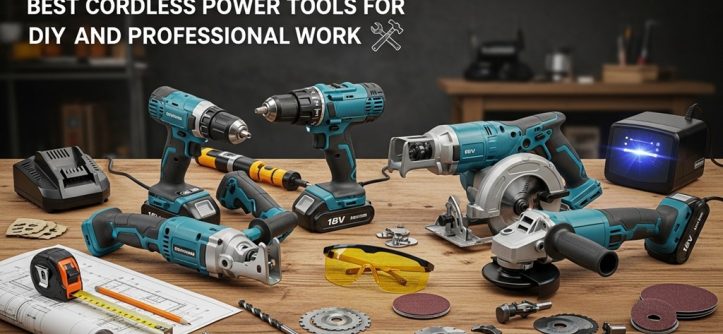
Cordless power tools are battery-powered tools designed to perform drilling, cutting, fastening, and grinding without being connected to a power outlet. They are essential because they provide portability, flexibility, and efficiency for both DIY users and professionals.
If you’ve ever struggled with tangled cords, limited mobility, or unreliable power sources, you already know the problem. Traditional tools slow you down. They limit where and how you work.
The demand for modern power tools has surged due to advancements in lithium-ion battery technology. According to industry reports, cordless tools now account for over 60% of global power tool sales. This shift is driven by improved battery life, faster charging, and better motor efficiency.
Whether you’re building furniture, running a workshop, or managing construction projects, choosing the best battery tools can significantly improve productivity and results.
What tools should be included in a cordless tools list?
A complete cordless tools list should include essential tools that cover drilling, cutting, fastening, and finishing tasks.
- Drill/Driver – For drilling holes and driving screws
- Impact Driver – For heavy-duty fastening
- Circular Saw – For cutting wood and boards
- Jigsaw – For curved and detailed cuts
- Angle Grinder – For cutting metal and polishing
- Oscillating Multi-Tool – For sanding, scraping, and cutting
- Reciprocating Saw – For demolition work
- Cordless Nail Gun – For framing and finishing
For DIY users, starting with a drill and impact driver is often enough. Professionals, however, require a full ecosystem of tools for efficiency.
Many brands now offer combo kits, which include multiple tools powered by the same battery platform. This reduces cost and improves compatibility.
How do you choose the best battery tools for your needs?

Choose battery tools based on usage type, battery voltage, ergonomics, and ecosystem compatibility.
Here’s a breakdown:
1. Understand Your Use Case
If you’re a DIY user, you don’t need industrial-grade tools. A 12V or 18V system is usually sufficient.
Professionals should look for 18V or 20V MAX systems with high torque and longer runtime.
2. Check Battery Voltage and Capacity
- 12V: Lightweight tasks
- 18V/20V: Medium to heavy tasks
- 36V+: Industrial applications
Battery capacity (Ah) affects runtime. A 5.0Ah battery lasts longer than a 2.0Ah battery.
3. Evaluate Brushless Motors
Brushless motors are more efficient and durable. They generate less heat and provide more power.
Studies show brushless tools can increase efficiency by up to 30% compared to brushed motors.
4. Consider Brand Ecosystem
Choose a brand that offers multiple tools using the same battery system. This saves money long-term.
5. Weight and Ergonomics
Heavy tools cause fatigue. Look for lightweight designs with comfortable grips.
What are the key features of modern power tools?
Modern power tools focus on performance, safety, and user convenience.
- Brushless motors for efficiency
- Smart battery management systems
- Fast charging (under 60 minutes)
- LED lights for visibility
- Variable speed control
- Electronic braking systems
Some advanced tools also include Bluetooth connectivity for tracking and performance monitoring.
These innovations make modern power tools more reliable and suitable for demanding environments.
Are cordless tools powerful enough for professional work?
Yes, modern cordless tools are powerful enough for most professional applications.
Earlier, cordless tools were limited by battery performance. Today, high-capacity lithium-ion batteries and brushless motors have changed that.
Case Study: A construction company in the U.S. switched from corded to cordless systems across job sites. They reported:
- 25% increase in productivity
- Reduced setup time
- Improved worker mobility
Heavy-duty tools like cordless rotary hammers and impact wrenches now match or exceed corded performance in many scenarios.
What mistakes should you avoid when buying cordless tools?
Avoid buying tools without considering compatibility, battery quality, and long-term needs.
- Ignoring battery platform compatibility
- Choosing cheaper batteries with low lifespan
- Overpaying for features you don’t need
- Buying single tools instead of combo kits
- Not checking warranty and support
One of the biggest mistakes is mixing brands. This leads to multiple chargers and batteries, increasing costs.
How do cordless tools compare to corded tools?
Cordless tools offer portability and convenience, while corded tools provide consistent power.
| Feature | Cordless Tools | Corded Tools |
|---|---|---|
| Mobility | High | Limited |
| Power | High (modern tools) | Very high |
| Maintenance | Low | Moderate |
| Setup Time | Fast | Slow |
| Best Use | On-site work | Workshop tasks |
For most users, cordless tools are now the preferred choice due to flexibility and improved performance.
How long do cordless tool batteries last?
Most lithium-ion batteries last between 3 to 5 years, depending on usage and maintenance.
Factors affecting battery life:
- Charge cycles
- Storage conditions
- Usage intensity
- Temperature exposure
To extend battery life:
- Avoid full discharge frequently
- Store in a cool, dry place
- Use original chargers
What is the best cordless tools setup for beginners?
A beginner setup should include a drill, impact driver, and one cutting tool.
Recommended starter kit:
- Cordless drill/driver
- Impact driver
- Circular saw or jigsaw
- 2 batteries (2.0Ah or higher)
- Fast charger
This setup covers 80% of common DIY tasks.
Conclusion: Which cordless power tools should you choose?
The best cordless power tools depend on your needs, budget, and long-term usage.
If you choose randomly, you risk wasting money and limiting your workflow. But if you focus on battery ecosystem, performance, and real use cases, you build a system that grows with you.
Start with essential tools. Invest in quality batteries. Stick to one brand ecosystem.
Whether you’re a DIY enthusiast or a professional, the right cordless tools can transform how you work—faster, cleaner, and more efficiently.
CTA: Ready to upgrade your toolkit? Start by building your cordless tools list today and choose tools that match your real workload, not just trends.
Frequently Asked Questions (FAQs)
1. What are the best battery tools for home use?
The best battery tools for home use include a drill, impact driver, and jigsaw. These tools handle most DIY tasks efficiently.
2. Are cordless tools worth the investment?
Yes, cordless tools are worth it due to their portability, ease of use, and improved battery performance in modern systems.
3. How many batteries should I have?
You should have at least two batteries. This allows one to charge while the other is in use, ensuring uninterrupted work.
4. What voltage is best for cordless tools?
18V or 20V tools are ideal for most users. They offer a balance of power and portability.
5. Can cordless tools replace corded tools?
In most cases, yes. Modern cordless tools provide enough power for professional tasks, except for some heavy industrial applications.
6. How do I maintain cordless power tools?
Keep tools clean, store batteries properly, and avoid overcharging. Regular maintenance extends tool life.
7. What is the difference between brushed and brushless motors?
Brushless motors are more efficient, last longer, and provide better performance compared to brushed motors.
Read More Also: 7 Common Golf Putting Mistakes and How to Fix Them
Find out: Discover Why Swimming Lessons in Alexandria Kingstowne VA Are Worth Every Penny



Leave a Reply