
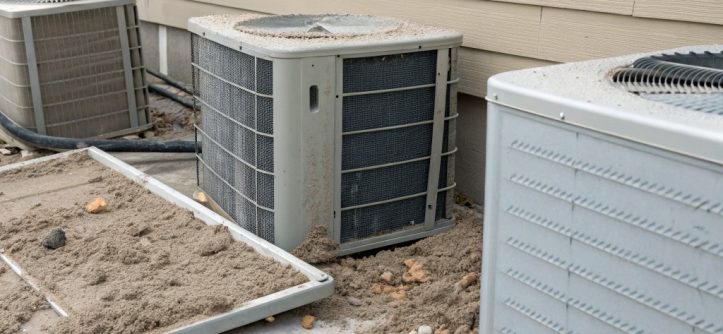
Outdoor pollution, renovation dust and everyday indoor activity all feed into the constant stream of particulates moving through an HVAC system. While filters catch a portion of it, many components still face buildup that changes how the system performs. Understanding which areas suffer the most helps explain why College Grove HVAC cleaning plays such an important role in keeping equipment reliable.
Grime-clotted Evaporator Coil Fins
Evaporator coils rely on thin, delicate fins to transfer heat efficiently, but these fins become coated with grime when particulate levels rise. The buildup creates a barrier between the air and coil surface, forcing the system to work harder to absorb heat. Cooling output declines, temperatures shift across different rooms, and energy consumption can climb without clear reason.
Moisture around the coil worsens the situation by trapping dust and helping it harden into a sticky layer. Airflow slows as the material thickens, sometimes allowing frost to form on the coil. Many people search for HVAC cleaning near me once they notice reduced cooling power or longer run times connected to coil obstruction.
Dust-caked Blower Motor Fan Blades
Blower fan blades depend on clean, balanced surfaces to move air smoothly through the system. Dust accumulation often throws off this balance, causing vibration, louder operation, and reduced airflow. As layers build up, the blades lose efficiency and the motor must work harder to maintain pressure throughout the ductwork.
Another issue occurs when debris changes the angle at which blades slice through the air. This subtle shift disrupts the designed airflow volume and affects comfort levels in different parts of the home. Technicians offering HVAC cleaning in College Grove TN commonly find blower assemblies heavily coated with fine dust during system inspections.
Clogged Heat Exchanger Combustion Paths
Heat exchangers in gas systems require open combustion paths to burn fuel cleanly. Particulate buildup inside these channels interrupts the flow of air and gas, leading to incomplete combustion and temperature inconsistencies. The system may begin cycling irregularly or heating less effectively than expected.
Clogged combustion paths also create additional strain on ignition components and safety sensors. This situation can escalate if ignored, making it one of the more sensitive areas impacted by particulate accumulation. College Grove HVAC cleaning services often include combustion-area checks for this reason.
Obstructed Condensate Drainage Lines
Condensate lines quietly handle moisture created during cooling cycles, but dust and organic debris can migrate into the line and restrict drainage. As water slows or backs up, the system may shut down to prevent overflow, or homeowners might spot water near the indoor unit.
Mold can also form inside the line when moisture sits still, releasing odors each time the system runs. People who notice musty smells coming from vents often seek HVAC cleaning near me, not realizing that the issue may be tied to a partially blocked drainage line.
Debris-laden Return Air Ducting
Return ducts pull air back into the HVAC system, making them prime collection points for particulate matter. Over time, these ducts accumulate layers of dust, pet hair, renovation particles, or insulation fibers. Restricted return airflow forces the blower to strain harder and reduces overall system efficiency.
One overlooked problem involves debris bypassing the filter due to pressure changes. That material can settle deeper within the system where it affects coils, motors, and sensors. Thorough College Grove HVAC cleaning helps prevent return duct buildup from impacting multiple components downstream.
Overloaded Pleated Secondary Filters
Secondary filters placed inside air handlers or furnaces offer added particle protection but often overload faster than homeowners expect. As particulates accumulate, these filters restrict airflow and cause the blower motor to work beyond its intended range. Reduced airflow can also lead to temperature swings or slow heating and cooling response. Filtration struggles intensify when ducts already contain accumulated dust. Secondary filters can’t compensate for debris already traveling toward them, which is why HVAC cleaning in College Grove TN becomes necessary rather than relying on more frequent filter changes alone.
Sticky Thermostat Internal Sensors
Thermostats contain sensitive internal sensors that detect room temperature accurately. When particulate matter enters through small openings or gaps, these sensors may become coated with a fine layer of dust. That buildup interferes with temperature readings, causing the system to turn on or off at inappropriate times.
Confusing temperature swings may appear long before the homeowner suspects the thermostat itself. Sensor contamination often goes unnoticed until a technician examines the inside of the device during routine HVAC cleaning near me or maintenance service.
Soot-heavy Electric Heating Elements
Electric heating elements generate warmth consistently, but they attract soot-like particles that cling to hot surfaces over time. As buildup thickens, the elements may heat unevenly or produce odors during operation. This debris also reduces heat transfer efficiency, prompting the system to run longer to maintain the same temperature. Material on heating elements can harden after repeated cycles, making it increasingly difficult for the system to overcome the insulation effect. College Grove HVAC cleaning professionals often remove soot layers during seasonal maintenance to restore steady operation.
Friction-prone Blower Assembly Bearings
Bearings inside the blower assembly rely on smooth rotation to maintain airflow. Dust and particulate contamination gradually mix with lubrication, thickening it and causing friction. As friction increases, bearings may squeal, grind, or slow, ultimately affecting airflow and system lifespan.
Overheated bearings can cause the blower motor to shut down unexpectedly if the strain becomes too high. Services offering HVAC cleaning in College Grove TN frequently include bearing assessments to catch early signs of particulate-related wear. For those needing help with particulate buildup across these components, Mr B provides cleaning and inspection options that support system reliability and performance.



Leave a Reply