
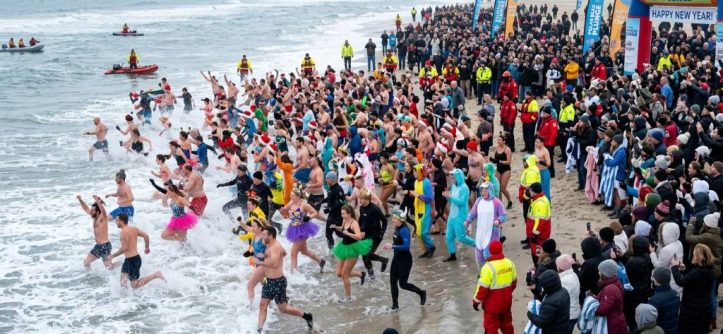
Every January 1, thousands of brave souls around the world strip down, sprint across frozen sand, and leap into icy water. The tradition is bold, joyful, and surprisingly popular. In 2027, January 1 falls on a Friday, making it a perfect long-weekend adventure for those who want to kick off the new year with a rush. Whether you are a seasoned cold-water swimmer or a curious newcomer, this guide covers the best beaches, top charity events, and everything you need to know before you dip.
What Is a Polar Bear Plunge?
A polar bear plunge is a cold-water swim held outdoors in winter. Participants enter a natural body of water — an ocean, a lake, or a river — usually at or near freezing temperatures. The event is typically brief. Most participants stay in the water for just a minute or two before returning to the warmth of a towel, a blanket, or a cup of hot chocolate.
The tradition dates back over a century. The Coney Island Polar Bear Club in New York, founded in 1903, is widely considered the oldest group dedicated to regular cold-water swimming. Since then, the custom has spread across the United States, Canada, the United Kingdom, Ireland, Australia, and beyond. Today, hundreds of events are organized every New Year’s Day, drawing crowds of participants and spectators alike.
Why People Take the Plunge on January 1
There are many reasons why people choose to start the new year with a cold swim. For some, it is a test of willpower — a way to prove to themselves that they can do something difficult on the very first day of the year. For others, it is a social tradition, a chance to laugh, shout, and share a memorable moment with friends and strangers.
Additionally, cold-water immersion is associated with several perceived health benefits. Many regular swimmers report improved circulation, reduced stress, and a mood boost after a cold dip. While medical evidence is still evolving, the anecdotal enthusiasm is undeniable. Therefore, the plunge serves both as a personal challenge and a communal celebration.
Charity is another major motivator. Many events raise funds for local causes, national nonprofits, and international organizations. Participants collect pledges before the event and donate the proceeds after. This fundraising element has transformed many small local gatherings into large, well-organized annual events.
Top Beaches for Polar Bear Plunges on January 1, 2027
North America and Europe host the most established polar bear plunge events. Here are some of the most popular and well-attended locations to consider for January 1, 2027.
Coney Island, New York, USA
The Coney Island Polar Bear Club hosts its annual New Year’s Day swim at the famous Brooklyn beach. This is one of the oldest and most iconic events in the world. Crowds gather early, the energy is electric, and the Atlantic Ocean in January is genuinely cold — usually around 3 to 5 degrees Celsius. Thousands of participants and spectators attend each year, and media coverage is widespread.
English Bay Beach, Vancouver, Canada
The Polar Bear Swim in Vancouver has been held since 1920, making it one of North America’s longest-running cold-water traditions. English Bay Beach fills with more than 2,000 swimmers every January 1. The water temperature in the Pacific here hovers around 8 degrees Celsius. Costumes are strongly encouraged, and the atmosphere is festive and family-friendly.
Loony Dook, South Queensferry, Scotland
The Loony Dook is Scotland’s most famous New Year’s swim. It takes place in the Firth of Forth, under the shadow of the iconic Forth Rail Bridge. Participants often wear elaborate fancy-dress costumes, and the event draws thousands of spectators. The water temperature in January averages around 6 degrees Celsius.
Forty Foot, Dublin, Ireland
The Forty Foot at Sandycove is a beloved Dublin swimming spot with a long New Year’s Day tradition. Every January 1, hundreds of swimmers brave the Irish Sea in what has become a cherished cultural ritual. The spot is compact, the atmosphere is warm despite the cold water, and the nearby cafes fill quickly afterward.
Scheveningen Beach, The Hague, Netherlands
The Netherlands hosts one of Europe’s largest New Year’s Day plunges at Scheveningen. In recent years, more than 10,000 participants have entered the North Sea in a single morning. The event is formally organized, with safety patrols, hot drinks, and onsite support. The water temperature is typically around 7 degrees Celsius.
Bondi Beach, Sydney, Australia
Australia flips the winter tradition into a summer celebration. Bondi Beach hosts a New Year’s Day swim in warm conditions, making it a relaxed and accessible event for all ages. However, the spirit of community and fresh-start swimming is just as strong. For those in the Southern Hemisphere, this is a sun-soaked alternative to the icy European and North American dips.
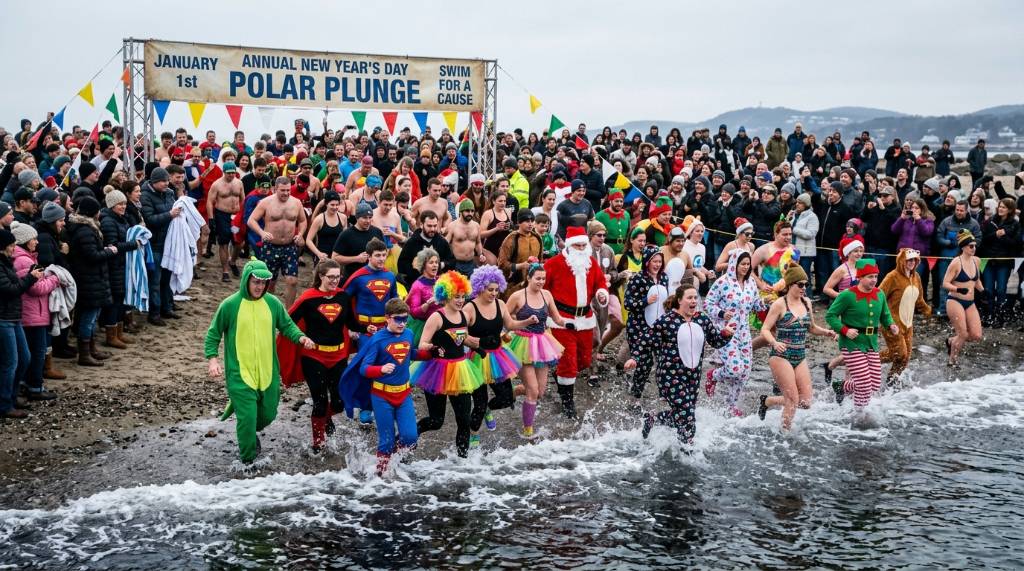
Charity Dips and Fundraising Events
Many of the world’s best polar bear plunge events are organized around charitable causes. These events combine the thrill of cold-water swimming with meaningful community impact.
Special Olympics Polar Plunge (USA)
The Special Olympics Polar Plunge is held in dozens of U.S. states throughout the winter months, with many events scheduled on or near January 1. Participants raise funds to support athletes with intellectual disabilities. The events are energetic, well-organized, and open to all fitness levels.
Dip in the Nip, Ireland
Dip in the Nip is a nationwide event in Ireland that takes place on New Year’s Day. Organized to raise funds for cancer charities, the event has grown significantly in recent years. Participants register online, collect sponsorship pledges, and join group swims at beaches and lakes across the country.
Decathlon New Year’s Day Swim, UK
Various UK charities organize New Year’s Day swims at seaside locations along the English coast. Causes supported include mental health organizations, hospice care, and children’s charities. Events are typically free to enter, though donations and sponsor forms are strongly encouraged.
Polar Bear Dip, Canada
Across Canada, numerous community groups and nonprofit organizations host New Year’s Day dips to support local causes. Events range from intimate community gatherings to large organized swims with hundreds of participants. Funds raised often benefit food banks, shelters, and health research.
How to Prepare for Your First Winter Swim
If January 1, 2027 will be your first cold-water plunge, some preparation will make the experience much more enjoyable. Cold water affects the body quickly, so a few sensible steps go a long way.
First, research the event you plan to attend. Check whether registration is required, whether there is a minimum age, and whether safety personnel will be present. Most organized events are well-staffed, but it is always good to know what to expect.
Second, dress appropriately before and after the swim. Bring warm layers, a change of clothes, thick socks, and a hat. The air temperature on January 1 is often as cold as the water, so getting warm immediately after exiting is important.
Third, enter the water gradually if you can. A slow entry gives your body a chance to adjust to the temperature. Avoid submerging your head suddenly, as this can trigger a cold shock response. Take slow, steady breaths.
Finally, do not swim alone. Always participate in organized events or go with a group. Cold water can cause muscle cramps and disorientation faster than most people expect, especially for first-timers.
Summary of Major Events on January 1, 2027
| Event | Location | Water Temp (approx.) | Charity Focus | Costume Tradition |
| Coney Island Polar Bear Club | New York, USA | 3–5°C | Local causes | Yes |
| Vancouver Polar Bear Swim | Vancouver, Canada | ~8°C | Community groups | Yes |
| Loony Dook | South Queensferry, Scotland | ~6°C | Various charities | Yes |
| Forty Foot Swim | Dublin, Ireland | ~9°C | Cancer charities | Optional |
| Scheveningen Plunge | The Hague, Netherlands | ~7°C | Local nonprofits | Optional |
| Bondi Beach Swim | Sydney, Australia | ~22°C | Surf lifesaving | No |
| Special Olympics Plunge | Multiple U.S. states | Varies | Special Olympics | Yes |
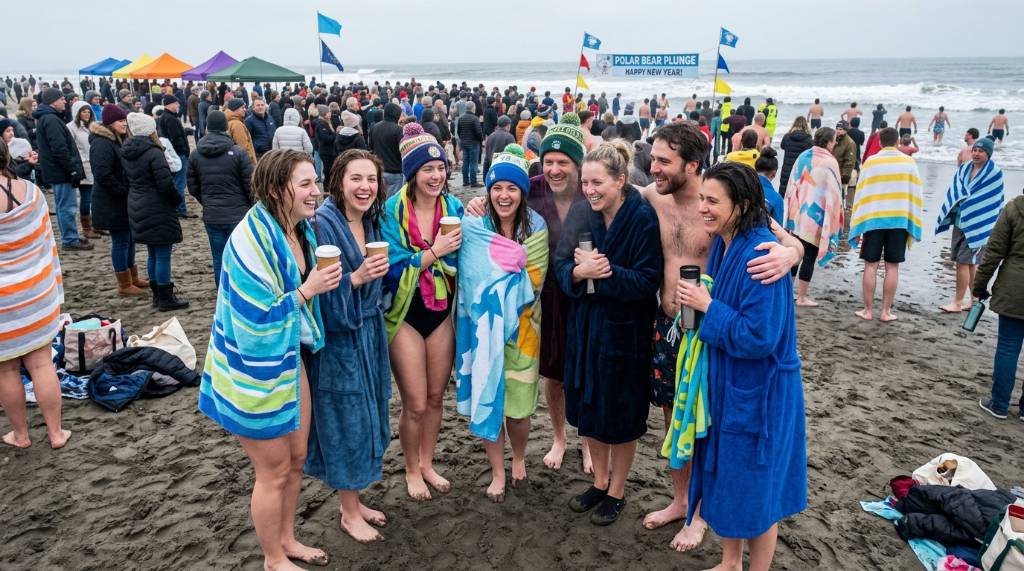
Safety Tips for Cold Water Swimming
Cold water swimming is a rewarding experience, but it carries real physical risks. The following tips will help you stay safe on January 1, 2027.
Always check the event’s safety guidelines before attending. Reputable events post detailed instructions on their websites and briefing areas. Follow all instructions from organizers and lifeguards.
Avoid alcohol before a cold swim. Alcohol impairs judgment, reduces your ability to feel cold, and increases the risk of hypothermia. Save the celebratory drink for after you have warmed up fully.
Know the signs of hypothermia. These include uncontrollable shivering, slurred speech, confusion, and pale or blue skin. If you or someone near you shows these signs, exit the water immediately and seek help.
People with heart conditions, asthma, or high blood pressure should consult a doctor before participating. Cold water causes an immediate spike in heart rate and blood pressure. This is manageable for healthy adults, but can be dangerous for those with underlying conditions.
Warm up gradually after the swim. Do not jump into a hot shower immediately, as the sudden temperature change can cause dizziness. Instead, dry off, layer up, and drink a warm beverage while your body temperature rises naturally.
Conclusion
January 1, 2027 offers an extraordinary opportunity to start the new year in the most memorable way possible — by plunging into cold water surrounded by a cheering crowd. From the legendary beaches of New York and Vancouver to the festive shores of Scotland and the Netherlands, events around the world welcome newcomers and veterans alike.
Many of these events also serve a greater purpose, raising vital funds for charities that support health, disability, and community causes. Whether you are motivated by the challenge, the community, or the cause, a New Year’s Day plunge is a unique and uplifting way to begin 2027. Prepare well, stay safe, and enjoy the icy rush that thousands of swimmers look forward to every year.
Frequently Asked Questions
What is a polar bear plunge?
A polar bear plunge is a cold-water swim held outdoors in winter, typically on New Year’s Day. Participants enter a natural body of water at low temperatures for a brief but exhilarating experience.
When is the polar bear plunge in 2027?
Most events are held on January 1, 2027, which falls on a Friday. Some events may also be held on the surrounding weekend.
How cold is the water at a polar bear plunge?
Water temperatures vary by location. In Northern Europe and the northeastern U.S., water can be as cold as 3 to 6 degrees Celsius. In milder climates such as Australia, water may be much warmer.
Is it safe to do a polar bear plunge?
For healthy adults, a brief cold-water swim at an organized event is generally safe. However, people with heart conditions, high blood pressure, or asthma should consult a doctor first.
Do I need to register in advance?
Many events require advance registration, especially larger charity events. Check the specific event’s website for registration details, fees, and deadlines.
What should I wear to a polar bear plunge?
Wear a swimsuit for the swim itself. Bring warm clothes, thick socks, a hat, gloves, and a towel for before and after. Many participants also wear fun costumes.
How long do most people stay in the water?
Most participants stay in the water for one to three minutes. The goal is not endurance but the experience of the cold-water shock and the joy of participating.
Can children participate in polar bear plunges?
Some events welcome families with children, while others have age restrictions. Always check the rules of your specific event. Children should be accompanied by an adult at all times.
How can I raise money for charity at a polar bear plunge?
Many events provide sponsor forms or online fundraising pages. Share your fundraising link on social media, contact friends and family, and set a clear fundraising goal before the event.
What are the health benefits of cold-water swimming?
Many swimmers report improved mood, reduced stress, and a sense of invigoration after cold-water dips. Regular cold-water exposure may also support circulation and mental resilience, though individual results vary.



Leave a Reply