

Baking bread at home has experienced a remarkable resurgence in recent years. Whether you’re crafting artisan sourdough or simple sandwich loaves, a quality stand mixer can elevate your baking experience. However, selecting the right mixer for bread dough requires careful consideration of several factors. This comprehensive guide will walk you through everything you need to know to make an informed decision.
Why Bread Dough Demands Special Attention
Bread dough differs significantly from cake batter or cookie dough. It’s dense, heavy, and requires sustained mixing to develop gluten properly. Therefore, not all stand mixers can handle this demanding task effectively. Understanding these unique requirements will help you avoid purchasing a mixer that struggles or fails when working with yeasted doughs.
Many bakers discover too late that their mixer lacks the power needed for bread making. The motor overheats, strange noises emerge, or the machine simply stops mid-knead. Consequently, investing in the right equipment from the start saves money and frustration in the long run.
Motor Power and Capacity Considerations
The motor is the heart of any stand mixer. For bread dough, you need substantial power to push through thick mixtures without strain. Mixers with at least 300 watts can handle occasional bread baking. However, if you plan to make bread regularly, consider models with 500 watts or more.
Additionally, wattage alone doesn’t tell the whole story. High torque mixers deliver consistent power even when resistance increases. This steady performance prevents the motor from burning out during extended mixing sessions. Look for mixers that specifically mention their capability to handle dense doughs.
Bowl capacity matters just as much as motor strength. A 4.5-quart bowl suits small households or occasional bakers. Meanwhile, 6-quart or larger bowls accommodate family-sized batches. Remember that bread dough rises significantly, so never fill your bowl more than halfway with initial ingredients.
Understanding Attachment Functionality
Stand mixers typically come with three basic attachments: a flat beater, a wire whip, and a specialized hook for dough. The third attachment proves crucial for bread makers. Its spiral or C-shaped design mimics hand kneading by stretching and folding the dough repeatedly.
Dough hook performance varies considerably between brands and models. Quality hooks are made from sturdy metal that won’t bend under pressure. They should reach nearly to the bottom of the bowl, ensuring all ingredients get incorporated evenly. Some premium models feature coated hooks that prevent dough from climbing up the attachment.
The connection system between attachment and mixer also matters. Tilt-head models offer easy access but may have slightly less power. Bowl-lift designs provide greater stability for heavy doughs. Consider which style suits your kitchen workflow and physical comfort.
Speed Settings and Control
Bread dough requires different speeds at various stages. Initially, ingredients need slow mixing to prevent flour from flying everywhere. Once combined, the dough benefits from medium speeds that develop gluten structure efficiently. Therefore, having multiple speed options gives you precise control.
Most quality mixers offer between six and ten speed settings. This range allows you to start slowly, gradually increase speed for kneading, and adjust as needed throughout the process. Some models include a soft-start feature that prevents sudden jerks when you turn on the machine.
However, more speeds don’t always equal better performance. What matters most is having the right speeds for bread making. A good kneading guide suggests using speed two for initial mixing and speed four for active kneading. Look for mixers that perform well at these critical settings.
Build Quality and Durability
A stand mixer represents a significant investment. Therefore, construction quality should factor heavily into your decision. Metal gears last longer than plastic ones, especially when working with heavy doughs. All-metal housing provides better stability than plastic casings.
The mixer’s weight indicates sturdiness. Heavier units stay put during vigorous mixing, while lightweight models may walk across your counter. Look for mixers weighing at least 20 pounds for serious bread baking. Additionally, rubber feet or suction cups enhance stability further.
Pay attention to the warranty offered by manufacturers. Companies confident in their products typically provide longer warranties. A one-year warranty is standard, but premium brands often extend coverage to five years or more. This protection proves valuable when investing in expensive equipment.
Evaluating Mixing Action and Bowl Coverage
Effective mixing requires the attachment to reach all areas of the bowl. Planetary mixing action, where the attachment rotates around the bowl while spinning on its own axis, ensures thorough incorporation. This design prevents unmixed pockets of flour or over-worked areas.
Some mixers offer adjustable bowl height. This feature allows you to optimize the clearance between attachment and bowl bottom. Proper adjustment ensures the dough hook performance remains consistent regardless of batch size. Check whether your chosen model allows this customization.
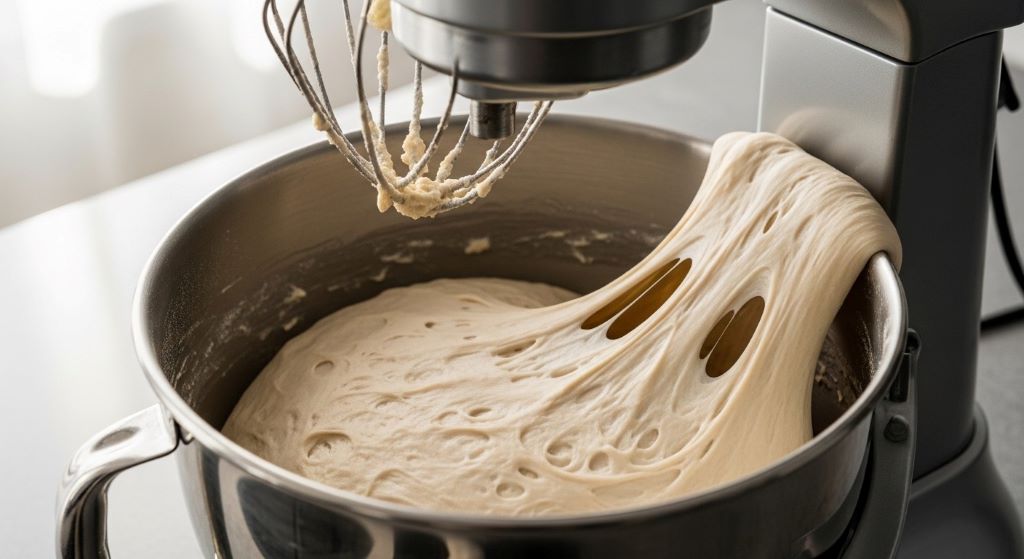
Bowl design also influences mixing efficiency. Bowls with handles make them easier to remove and pour from. Glass bowls let you monitor progress without stopping the mixer. Stainless steel bowls are durable and maintain temperature better during extended kneading sessions.
Noise Level Considerations
Stand mixers generate noise during operation. However, the volume varies significantly between models. Some newer designs incorporate noise-dampening features that make them surprisingly quiet. This consideration becomes important if you bake early in the morning or live in an apartment with thin walls.
Motor type affects noise levels. Direct-drive motors typically run quieter than belt-driven systems. Additionally, well-made gears produce less grinding noise than poorly manufactured ones. Reading user reviews often reveals real-world noise experiences that specifications don’t capture.
Temperature Management During Long Kneading
Bread dough kneading can take ten minutes or longer. During this time, friction generates heat in both the dough and the motor. Quality mixers manage this heat effectively, preventing overheating that could damage the motor or negatively affect your dough.
Look for mixers with ventilation systems that dissipate heat efficiently. Some models include automatic shutoff features that protect the motor if it gets too hot. These safety mechanisms prove valuable when you’re juggling multiple baking tasks and might not notice warning signs.
Additional Features Worth Considering
Modern stand mixers offer various convenience features. Splash guards prevent flour from escaping during initial mixing. Pour chutes let you add ingredients without stopping the mixer. Some models include timers that automatically shut off after a preset duration.
Attachment compatibility expands your mixer’s versatility. Many brands offer optional attachments like pasta rollers, meat grinders, or spiralizers. If you envision using your mixer beyond bread making, ensure the model supports the attachments you want.
Digital displays on premium models show mixing time and speed settings clearly. Some even include automatic programs for common tasks. However, these features add cost. Decide whether they justify the price increase for your specific needs.
Brand Reputation and Customer Support
Established brands typically offer better customer support and readily available replacement parts. When your mixer needs service or a new attachment, dealing with a reputable company makes the process smoother. Research the manufacturer’s reputation for honoring warranties and responding to customer concerns.
Read reviews from actual bread bakers rather than general users. Their experiences with dough specifically will prove more relevant to your needs. Look for patterns in feedback regarding durability, power, and performance over time.
Budget Considerations and Value
Stand mixer prices range from under one hundred dollars to over five hundred. Generally, you get what you pay for in terms of power, durability, and features. However, the most expensive option isn’t always necessary for your situation.
Entry-level mixers suit occasional bakers who make simple breads. Mid-range models offer good performance for regular home baking. Professional-grade mixers cater to serious enthusiasts or small-scale commercial operations. Assess your baking frequency and ambitions honestly before deciding how much to spend.
Consider the long-term value rather than just the initial price. A durable mixer that lasts twenty years costs less per use than a cheap model that fails after three years. Factor in warranty coverage and the likelihood of needing repairs when calculating true value.
Testing Before You Buy
If possible, see mixers in action before purchasing. Many kitchen stores have display models you can watch or even test. Pay attention to how smoothly they operate, the noise they generate, and how stable they remain during mixing.
Alternatively, borrow a friend’s mixer for a test run. Making a batch of bread dough in a specific model gives you practical insight that specs and reviews cannot provide. You’ll immediately understand whether the mixer suits your needs and preferences.
Making Your Final Decision
Choosing the best stand mixer for bread dough requires balancing multiple factors. Prioritize motor power and build quality if you plan to bake frequently. These fundamental attributes determine whether your mixer will reliably handle dense doughs over many years.
Consider your typical batch sizes when selecting bowl capacity. Think about available counter space and whether you’ll store the mixer or keep it accessible. These practical considerations affect your daily experience with the appliance.
Create a checklist of must-have features versus nice-to-have options. This clarity helps you focus on models that meet your essential requirements without getting distracted by unnecessary extras. Remember that the best mixer for you depends on your specific baking habits and preferences.
Maintenance and Care
Proper maintenance extends your mixer’s lifespan significantly. Clean attachments promptly after each use, preventing dried dough from hardening in crevices. Wipe down the mixer body regularly, avoiding water near the motor housing.
Periodically check that all attachments fit securely. Loose connections can cause uneven mixing or damage to the attachment hub. If you notice any unusual noises or performance issues, address them promptly rather than continuing to use a potentially damaged machine.
Some mixers require occasional lubrication of gears. Consult your owner’s manual for specific maintenance recommendations. Following these guidelines prevents premature wear and keeps your mixer running smoothly for years.
Conclusion
Selecting the best stand mixer for bread dough involves careful evaluation of motor power, build quality, and mixing efficiency. High torque mixers with robust construction handle heavy doughs reliably. Effective dough hook performance ensures proper gluten development for excellent bread texture. A comprehensive kneading guide helps you understand the speeds and techniques needed for success.
Consider your baking frequency, typical batch sizes, and budget when making your choice. Prioritize durability and power over fancy features if you plan to bake regularly. Read reviews from fellow bread bakers, and test models when possible. With the right mixer, you’ll enjoy years of successful bread baking, creating delicious homemade loaves that bring joy to your table.
Frequently Asked Questions
What wattage do I need for kneading bread dough?
For occasional bread baking, a mixer with at least 300 watts suffices. However, regular bread makers should invest in models with 500 watts or more. Higher wattage ensures the motor doesn’t strain or overheat during extended kneading sessions. Remember that wattage works alongside torque to determine actual performance with dense doughs.
Can I use the flat beater instead of the dough hook?
While the flat beater might initially combine ingredients, it won’t knead dough properly. The dough hook’s specialized design stretches and folds dough to develop gluten structure effectively. Using the wrong attachment produces inferior results and may damage your mixer. Always use the dough hook for yeasted bread recipes.
How long should I knead bread dough in a stand mixer?
Most bread doughs require between eight and twelve minutes of kneading in a stand mixer. The exact time depends on the recipe, dough hydration, and mixer power. Dough is ready when it’s smooth, elastic, and passes the windowpane test. Over-kneading is possible but less common than with hand kneading.
Why does my mixer struggle with bread dough?
Struggling typically indicates insufficient motor power for the dough’s density. Other causes include overfilling the bowl, incorrect speed settings, or using the wrong attachment. Ensure you’re not exceeding the manufacturer’s recommended flour capacity. Some mixers simply aren’t designed for heavy bread doughs.
Do I need a tilt-head or bowl-lift mixer for bread?
Both styles can handle bread dough effectively. Bowl-lift models typically offer more power and stability for heavy mixtures. Tilt-head designs provide easier access for scraping down the bowl. Choose based on your preference for convenience versus maximum power. Either type works well if properly rated for bread making.
Related Topics:
KitchenAid Pasta Maker Attachment Review – Honest Insights for Home Chefs
The Importance of Quality Cutting Tools in Kitchen



Leave a Reply