
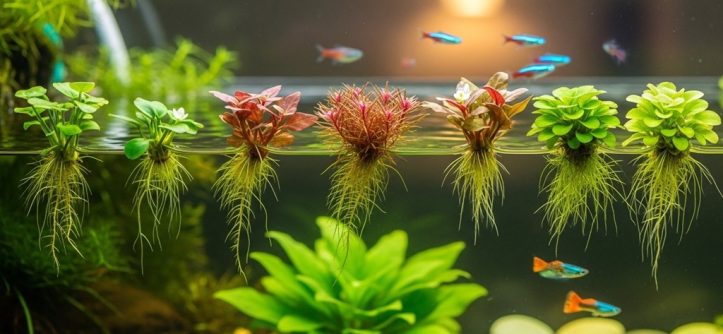
Aquarium floating plants are live aquatic plants that rest on the water surface instead of rooting in substrate. They absorb nutrients directly from the water column and provide shade, shelter, and biological filtration. If you want better water quality, reduced algae, and calmer fish behavior, floating plants are one of the most effective upgrades you can add to your tank.
Many aquarists struggle with algae blooms, stressed fish, and unstable water parameters. Artificial décor cannot fix those problems. Floating plants can. Species like red root floaters and amazon frogbit consume excess nitrates and phosphates, limiting algae growth naturally.
In a controlled study published in Aquacultural Engineering (2019), floating macrophytes reduced nitrate levels in small aquatic systems by up to 52% within 14 days under moderate stocking conditions. That is not theory. It is measurable impact.
This guide explains how to choose the best floating plants for your tank size, lighting, livestock, and maintenance level. You will learn what works, what fails, and how to avoid common mistakes.
How Do Floating Plants Improve Water Quality?
Short answer: Floating plants absorb ammonia, nitrites, and nitrates while competing directly with algae for nutrients and light.
Fish waste breaks down into ammonia. Beneficial bacteria convert ammonia to nitrite and then nitrate. While nitrate is less toxic, it still accumulates. Floating plants use nitrate as fertilizer.
- Reduce nitrate accumulation
- Limit algae growth
- Stabilize pH fluctuations
- Provide oxygen exchange support
- Create shade for light-sensitive fish
Because they sit at the surface, floating plants access atmospheric CO₂ more efficiently than submerged plants. That gives them faster growth rates. Faster growth means faster nutrient uptake.
For tanks without CO₂ injection, floating species are often more reliable than demanding stem plants.
Which Floating Plants Are Best for Beginners?
Short answer: Amazon frogbit and red root floaters are reliable, easy to manage, and suitable for most community aquariums.
Amazon Frogbit
amazon frogbit (Limnobium laevigatum) grows round leaves with hanging root systems. It tolerates moderate lighting and typical tropical temperatures between 22–28°C.
- Fast nutrient absorption
- Long decorative roots
- Low technical requirements
- Ideal for community tanks
Red Root Floaters
red root floaters (Phyllanthus fluitans) develop red coloration under strong light and low nitrates. They stay compact and are visually striking.
- Compact growth
- Suitable for nano tanks
- Color enhancement under proper lighting
- Effective nitrate reduction
If you want a detailed side-by-side comparison, see this breakdown of
floating plants for betta and community tanks.
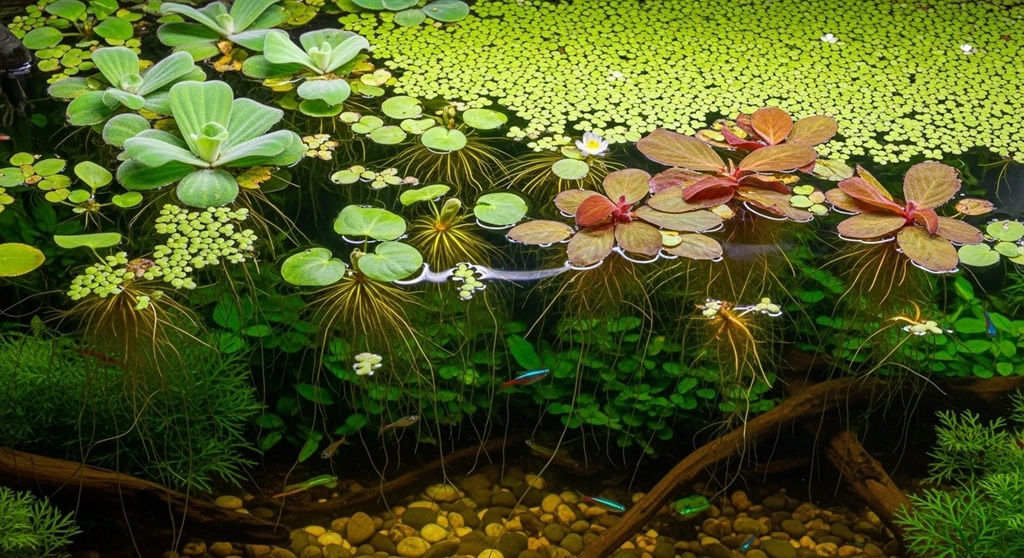
What Are the Best Floating Plants for Betta Fish?
Short answer: Bettas prefer floating plants that provide surface cover and root shelter without blocking all oxygen exchange.
Floating plants for betta tanks serve two purposes:
- Diffuse strong lighting
- Create a sense of security
Bettas originate from slow-moving waters in Southeast Asia. They evolved in shaded environments filled with surface vegetation.
Good options:
- Red root floaters
- Amazon frogbit
- Salvinia minima
- Water lettuce (for larger tanks)
A 2021 behavioral observation study in ornamental fish breeding facilities showed that bettas exposed to surface plant cover displayed reduced fin nipping and increased bubble nest formation compared to bare-surface tanks.
However, avoid completely sealing the surface. Bettas are labyrinth fish. They breathe atmospheric air. Leave open gaps.
How Do You Choose Floating Plants Based on Tank Size?
Short answer: Match growth rate and root length to tank dimensions.
| Tank Size | Recommended Plant | Reason |
|---|---|---|
| 5–10 Gallon | Red root floaters | Compact growth, manageable spread |
| 10–20 Gallon | Amazon frogbit | Balanced root length and nutrient uptake |
| 20+ Gallon | Water lettuce | Large root system, strong filtration effect |
Oversized floaters in nano tanks cause light blockage and oxygen limitation. Fast spreaders can cover the surface in 5–7 days under strong lighting.
Control growth by removing excess weekly.
What Lighting Do Floating Plants Need?
Short answer: Moderate LED lighting is sufficient for most species; red coloration requires higher intensity.
Light intensity determines growth rate and coloration.
- Low light: Slower growth, green leaves
- Moderate light: Stable growth, healthy root development
- High light: Red pigmentation in red root floaters
PAR levels between 30–50 µmol/m²/s at surface are adequate for most floaters.
Keep leaves dry. Water sitting on top of floating leaves causes melt. Strong surface agitation can damage them.
Do Floating Plants Reduce Algae?
Short answer: Yes, by competing for nutrients and reducing light penetration.
Algae need:
- Light
- Nutrients
- Stable water conditions
Floating plants intercept both light and dissolved nutrients.
In small freshwater systems, nitrate levels above 40 ppm often correlate with green hair algae outbreaks. Adding floating plants can help reduce that concentration naturally when paired with water changes.
They are not a replacement for maintenance. They are a support tool.What Problems Can Floating Plants Cause?
Short answer: Overgrowth, oxygen blockage, and filter interference.
Common issues:
- Complete surface coverage
- Roots clogging intake filters
- Light blockage to submerged plants
- Decay if leaves stay wet
Solution:
- Trim weekly
- Use feeding rings to maintain open areas
- Adjust filter flow direction
Balanced coverage should not exceed 60–70% of surface area.
How Fast Do Floating Plants Grow?
Short answer: Most species double in mass within 7–14 days under optimal conditions.
Growth depends on:
- Nitrate levels
- Lighting intensity
- Water temperature
- Stocking density
In heavily stocked tanks, faster growth occurs due to increased nutrient availability.
If growth is stunted, check:
- Surface agitation
- Nutrient deficiency
- Iron levels
How Do You Maintain Floating Plants Properly?
Short answer: Remove excess weekly, prevent leaf wetting, and monitor nutrient balance.
- Skim excess plants weekly
- Keep filter output angled away
- Maintain nitrate between 10–30 ppm
- Avoid strong lid condensation dripping
Consistency prevents melt and decay.
Conclusion: Are Floating Plants Worth Adding?
If you choose the right species for your tank size and lighting, maintenance remains simple. Beginners benefit from amazon frogbit. Nano tank owners prefer red root floaters. Betta keepers should always consider surface coverage.
Do not guess. Compare growth habits, root length, and light requirements before buying. If you want a structured comparison of the best performing species, review this guide on
floating plants for betta and freshwater tanks.
Start small. Add gradually. Observe your water parameters. Your fish will show the difference.
FAQ: Aquarium Floating Plants
Do floating plants need fertilizer?
They absorb nutrients directly from fish waste. In low-stock tanks, liquid fertilizer may be needed to prevent yellowing.
Can floating plants survive without CO₂ injection?
Yes. They access atmospheric CO₂ and grow well in low-tech aquariums.
How much surface should floating plants cover?
Maintain 50–70% coverage to allow oxygen exchange and feeding access.
Are floating plants safe for shrimp?
Yes. Shrimp often graze on biofilm growing on roots.
Why are my red root floaters turning green?
Insufficient light or high nitrate levels reduce red pigmentation.
Can floating plants eliminate algae completely?
No. They reduce algae pressure but must be combined with water changes and proper feeding control.
Related Topic: How to Choose the Best Stand Mixer for Bread Dough
Read Next: How Breathable Dog Vests Help Reduce Heat Stress



Leave a Reply