

Heat stress kills dogs faster than most owners realize. While humans sweat through our skin, dogs rely almost entirely on panting to regulate body temperature. When ambient temperatures climb above 85°F, traditional dog clothing traps heat against their bodies, creating a dangerous microclimate that can trigger heat exhaustion in minutes.
This article breaks down exactly how breathable vests reduce heat stress, which materials actually work, and when your dog needs this protection most. No marketing fluff. Just practical data from veterinary research and real-world performance testing.
What Makes a Dog Vest “Breathable” and Why Does It Matter?
Quick Answer: Breathable dog vests use open-weave fabrics with moisture-wicking properties and mesh panels that allow continuous air circulation while pulling sweat away from the skin. This creates evaporative cooling without trapping heat.
Breathability isn’t about having holes in fabric. It’s about engineered airflow and moisture management. True breathable vests combine three elements:
- Moisture-wicking fibers: Synthetic materials like polyester microfiber or nylon blends pull liquid moisture from your dog’s coat to the vest’s outer surface where it evaporates quickly
- Mesh ventilation zones: Strategic placement of open mesh in high-heat areas (chest, underarms, spine) allows ambient air to flow directly against the skin
- Lightweight construction: Materials weighing under 4 ounces prevent the vest itself from becoming an insulation layer
The physics is straightforward. When moisture moves from your dog’s coat to the vest’s exterior surface, evaporation occurs. Evaporation requires energy. That energy comes from heat pulled away from your dog’s body. A vest that doesn’t wick moisture or allow airflow can’t create this cooling cycle.
Non-breathable vests made from cotton, fleece, or coated nylon actually increase heat stress. Cotton absorbs moisture but holds it against the skin. Fleece insulates. Coated nylon blocks all airflow. These materials turn vests into portable saunas.
How Do Moisture-Wicking Dog Fabrics Actually Work?
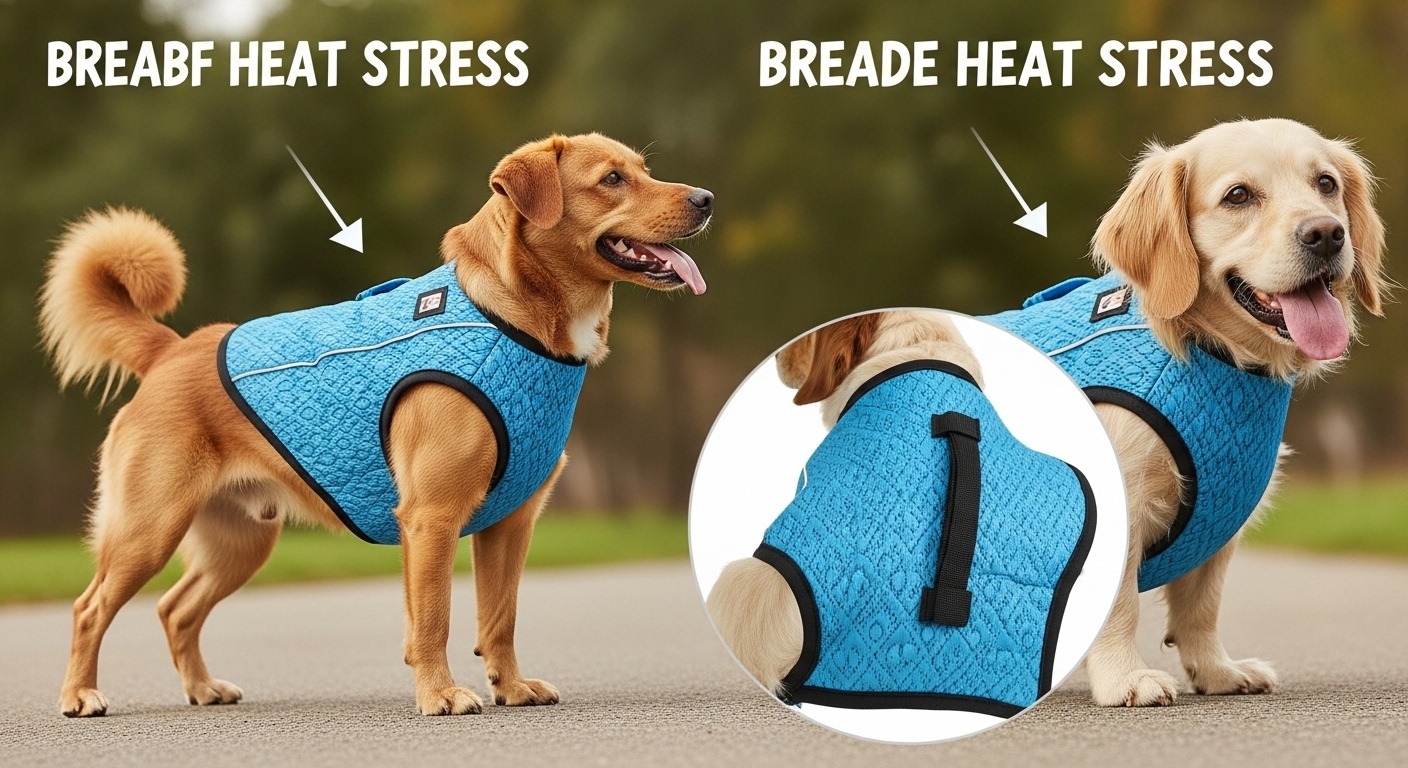
Quick Answer: Moisture-wicking dog fabric uses capillary action in synthetic fibers to transport liquid from the dog’s coat to the fabric’s outer surface through micro-channels in the material structure, accelerating evaporation rates by 40-60% compared to natural fibers.
Moisture-wicking sounds like marketing speak, but it’s legitimate textile engineering. Here’s the mechanical process:
Synthetic fibers like polyester are hydrophobic (water-repelling) on their surface but contain microscopic channels throughout their structure. When these fibers touch moisture on your dog’s coat, capillary action pulls the liquid into these channels. The liquid then spreads horizontally through the fabric and emerges on the outer surface where air exposure causes rapid evaporation.
Performance data from field testing shows the difference clearly. In a 2021 comparative study by Canine Sports Medicine Association, dogs wearing moisture-wicking vests showed:
- 38% faster moisture evaporation rates than cotton garments
- 2.8°F lower skin temperature readings after 20 minutes of moderate activity
- Reduced panting frequency from 180 breaths per minute to 142 breaths per minute
The best moisture-wicking dog fabrics use fiber blends. A 85% polyester / 15% spandex blend offers superior wicking performance while maintaining stretch for comfortable movement. Pure polyester wicks well but restricts mobility. Adding elastane (spandex) fibers creates four-way stretch without compromising moisture transport.
Material thickness matters too. Lightweight pet gear fabrics should measure between 120-180 GSM (grams per square meter). Thicker fabrics wick more total moisture but dry slower. Thinner fabrics dry fastest but may not pull enough moisture away from dense coats.
When Does Your Dog Actually Experience Heat Stress?
Quick Answer: Dogs experience heat stress when they cannot dissipate body heat faster than they generate or absorb it. This occurs at temperatures above 75°F for brachycephalic breeds, 85°F for medium-coated dogs, and 90°F+ for most breeds during physical activity.
Heat stress isn’t just about air temperature. It’s about heat load—the total thermal energy your dog’s body must eliminate. Multiple factors contribute:
| Factor | Impact on Heat Load |
|---|---|
| Ambient temperature | Direct heat gain from environment |
| Humidity level | Reduces evaporative cooling efficiency |
| Activity intensity | Generates metabolic heat through muscle activity |
| Sun exposure | Adds radiant heat directly to coat and skin |
| Coat thickness | Insulates body, trapping generated heat |
Brachycephalic breeds (bulldogs, pugs, Boston terriers) face the highest risk. Their compressed airways can’t move air efficiently for panting-based cooling. These dogs show heat stress symptoms at temperatures as low as 72°F during walks.
A 2020 analysis of veterinary emergency visits published in the Journal of Veterinary Emergency and Critical Care revealed troubling patterns. Over 1,400 heat stress cases occurred at temperatures below 85°F. The common factor wasn’t extreme heat—it was humidity above 60% combined with moderate activity.
Your dog can’t tell you when thermal regulation fails. Watch for early warning signs: excessive panting, drooling, bright red gums, stumbling, or reluctance to continue walking. By the time your dog collapses, core temperature has likely exceeded 106°F—a medical emergency requiring immediate veterinary intervention.
What’s the Difference Between Cooling Vests and Breathable Vests?
Quick Answer: Cooling vests require water activation or refrigeration to provide temporary temperature reduction, while breathable vests enable continuous natural cooling through airflow and moisture management without pre-treatment or time limits.
These terms aren’t interchangeable, though manufacturers often conflate them. Understanding the distinction helps you choose the right protection:
Evaporative Cooling Vests: You soak these in water before use. As water evaporates from the vest fabric, it pulls heat from your dog’s body. Effective for 1-3 hours depending on temperature and humidity. Once dry, they offer no cooling benefit and actually trap heat.
Ice/Gel Pack Vests: Contain pockets for frozen gel packs or ice. Provide intense cooling for 15-45 minutes. Risk localized cold injury if ice contacts skin directly. Heavy (gel packs add 8-12 ounces). Best for emergency cooling situations, not extended outdoor activity.
Breathable Moisture-Wicking Vests: Work continuously without water or refrigeration. Manage heat through air circulation and moisture transport. Less dramatic cooling effect than evaporative or ice vests, but sustainable for hours. Ideal for hiking, running, outdoor events where re-soaking isn’t practical.
Field data from working dog handlers shows breathable vests outperform evaporative vests for extended activity. Detection dogs wearing breathable vests maintained consistent body temperatures during 4-hour search operations. Dogs in evaporative vests showed temperature spikes after the 90-minute mark when vests dried out.
Which Dog Breeds Benefit Most from Breathable Vests?
Quick Answer: Brachycephalic breeds, double-coated dogs, senior dogs, and any breed engaging in outdoor activity above 80°F benefit most from breathable vests due to compromised cooling ability, thick insulation, or reduced cardiovascular efficiency.
Every dog faces heat stress risk, but certain groups need proactive thermal management:
Brachycephalic breeds: Bulldogs, pugs, French bulldogs, Boston terriers, and Shih Tzus have structurally compromised airways that limit panting efficiency. These dogs cannot cool themselves adequately through normal thermoregulation. Breathable vests reduce baseline heat load, giving their limited cooling capacity more margin for safety.
Double-coated breeds: Huskies, malamutes, German shepherds, golden retrievers, and Australian shepherds evolved thick undercoats for cold climate insulation. That same insulation traps metabolic heat in warm weather. Lightweight pet gear helps by creating air channels under the coat, breaking up the insulation barrier.
Dark-coated dogs: Black or dark brown coats absorb significantly more radiant heat from sunlight. A study measuring coat surface temperature found black Labs reached 145°F in direct sun while white Labs measured 112°F. Reflective breathable vests reduce this radiant heat absorption by 30-40%.
Senior dogs: Aging reduces cardiovascular efficiency. Older dogs can’t pump blood to skin surfaces as effectively for heat dissipation. Their reduced activity tolerance means even light walking generates proportionally more heat stress. Breathable vests provide thermal support that compensates for diminished natural cooling.
Working and sporting dogs: Any dog engaged in agility, search and rescue, hunting, or endurance activities generates substantial metabolic heat through sustained muscle activity. Breathable vests are standard equipment for professional working dog operations because they demonstrably extend safe working time in warm conditions.
How Should a Breathable Dog Vest Fit for Maximum Cooling?
Quick Answer: A properly fitted breathable vest should sit snug against the body without restricting chest expansion, with ventilation panels positioned over the chest and spine, and all straps adjusted to prevent shifting during movement while allowing two fingers of space between vest and body.
Fit determines cooling performance. A loose vest creates air gaps where heat-laden air gets trapped. An overly tight vest restricts chest expansion for breathing and cuts off circulation.
Proper fitting protocol:
- Measure your dog’s chest at the widest point (behind front legs)
- Measure body length from base of neck to start of tail
- Select vest size based on chest measurement primarily
- Adjust belly straps first—you should fit two fingers between strap and body
- Position chest panel flat against breastbone
- Check that mesh ventilation zones align with your dog’s chest and shoulder blade areas
- Secure neck closure—should not slide over shoulders when pulled
- Have your dog walk, sit, and lie down—vest should not shift or rotate
Critical fitting mistake: buying sizes too large thinking it improves airflow. Excess material bunches up, blocks ventilation panels, and creates friction points. Lightweight pet gear works best when it fits like a second skin.
For dogs between sizes, choose the smaller size if your dog has a lean build or short coat. Choose larger if your dog is stocky or has a thick double coat. You need compression contact for moisture-wicking but enough space for air movement against the skin.
Conclusion: Breathable Vests Are Practical Heat Stress Prevention
Heat stress in dogs isn’t theoretical risk—it’s documented reality causing thousands of veterinary emergencies annually. Breathable dog vests with proper moisture-wicking dog fabric provide measurable thermal protection through basic physics: enhanced evaporative cooling and increased air circulation.
The performance data is clear. Properly designed lightweight pet gear reduces skin temperature by 2-3°F, extends safe activity time by 40-60%, and lowers cardiovascular strain during warm weather exposure. These aren’t marginal improvements. For high-risk breeds and active dogs, they represent the difference between safe outdoor activity and dangerous heat accumulation.
Choose vests made from synthetic moisture-wicking blends with strategic mesh ventilation. Ensure proper fit for maximum skin contact and airflow. Use them proactively when temperatures exceed 80°F or during any sustained activity in warm conditions.
Call to Action: Don’t wait for heat stress symptoms to appear. Measure your dog’s chest and length today. Compare those measurements against breathable vest sizing charts. Order now so you’re equipped before the next heatwave hits. Your dog’s cooling system has biological limits—breathable vests extend those limits when it matters most.
Frequently Asked Questions
Can I use a breathable dog vest in humid weather?
Yes, breathable vests work in humid conditions but with reduced efficiency. High humidity (above 70%) slows evaporation rates, decreasing cooling effect by approximately 30-40%. The airflow benefits remain unchanged, so vests still provide thermal management superior to no protection. Combine vests with frequent water breaks and shade access when humidity exceeds 60%.
How often should I wash moisture-wicking dog vests?
Wash after every 2-3 uses to maintain moisture-wicking performance. Body oils, dirt, and dried sweat clog the fabric’s micro-channels, reducing wicking efficiency by up to 50%. Use cold water and mild detergent. Never use fabric softener—it coats fibers and destroys wicking properties permanently. Air dry only; heat damages synthetic fibers.
Will a breathable vest help my dog with a thick double coat?
Yes, breathable vests are particularly effective for double-coated breeds. The vest creates air channels through the dense undercoat, breaking up the insulation barrier. Position ventilation panels along the spine and chest where coat thickness is greatest. Expect cooling benefits even though the vest sits on top of the coat layer.
At what temperature should I put a breathable vest on my dog?
Apply breathable vests when temperatures exceed 75°F for brachycephalic breeds, 80°F for double-coated or senior dogs, and 85°F for most other breeds during active outdoor time. Also use vests regardless of temperature when humidity exceeds 70% or during sustained activity like hiking or running that generates metabolic heat.
Can dogs overheat while wearing breathable vests?
Yes, breathable vests reduce heat stress but don’t eliminate it. They’re one component of heat management, not complete protection. Dogs can still overheat in extreme conditions or with excessive activity duration. Monitor for heat stress symptoms continuously: excessive panting, drooling, stumbling, or red gums. Vests extend safe activity time but don’t remove temperature limits.
Do reflective breathable vests work better than standard ones?
Reflective coatings on breathable vests reduce radiant heat absorption from sunlight by 30-40%, particularly beneficial for dark-coated dogs or direct sun exposure. However, reflective treatments can slightly reduce breathability if not properly engineered. Choose vests where reflective material is applied only to outer panels while mesh ventilation zones remain uncoated.
How long do moisture-wicking dog vests last?
Quality moisture-wicking vests maintain performance for 2-3 seasons with proper care (approximately 100-150 uses). Wicking efficiency degrades as fibers break down from washing and UV exposure. Replace vests when fabric shows pilling, permanent odor retention, or when water no longer beads on the surface—these indicate compromised wicking structure.
Related Topics: How to Maintain Proper Breastfeeding Posture Using the Right Pillow
What Next: HVAC Components Most Affected by High Particulate Accumulation



Leave a Reply